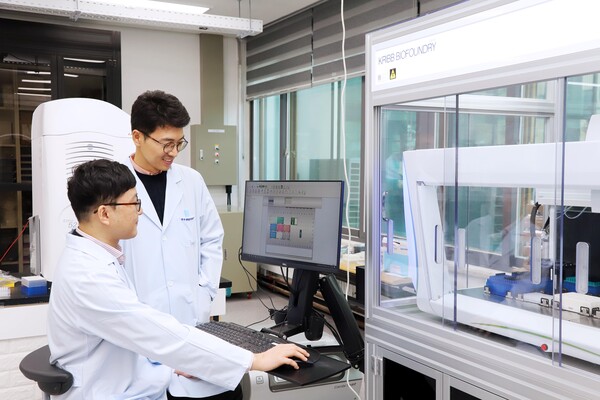
'Synthetic CRISPRi-based plasmid screening to reduce antibiotic resistance'

A team of researchers at the Korea Research Institute of Bioscience and Biotechnology (KRIBB) has developed a CRISPRi-based plasmid selection system by building a cascaded logic inverter to mimic antibiotics and thereby reduce antibiotic-resistance genes.
Antibiotic screening is most widely used to select plasmids that will survive stably in host cells when developing a mass production manufacturing process of bio-products. However, continued use of antibiotics increases antibiotic resistance, induces allergic reactions, and raises manufacturing costs.
As an alternative, nutritional-required strains can be used. However, it is difficult to make strains, and this method has a low screening ability. Plus, there is a limit to the number of genes available for screening.
For example, in biopharmaceuticals such as DNA vaccines, the smaller the size of the plasmid, the higher the transfer efficiency in the human body, and the higher the amount of antigen expression. Thus, a platform capable of selecting small plasmids is required.
Accordingly, the research team developed a system that only selects cells with plasmids by creating an intelligent gene circuit based on synthetic biology. The principle is that cells survive and are selected because interference by gene scissors does not occur in the presence of plasmids. They combined a NOT logic circuit and CRISPR interference (CRISPRi) gene that suppresses the expression of a specific gene to replace the function of the antibiotic. Read More…