Taiwan in Time: ‘Just an amateur artist'?

Hsiao Ju-song (è•å¦‚æ¾) had big shoes to fill. His father became the first Taiwanese lawyer during Japanese rule — passing the exam without any formal study — while his older brother was an esteemed physician with a Doctor of Medicine degree from Germany. He even served as a lieutenant during World War II, a rank that few Taiwanese attained.
Despite their achievements, the family wasn’t wealthy, and high hopes were placed on Hsiao when he became one of four Taiwanese students accepted into the prestigious Taihoku First High School (today’s Taipei Municipal Jianguo High School, 建國ä¸å¸).
Facing discrimination at school and suffocating pressure at home, Hsiao found solace in painting. His parents forbade him from making art at home, but he always found a way — whether it was sketching on scraps of paper stolen from his father’s study, or doodling in his workbooks while pretending to study.
At the age of 17, Hsiao was selected to exhibit at the 1939 Taiyang Fine Arts Exhibition. Aside from a brief hiatus, he participated in the show every year until 1991, submitting more that 70 pieces.
When Hsiao insisted on pursuing art as a career, his family called him a traitor and a good-for-nothing, refusing to provide him with any financial support. Supplies were scarce due to World War II, and for two years he subsisted mostly on taro leaves while studying to be an art teacher at Hsinchu Normal University, greatly damaging his health.
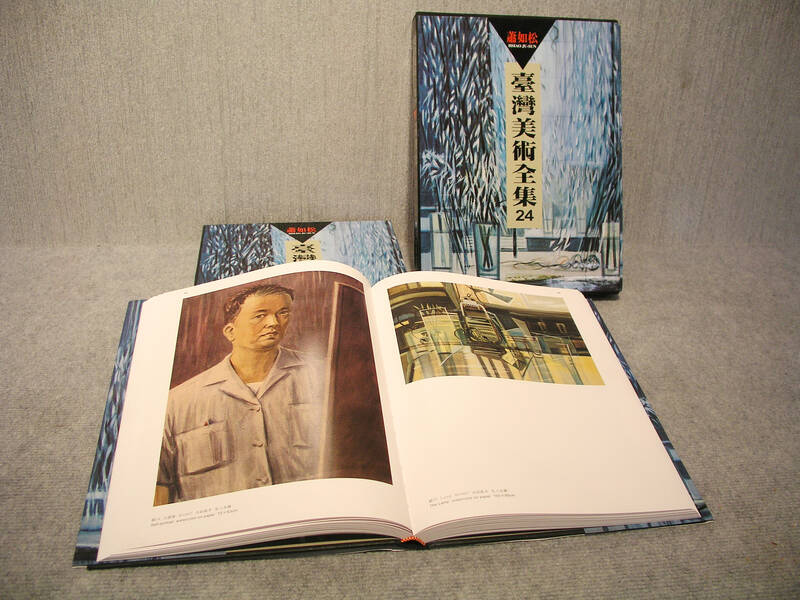
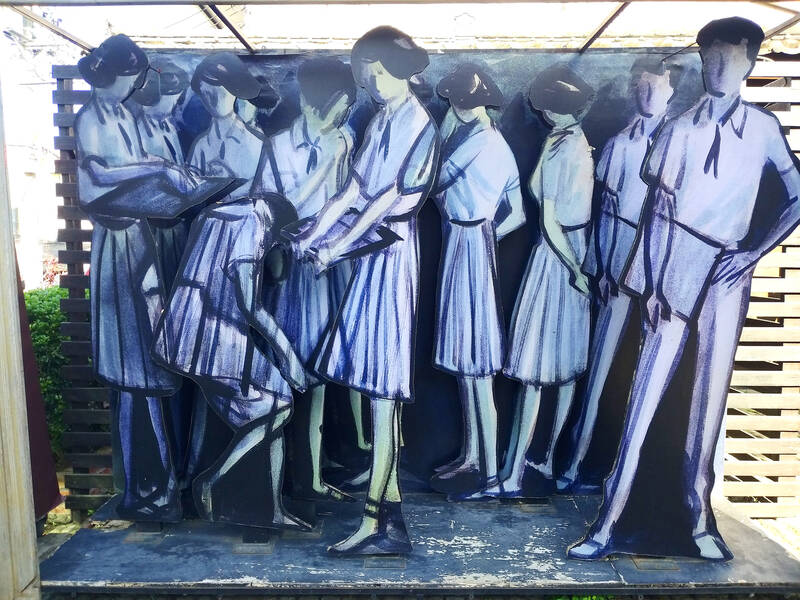
Today, Hsiao is remembered as a low-key, yet important watercolor painter and a strict but passionate art teacher, with an art park dedicated to him around his former residence in Hsinchu’s Jhudong Township (竹æ±). Hsinchu County has been putting on a series of events starting last month to commemorate his 100th birthday, which falls on Tuesday.
FIRST LAWYER
Hsiao’s tenth generation ancestor was one of the first Han Taiwanese to settle in the future Hakka settlement of Beipu Township (北埔), Hsinchu County.
His father, Hsiao Hsiang-an (è•ç¥¥å®‰), trained to become a teacher, although his true interest was law. Ling Chun-yu (凌春玉), who has done much research on the family, writes that the elder Hsiao continued to study in his free time, and in 1919 passed the high-level civil servant examinations to become a translator for the Taipei High Court and the Governor-General’s Advisory Council.
This was already a rare accomplishment, Ling writes; only about 50 Taiwanese passed the high-level examinations during the half century of Japanese rule, and even fewer were hired on. In 1923, the elder Hsiao reportedly served as crown prince Hirohito’s personal translator for his 12-day tour of Taiwan, and played shogi, also known as Japanese chess, with the royal during their down time. Read More…