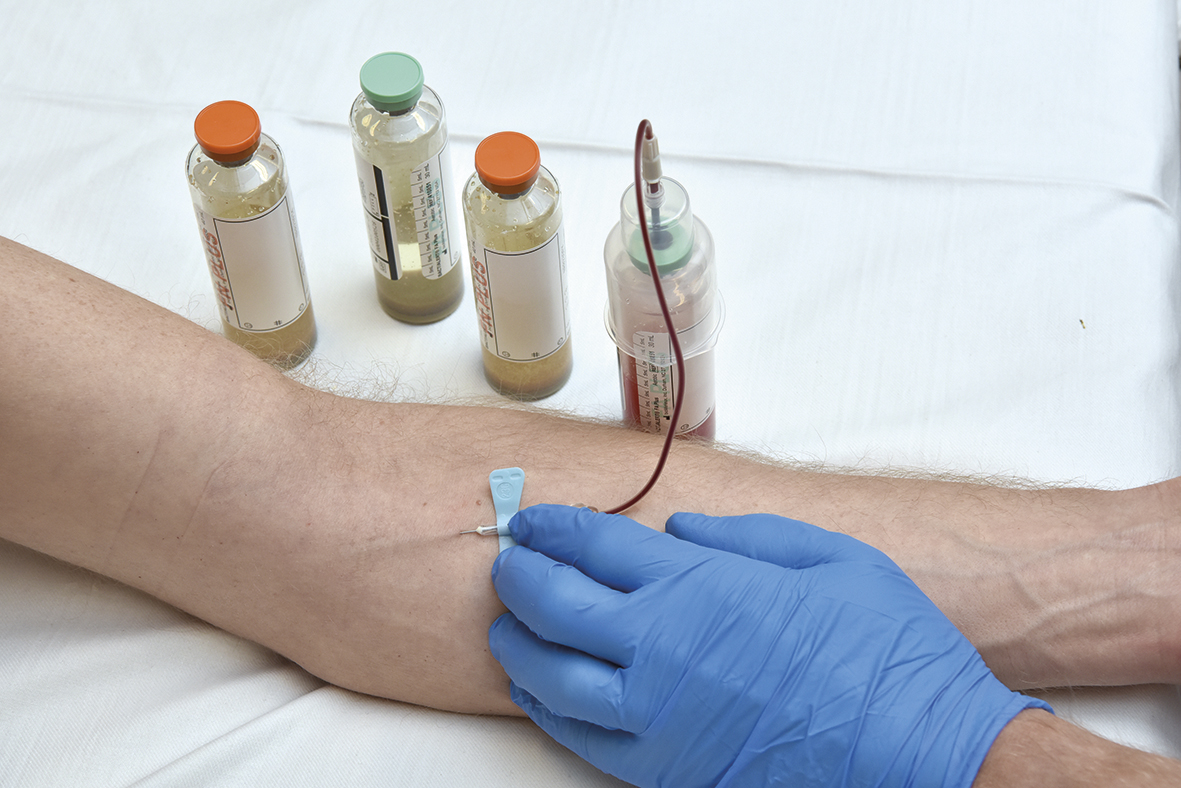
Take four blood culture bottles in one and the same venipuncture
-
 Loading...
 - Imogen Fletcher
- 09 Sep 2022
- 78 Views
- 0 Like
- 0 Comment
Blood culture is the standard method for the detection of microorganisms in patients with sepsis [1]. By tradition, in Sweden and the majority of other countries, four blood culture bottles have been routinely taken divided between two venipunctures, one aerobic and one anaerobic blood culture bottle from each venipuncture. This strategy has been justified by the fact that the comparison of blood culture results between two venipunctures provides the opportunity to distinguish between significant bacteremia and contamination [2]. At the same time, there is a risk that ordering blood cultures through two venipunctures in stressful situations means that the second venipuncture is prioritized away. As there is a clear correlation between the total blood culture volume examined and the chance of detecting bacteria [3], the issue of routinely taking four blood culture bottles through the same venipuncture has long been debated. Such a strategy would mean reduced work effort for the healthcare staff and a reduced number of stitches for the patient. The strategy has been used in France, where a study has shown that it has the potential to work as a routine method [4]. However, clinical studies with well-defined patient cohorts supporting such a strategy have so far been lacking.
Recently, however, two Swedish studies have focused on the issue of four blood culture bottles in one venipuncture instead of divided into two.
The first study was a prospective non-inferiority study [5], where 549 patients who activated the sepsis alarm in a Swedish emergency department were sampled with four blood culture bottles in one arm and two blood culture bottles in the other. In the analysis, the blood culture results from the four blood culture bottles taken in one arm (new method) were compared with the first two blood culture bottles from the same arm combined with the two blood culture bottles from the other arm (traditional method). Each patient was thus sampled with both the new method's four blood culture bottles and the traditional method's four blood culture bottles. Relevant bacterial growth was detected in 29.1 percent of the cases with the new method and 29.5 percent of the cases with the traditional method, which showed that the new method was not inferior to the traditional one in detecting relevant bacterial growth (the study's non-inferiority margin was not exceeded). The proportion of cases with growth of contaminants in blood culture was slightly lower with the new method compared with the traditional method (5.3 percent vs. 7.3 percent; P = 0.072).
Of 8 study patients who received the main diagnosis of endocarditis for the episode of care, at least two blood culture bottles were positive in 6/8 patients with the new method's four blood culture bottles and in 6/8 patients with the traditional method's four blood culture bottles (unpublished data).
The second study was a retrospective study [6] comparing blood cultured patients in a large Swedish emergency department 12 months before (n = 5,248) and 12 months after (n = 5,364) switching routine blood culture method from traditional method with four blood culture bottles divided by two venipunctures to a new method with four blood culture bottles in one venipuncture. The proportion of patients with a positive blood culture was significantly higher after the change of routine method compared to before the change (19.6 percent vs. 17.8 percent; P = 0.018). The study showed that this difference was because the new method resulted in a greater proportion of patients being sampled with four blood culture bottles. Read More…