Talking with students in Egypt so that we learn how to talk about them
-
 Loading...
 - Aabir Fathi
- 21 Jun 2022
- 230 Views
- 0 Like
- 0 Comment
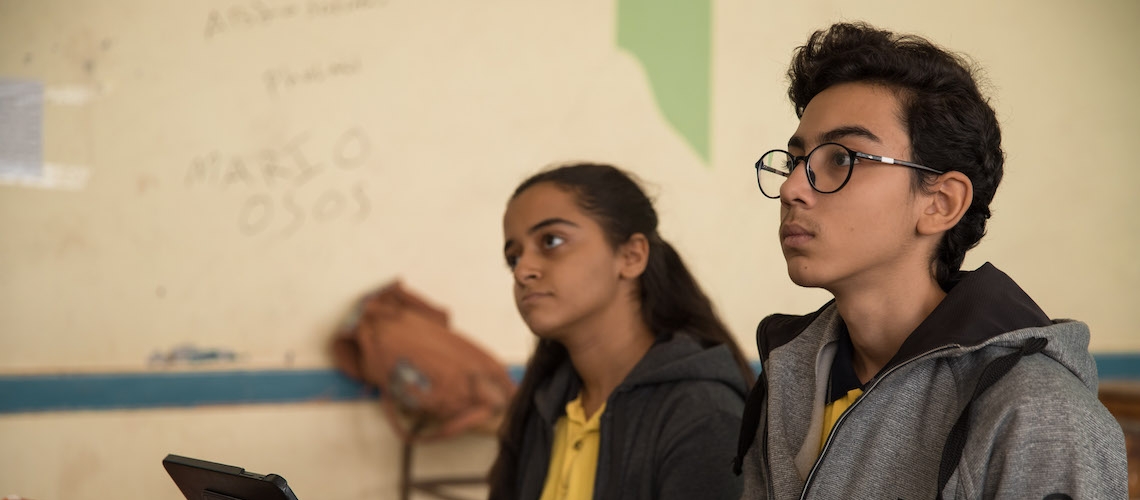
"I want to specialize in mechatronics when I grow up," said a grade 10 student during a recent visit to a public school in Giza. A grade 7 student said, "I want to be a vet to save animals." Another student in grade 7 said, "I want to be an Arabic teacher."
My team, from the World Bank’s Supporting Education Reform Project in Egypt, has maintained a good ritual of visiting public schools to talk to students. I often tell students that we would rather talk to them than talk of them. Students have very big aspirations for their future. Many of them see the links between their education in primary/preparatory or secondary schools and their future goals, and they appreciate the ongoing education sector reforms as broadening their perspectives and introducing new, non-cognitive skills that better equip them for the future, as citizens and as professionals.
To give some background, in September 2018, Egypt embarked on major education reform, with the aim to “bring learning back to the classroom” and equip students with higher order thinking skills, thus preparing them for life as well as for the job market. The reform is extensive. It targets 25 million students and 1.3 million teachers and non-teaching staff (of which around 1 million are teachers). The reform (also known as EDU 2.0) promotes the foundations of learning, starting early in grades Kindergarten (KG) and primary 1-3; introduces a modernized curriculum driven by alternative television and digital learning resources; and adopts a new student assessment system to pull teaching and learning away from memorization and credentials, such as examination scores, towards the skills that promote the well-being of citizens and labor force of the 21st century.
Students’ opinions about the national sector reforms are often influenced by their parents, who may be supporting or resisting the changes. We spoke to the students themselves who, in all cases, across all grades, told us they:
- (a) would rather be in school than receive private tutoring, provided their teachers are sufficiently trained to teach the new curriculum and prepare them well for the new exams;
- (b) are eager to be heard and for their feedback to count in the decision making process;
- (c) feel stressed, and not sufficiently equipped for the ongoing change
One request that kept popping up in different classrooms is "make curricula easier," and I wonder if I succeeded in convincing them that a lighter curriculum could come up with serious results. Studying a lighter or easier version of the curriculum could have grave consequences, as not being able to close the incision in the middle of the surgery, where students would not have learned those remaining steps under the reduced curriculum.
To date, the Education Ministry’s key achievements include: (a) rolling-out the new curriculum and teacher training for KG and grades 1-4; (b) conducting a KG diagnostic study to identify strengths and opportunities to strengthen KG teaching practices in the classroom; (c) developing digital and educational TV learning resources for grades 4-12; (d) developing the grade 4 national assessment framework that guided the baseline administration in December 2021, and (e) designing and administering secondary education examinations in grades 10-12, focusing on higher order thinking skills.  
During the school visits, students notably welcomed the opportunity to debate the ongoing reforms and to share their views and experiences. Older students in grades 7 (age 11-12) or 10 (age 15-16) who have siblings in grade 4 recognize their sibling was getting a better education than they did and was being exposed to broad-based content. Some students, however, saw it as too challenging for their sibling, and above what could be expected of grade 4 students, though this could also be attributed to school closures in the past two COVID-19 years that left students unprepared.
Overall, there is consensus among stakeholders for the timely and potentially impactful education reforms to create functional citizens and employable graduates. Most grade 10 students admitted the reforms that apply to their grade are “not as bad as older students described.” Naturally, and given the novelty of the experience, some of them seem to struggle with the tablet-based, dry-run test, and particularly with essay questions where the “pen” takes some time to get used to (note: the Ministry of Education has already announced use of paper-based tests for essay questions). Students also recognize that playing games on smartphones is not the same as studying. Sitting for tablet-based examinations requires more effort from them, both to access and to use the large range of resources on offer.
Meanwhile, they are eager for additional information regarding the reform and the associated changes. Read More...