The 20 Heroic Events That Defined the Greek War of Independence
-
 Loading...
 - Helmi Salonen
- 22 Mar 2022
- 382 Views
- 0 Like
- 0 Comment
The Greek War of Independence, which brought about the birth of the modern Hellenic nation, is full of memorable events, most of them bloody battles and incredible feats of heroism.
The war cry “Freedom or Death” echoed across Greece as a smattering of heroes fought against the vast Army and Navy of the Ottoman Empire, the underarmed against the well-armed, those desperate for freedom against their complacent overlords.
The spark was provided by enlightened Greeks living mostly in Europe and Russia, thirsty for the rebirth of an once-glorious nation that had been deliberately reduced to a land of of poor, uneducated masses subservient to their Ottoman rulers.
1814: The founding of the Filiki Eteria sparks War of Independence
The Filiki Eteria, or Society of Friends, was a secret organization founded in 1814 in Odessa, Russia (now in Ukraine) with the purpose of overthrowing Ottoman rule in Greece and establishing an independent Greek state.
The Society’s members were mainly educated, young Phanariot Greeks from Constantinople and the Russian Empire, but also included Greek politicians and military leaders and affluent academics as well as several Orthodox Christian leaders from other nations.
March 13, 1821: Bouboulina raises the flag of revolution
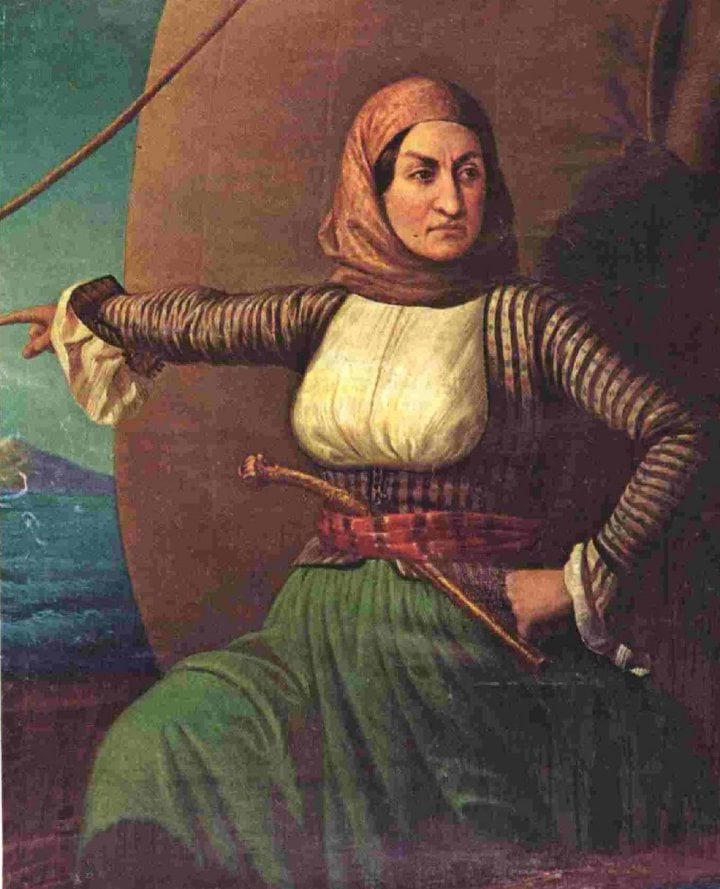
The first flag of the revolution was actually raised on the island of Spetses by Laskarina Bouboulina. Twice widowed with seven children, she was extremely wealthy, owning several ships.
On April 3 Spetses revolted against Ottoman rule, followed by the islands of Hydra and Psara. Between them the islands had a fleet of over 300 ships to use in the War. Bouboulina and her fleet of eight ships sailed to Nafplion and took part in the siege of the impregnable fortress there.
In the attack on Monemvasia later, she even managed to capture the fortress. She took also part in the blockade of Pylos and brought supplies to the revolutionaries by sea.
Bouboulina became a national hero, one of the first women to play a major role in the Greek War of Independence. Without her, and her ships, the Greeks might not have gained their independence.
March 17, 1821 Mani declares war on the Ottomans
On March 17, 1821, the Maniots, descendants of the Spartans on the Mani peninsula in Peloponnese, declared war in Areopoli. The same day, a force of 2,000 Maniots under the command of Petros Mavromichalis advanced on the Messenian town of Kalamata.
There, they joined forces with the troops under the command of the revolutionaries Theodoros Kolokotronis, Nikitaras and Papaflessas. Kalamata fell to the Greeks on March 23, while in Achaia, the town of Kalavryta was besieged on March 21.
March 25, 1821: The Revolution is declared
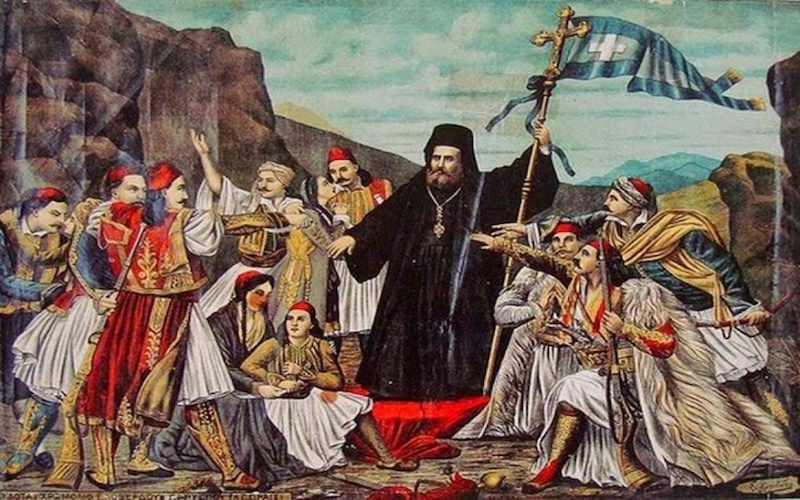
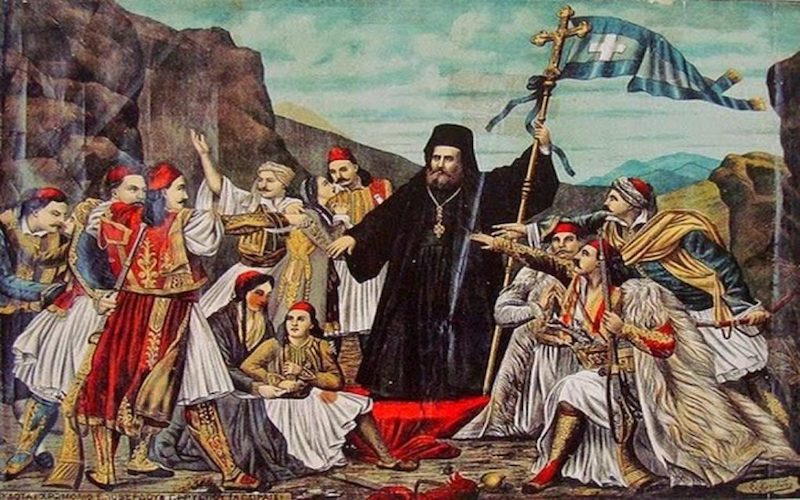
The Greek War of Independence was declared on March 25, 1821 by Metropolitan Germanos of Patras, who raised the Revolutionary banner with its cross in the Monastery of Agia Lavra, near Kalavryta.
Although some historians doubt the historicity of this event, the date is part of the consciousness of Greeks as the official date of the declaration of Greece’s War of Independence.
It is also said that such was the determination of those present, that they shouted “Eleftheria I thanatos (Freedom or death).”
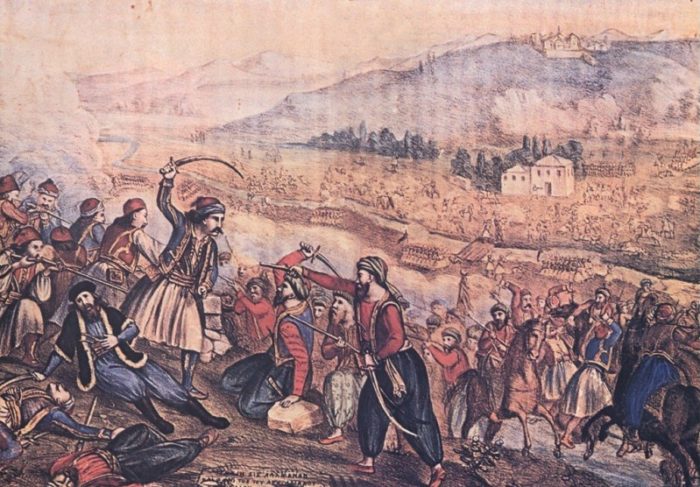
April 23, 1821: The brutal killing of Athanasios Diakos
Athanasios Diakos, whose real name was Athanasios Grammatikos, starred in the revolution of Eastern Central Greece, triumphing in many battles against the Ottomans in the region.
He had even managed to take over Livadia, Thebes and Atalanta as a result of his perspicacity and courage. At the Battle of Alamana, Diakos and his band of just a few men confronted Kiose Mehmet and Omer, who had been ordered to suppress the revolution in Roumeli (as Central Greece was named then).
After a heroic battle, Diakos was wounded and taken prisoner. He was then asked to denounce his Christian faith and collaborate with the Ottomans; but he refused.
The defiance of the Greek hero and his devotion to Greece and his faith became legend. His extraordinarily gruesome punishment — death by impalement — became a symbol of the Ottomans’ barbarism and brutality.
May 8, 1821: Battle at Gravia Inn
Just one month after that, Omer Vryonis with his troops continued his advance in Central Greece while Chieftain Odysseas Androutsos and his men were locked up in Gravia Inn, a strategic, narrow spot on the road.
When the Ottomans approached, they asked the rebelling Greeks to surrender, sending a messenger to negotiate. Androutsos then started fighting the attackers, shooting the messenger dead. Read More...