The BCT raises its key rate to control inflation: Hard blow for households and businesses!
-
 Loading...
 - Beverly Garcia
- 20 May 2022
- 305 Views
- 0 Like
- 0 Comment
The economic situation in the country is going from bad to worse. While some indicators are beginning to recover, public finances are at an impasse, a finding accentuated by the absence of a financing program from the International Monetary Fund (IMF).
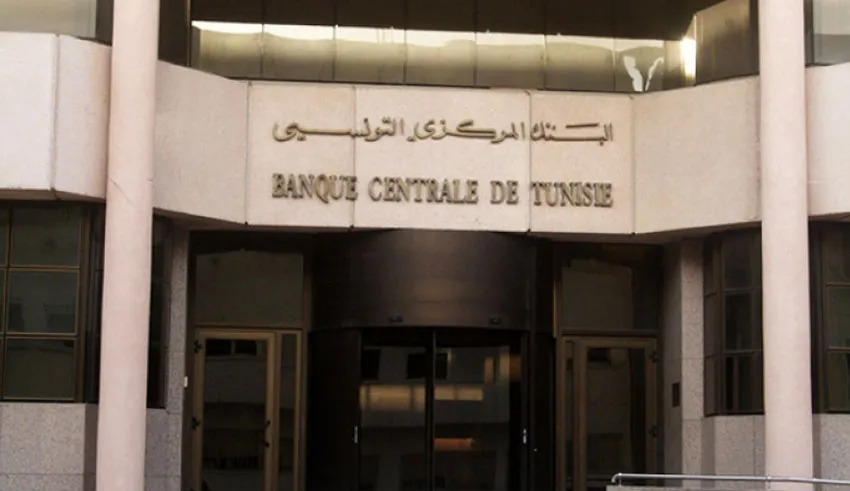
Suffice to say that the current government is in the process of deploying all efforts to avoid an economic sinking, which for some economists promises to be imminent. It is in this context of economic precariousness and instability that the Central Bank of Tunisia (BCT) decided to raise its key rate by 75 basis points, bringing it to 7%. As a reminder, this key rate constitutes, in the various countries, a tool for steering the economy. It mainly corresponds to the interest rate that a central bank, such as the Central Bank of Tunisia (BCT), applies to commercial banks for a loan or an investment of liquidities.
In practice, commercial banks can obtain credit from their country's central bank when they run out of cash and need refinancing. The Central Bank then charges them interest. In contrast, commercial banks deposit cash in the coffers of the Central Bank when they have excess funds. The Central Bank remunerates this placement.
Why did the BCT make this decision at this precise moment? What are the risks for the economic and financial fabric, but especially for households? Tunisians are starting to ask questions, as everything converges towards a fairly difficult next economic phase, especially for Tunisian families who depend on debt, which risks further weakening their purchasing power.
More clearly, commercial banks pass on the rates they charge for their own loans and investments to their customers, which include businesses and households. Thus, the key rates influence the cost of mortgages and other loans as an individual. In concrete terms, if key interest rates increase, commercial bank interest rates also increase, and your loans become more expensive. Conversely, if key interest rates fall, commercial bank rates fall, and the cost of your loans decreases.
In any case, for the BCT, this decision was taken to control the upward trend of inflation in Tunisia. “This rate was raised after reviewing the latest economic and financial developments and aims to counteract the expected inflationary pressures and above all to curb an acceleration of this inflation”, indicates in this sense the press release from the Bank of Banks.
In other words, the decision to increase the key rate comes in order to deal with the continuation of inflationary pressures which represent a risk for the economy and a threat to purchasing power, requiring the taking of appropriate measures to reduce its negative effects. Such a measure also aims to reduce the current account deficit of the balance of external payments. This decision is applicable from yesterday Wednesday, May 18.
Towards double-digit inflation?
The inflation rate continued its upward trend for the fourth consecutive month, reaching 7.5% in April 2022 (year-on-year). The Central Bank of Tunisia confirmed this upward trend or acceleration of inflation to 7.5%, i.e. the highest level recorded since the end of 2018, after being around 7.2% in March, 7% in February, 6.7% during the month of January 2022 and especially 5% in April 2021.
The BCT indicated that this rise in inflation is due to the acceleration in the prices of manufactured products which increased by 9.3% and those of food products by 8.7% (against 4.9% in April 2021 ). We even risk seeing inflation reach double-digit levels in a few months.
According to the indicators of the National Institute of Statistics, in one year, food prices have increased by 8.7%. Ditto for basic necessities, building materials and even for energy, the middle classes are now struggling to do their shopping. Read More…