The Best Filter To Protect Your Camera Lens
-
 Loading...
 - Feng Huang
- 22 Jul 2022
- 93 Views
- 0 Like
- 0 Comment
The best filter to protect your camera lens is called UV Protection Filter (Ultraviolet Filter). The quality UV filters protect your expensive lens from physical damage (scratches, bumps) and have minimal or no effect on image quality.
What Is а UV Filter?
Originally UV filters (Ultraviolet Filter) were developed in film photography days. A UV filter was necessary since the filters blocked unwanted ultraviolet light from hitting the film. The image suffered haziness and fogginess without a UV filter, especially in blue hues.
Since modern digital cameras have built-in UV filters on the sensor level, the need for UV filters is minimal today.
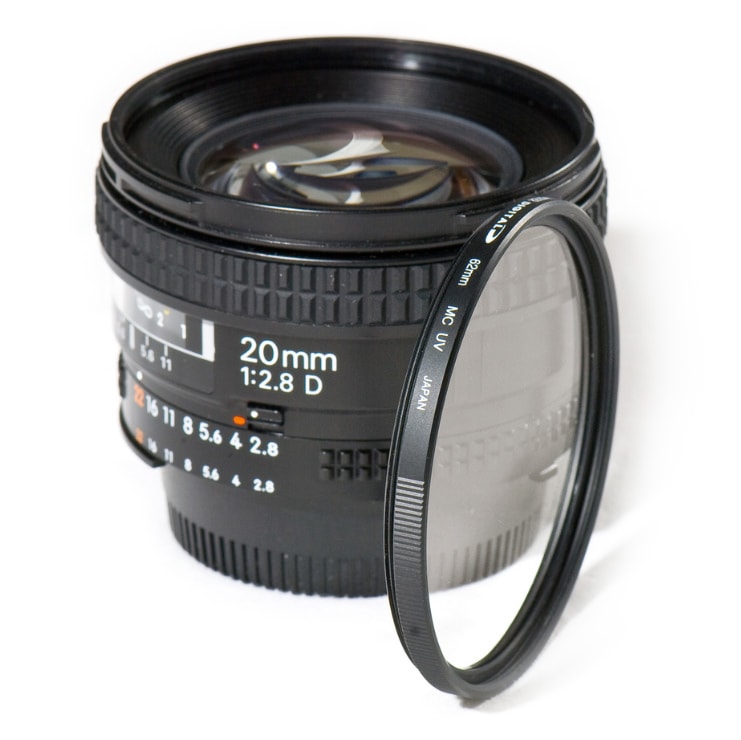
It is a common belief that UV filters reduce chromatic aberration or color fringing, but I have never seen any proof of that with my eyes. Based on my experience, if a lens is poorly built, no filter can correct the color fringing it produces. And if UV filters do reduce chromatic aberration, the reduction is too insignificant to make a difference in image quality.
Today, the only function that UV filters offer is protection. There is very little difference between clear or UV protection filters.
Using UV Protection Filter in Modern Photography
This is often a topic of debate in the photography community because there is no clear consensus about using UV filters for protection purposes in digital photography.
Different photographers approach UV protective filters differently.
We can separate most photographers into three groups depending on how they use UV filters.
· Group 1. Some photographers never use protective or UV filters because they believe that adding an extra layer of glass in front of an expensive, state-of-the-art lens can potentially degrade the quality of the image. We call these photographers “the perfectionists.”
· Group 2. Photographers in the second group use UV protective filters only when necessary. For example, if you attend the Burning Man festival in the desert, you will typically clean the front element of your lens around 100 times daily. The sand and dust can potentially damage your lens.
· Group 3. The final group of photographers is those who immediately attach a UV protection filter when they purchase a lens and never remove it. The logic here is that the risk of damaging the lens far outweighs the minimal degradation in the quality of images and, as a result, is worth it in the long run.
How I Use UV Protection Filters
For a long time, I belonged to the first group of “perfectionists” and refused to use the protective filter. I thought using the lens hood was better to protect my lens from any potential physical damage.
What changed my mind was my frequent travels to the West Coast of the United States. Due to the strong winds along the coast, saltwater mist is always present in the air, even when it is not raining. Constantly wiping the front element of any lens can easily cause damage to its coating, especially when salt residue is present.
At this point, I have UV protection filters for all my lenses, but they mostly stay in my bag. I only use them when necessary. Before hiking along the coast, I always attach the filters to my lenses the night before. And before driving through Death Valley, I also ensure all my lenses are protected with filters.
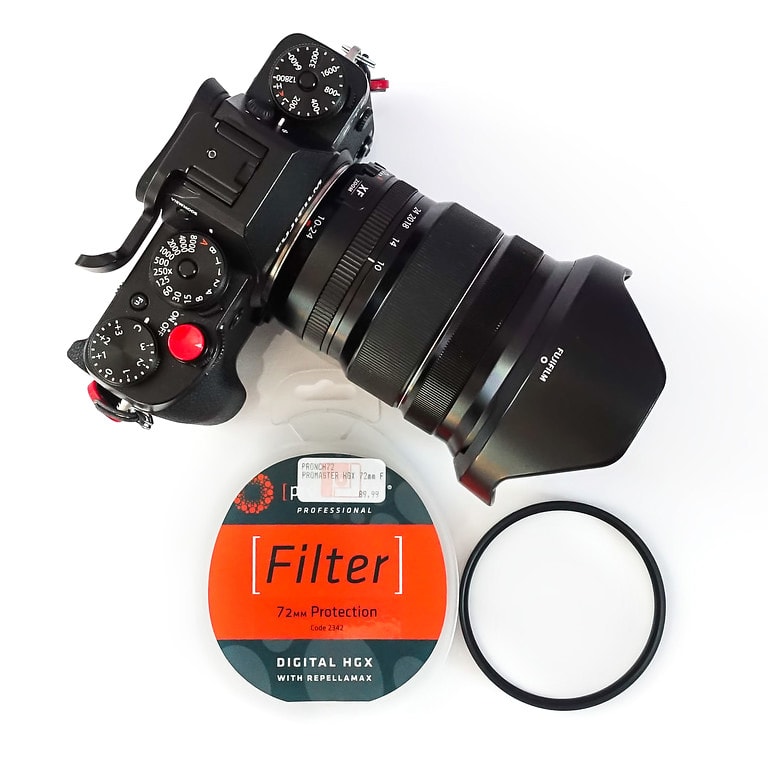
What are the negatives of using UV Protection Filters?
To answer the question about the negative side effects of using protective UV filters, we need to understand the properties of glass in optics. They are light transmission and light reflection. They indicate the ratio of light that comes through glass versus the light reflected by the glass.
As a general rule, the optical flat glass transmits 95% of light, and 5% is reflected.
It means that if you shoot through the optical glass, you lose 5% of light and are at a higher risk of unwanted lighting effects such as lens flare and ghosting.
In practical terms, you should use UV protective filters with the highest transmission and the lowest level of reflection. Read More…