The best places to visit in the Algarve
-
 Loading...
 - Piers Howard
- 25 Oct 2022
- 68 Views
- 0 Like
- 0 Comment
This southern pocket of Portugal also has castles, historic cobblestone centers and sleepy cliff-top villages overlooking wild stretches of coastline. Whether you’re traveling solo, heading off on a romantic getaway or seeking a child-friendly place with lots of activities on offer near the seaside, the Algarve has you covered. Below is a rundown of some top places to visit when planning your trip.

Sagres: best for edge-of-the-world views
The western-most town in the Algarve, Sagres has some of Portugal’s most spectacular scenery. At the centuries-old Fortaleza de Sagres, you can walk to the edge of sheer sea cliffs and watch the waves crashing far below while pondering the daring of Portuguese explorers who headed off into uncharted waters. According to legend, Sagres was where Prince Henry the Navigator founded his school for sailors (cartography, ship design, astronomy and of course navigation) back in the 15th century, ushering in the Age of Discoveries. Even more drama – some say the best viewpoint in the Algarve – lies just a few kilometers north at the Cabo de São Vicente, Europe’s southwesternmost point. There a lonely lighthouse overlooks the jagged wind-whipped cape.
These days, Sagres continues to look out to sea – often in search of great waves owing to the popular surf camps here, or perhaps with an eye toward leaping cetaceans on a dolphin-watching cruise. The village itself is smaller and quieter than towns in the central Algarve, with most of the action happening at terrace bars and restaurants along the main drag of Rua Comandante Matoso.
Faro: best for historical journeys
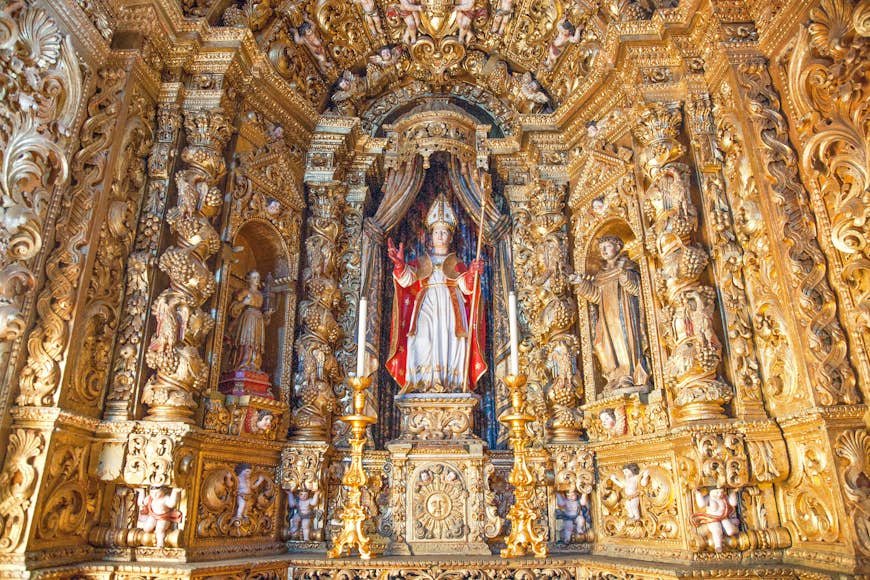
Many travelers fly into Faro and quickly depart for resorts to the east and west. Unfortunately, they’re missing one of the Algarve’s most intriguing towns, with a cobblestone center that’s packed with history. You can feel the hands of time spin backward while entering the walled medieval quarter beneath the neoclassical Arco da Vila. Up ahead the Sé (cathedral) lords over the town. Built in the 13th century (likely on top of a Roman temple), only a few original elements remain – the rest rebuilt in a mishmash of Gothic, Renaissance and baroque styles after the devastating 1755 earthquake. Climb to the rooftop for views over the town, then complete the time travel with a visit to Museu Municipal, a domed 16th-century landmark that was once the epicenter of the Jewish quarter. Read More…