The Best Time to Visit Tanzania in 2023
-
 Loading...
 - Mary Elisha
- 27 Jan 2023
- 67 Views
- 0 Like
- 0 Comment
Nestled on the southeastern coast of Africa, Tanzania provides a vibrant natural environment and fascinating culture to visit on your next vacation. Tanzania lies on the Indian Ocean between Kenya to the north, the Democratic Republic of the Congo to the west, and Malawi and Mozambique to the south.
Folks flock to Tanzania throughout the year for unbeatable wildlife viewing and tremendous hiking, and other natural sightseeing.
While the great outdoors is the biggest draw for tourists to Tanzania, visitors will also enjoy the friendly and welcoming people and local festivals in this African nation. Tanzania holds many amazing things to discover.
This country hosts a busy season and a slower season for visitors to decide if they want to enjoy a bustling trip or a secluded getaway. Like many exotic locations around the world, tourists should review guidelines and considerations before traveling to Tanzania.
Why You Should Visit Tanzania
Tanzania’s tropical climate provides a delightful range of temperatures and climates, depending on the place and altitude you are visiting. Tanzania boasts incredible experiences for every adventurer.
Safaris
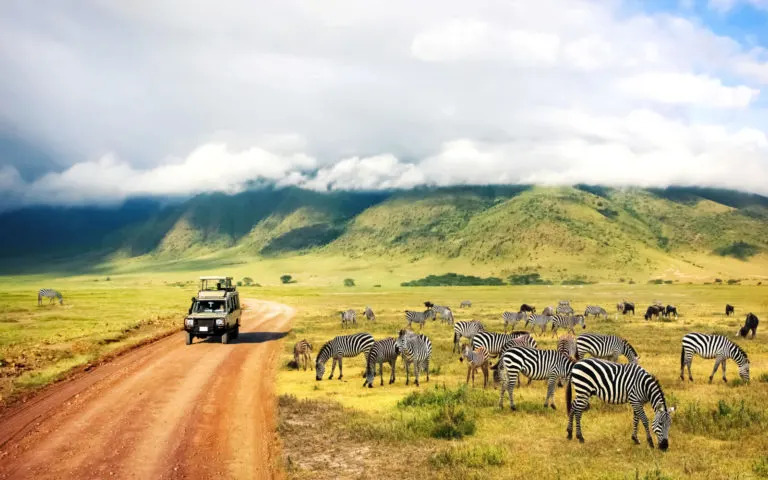
If you have always wanted to go on a safari, Tanzania provides the perfect place. Most of the country consists of 17 game reserves, including three enormous game reserves called the Rungwa Game Reserve, Kizigo Game Reserve, and Muhesi Game Reserve.
In fact, Tanzania is often found at the top of our list of the overall best safaris in Africa!
These three largest reserves make up 17,000 square miles of Tanzania’s thrilling landscape. Game reserves provide protected areas for wildlife and foliage to flourish. This conservation effort is open to the public and does provide opportunities for tourists, with sightseeing safaris.
A dazzling array of animals roam free in these lands, providing an unbeatable chance to see these unbelievable species. Tanzania boasts the ability to see the “Big Five” of the African game: rhinos, elephants, buffalo, leopards, and lions.
In addition to seeing wildlife like elephants, rhinos, and lions, these conservation areas also protect valuable ecosystems. Many of these reserves support several different types of ecosystems.
From grassy savannas stretching as far as the eye can see to dense riverine forests near sources of water, there’s all different types of enviroments. Essential birds, insects, and other small animals thrive in these protected areas and contribute to the health of the overall environment. Read More…