The crab invading the Mediterranean Sea
-
 Loading...
 - Jeremy MOORE
- 05 Oct 2022
- 74 Views
- 0 Like
- 0 Comment
In October 2014, Lotfi Rabaoui was travelling the shallow sandy waters near Ghannouch, a small coastal town in the Gabes Gulf in Tunisia, with a group of local fishermen. Traversing the beds of seagrass and algae, the fishermen made an unusual catch.
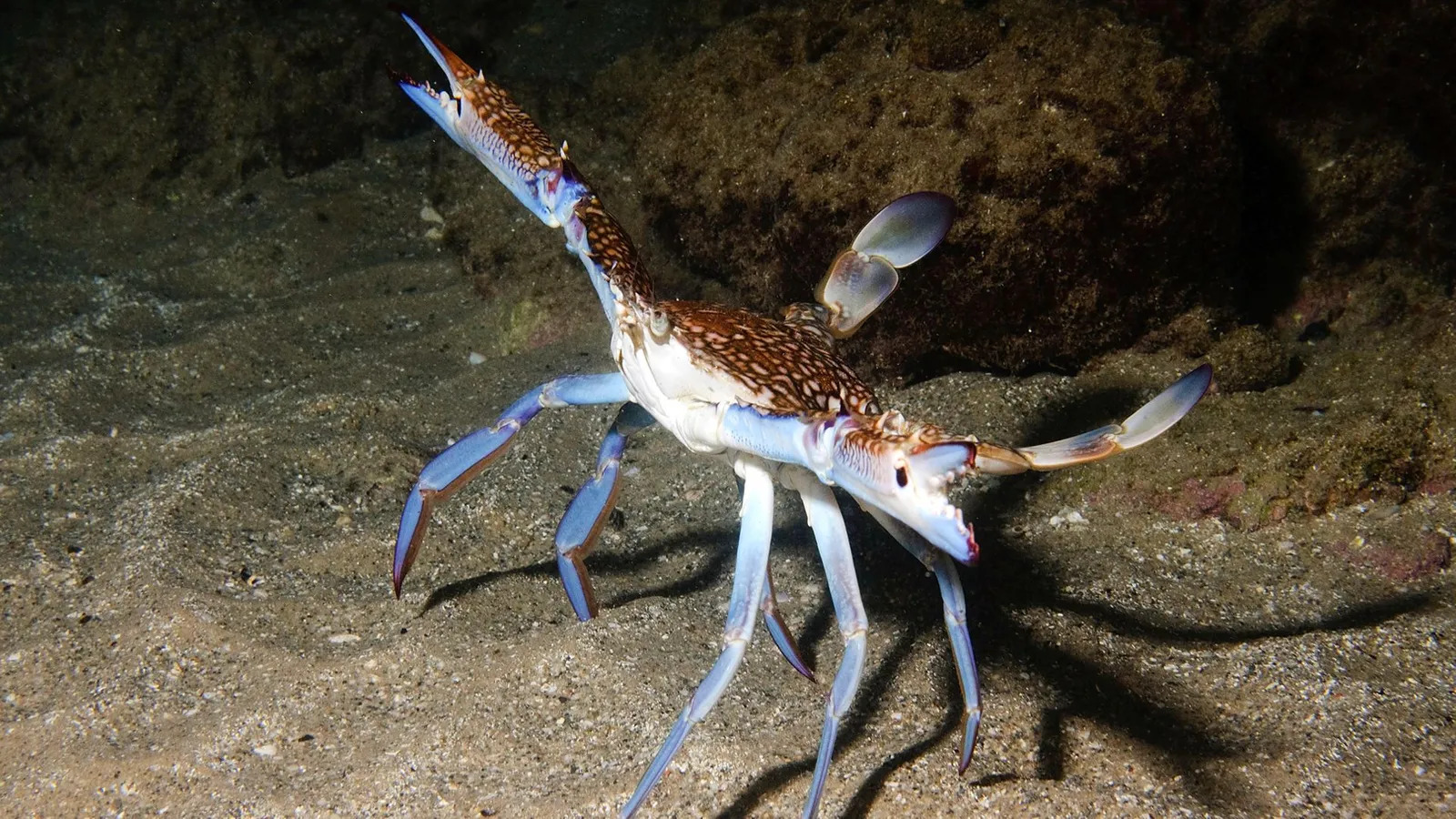
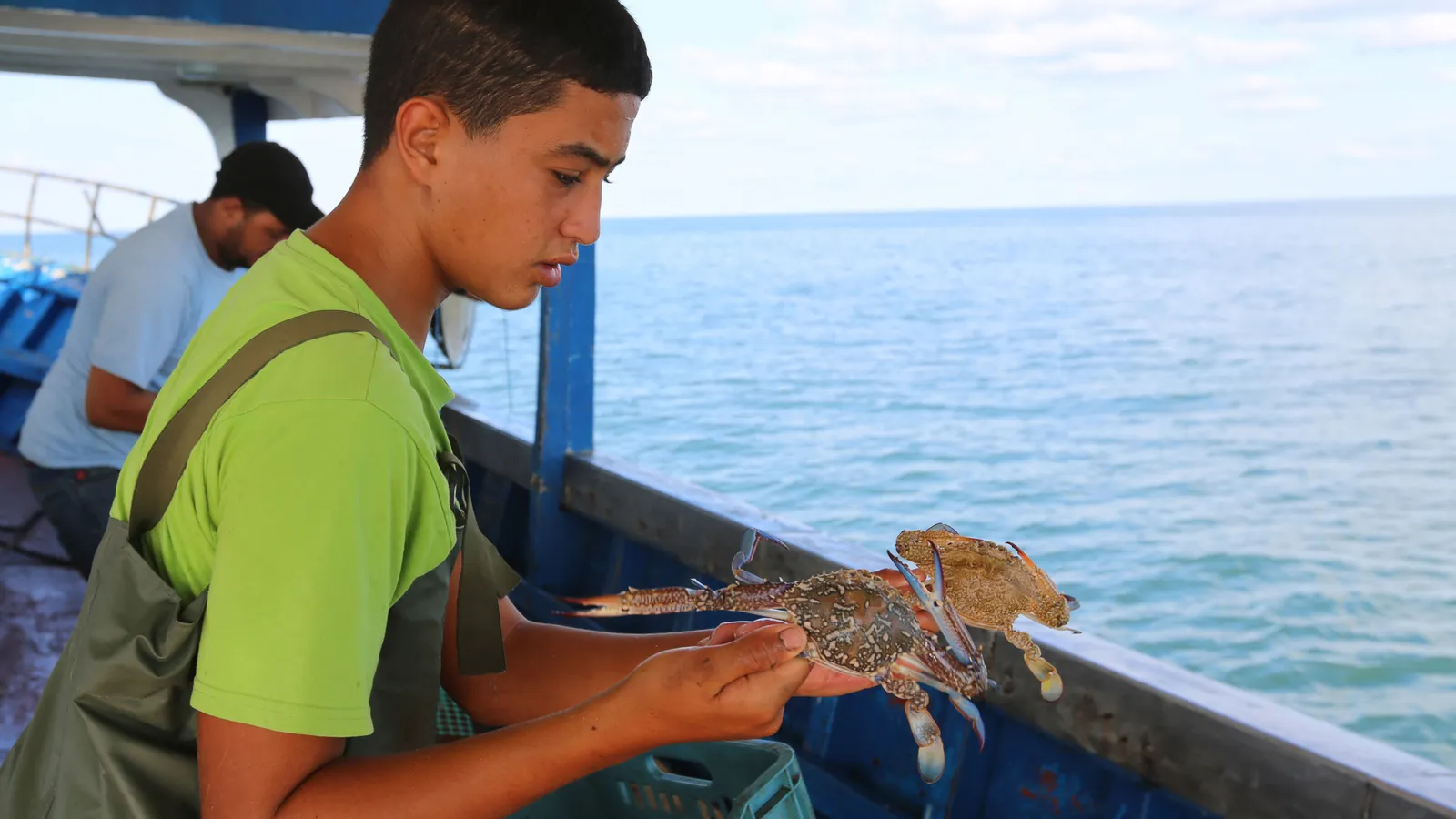
Tangled in their net was a species of crab, Portunus segnis or blue crab, that wasn't native to the region. More remarkable still, was that the fishermen didn't find just one blue crab – their nets had captured 24 of them.
Rabaoui, at the time researcher at the Faculty of Science of Tunis at the University of Tunis El Manar, noted the discovery with interest. Little did he know, however, that a year later this non-native, or alien species would become a national curse.
Soon after, the blue crab population exploded. Hakim Gribaa, a fisherman on the island of Djerba, remembers it as if it were yesterday. "It was panic stations," says Gribaa. "The crab represented almost 70% of my fishing catches and I did not know what to do with it."
The blue crabs were prolific, reproducing up to four times a year with litters of 100,000 per female. This crustacean is "very aggressive", says Gribaa – it destroys nets, and nips fishermen and other fish. The terror the crabs caused was such that they became known locally as "Daesh", the Arabic acronym for the group calling itself Islamic State.
At first, the fisherfolk's livelihoods were overturned. "We were clueless," says Fethi Naloufi, a fishing engineer and head of the Interprofessional Group of Fishery Products in Zarzis, a public organisation responsible for promoting fisheries and aquaculture in Tunisia. Even disposing of the crab bycatch became a challenge. "They remained piled up in the port, or they were thrown back into the sea," says Naloufi.
The blue crab has upended Tunisia's fishing industry in more ways than one. But after the initial shock, it has now become one of the region's most sought-after seafoods.
The blue crab originates in Indo-Pacific waters and reached the Mediterranean Sea in 1898, around a decade after the Suez Canal opened. Since then, the crustacean has been recorded in various areas in the Mediterranean, from the Levantine basin up through Sicily, spreading according to environmental conditions, its migration capacity and shipping activities.
"As for many invasive species, the proliferation of the blue crab has intensified with the warming of surface waters due to climate change, and with the increase of maritime traffic," says Jamila Ben Souissi, a researcher on biodiversity and climate change in the Mediterranean and member of the Mediterranean Science Commission. Read More…