The Food You Must Try in Alaska
-
 Loading...
 - Thomas Bourgeois
- 12 Apr 2022
- 318 Views
- 0 Like
- 0 Comment
While Alaska might not be San Francisco or Paris, you’ll find that the Last Frontier offers many unexpected delights to lovers of food and drink. The pristine North Pacific Ocean produces a bounty of seafood unmatched just about anywhere else in the world, while the near endless daylight combines with rich glacial soils to yield remarkably tasty fruits and vegetables. Local chefs and brewmeisters—often single entrepreneurs or mom-and-pop teams—serve intriguing meals and beverages in venues scattered across the state, creating a cuisine that’s uniquely Alaskan.
Here’s our list of the foods and libations you should try—and where you can find them!
Seafood
Alaska is one of the last, best places in the world to sample—and savor—wild-caught seafood. And, with strict federal and state management ensuring sustainable harvests, this dining experience is guilt-free. Alaska salmon, in particular, is abundant and healthy, if not an outright “superfood.”
Chinook Salmon
The largest species of Pacific salmon and Alaska’s state fish, Chinooks (or kings) can range up to three feet long and weigh 25 to 60 pounds (the record is 125 pounds). Alaskans love the size and strong flavor, eating them as fillets or steaks and cooking them over charcoal or open flame. The oily red flesh has a tender, melt-in-your-mouth quality, with Copper River kings almost fudge-like in consistency.
Kings return May through July, but are most commonly available in June. Most dinner-oriented restaurants will serve king salmon throughout the commercial fishing season and into winter. You can also find them sold fresh in grocery stores and specialty seafood retailers. Kings will probably be the most expensive fish on most menus, sometimes hitting $30 to $50 per pound for fresh fillets.
Sockeye Salmon
Sockeyes are Alaska’s go-to meat fish—the most commercially important salmon in Alaska, with 20 million to 30 million of the 4- to 10-pounders caught each year. Thousands of Alaskans and visitors target sockeyes with rod-and-reel and personal-use nets.
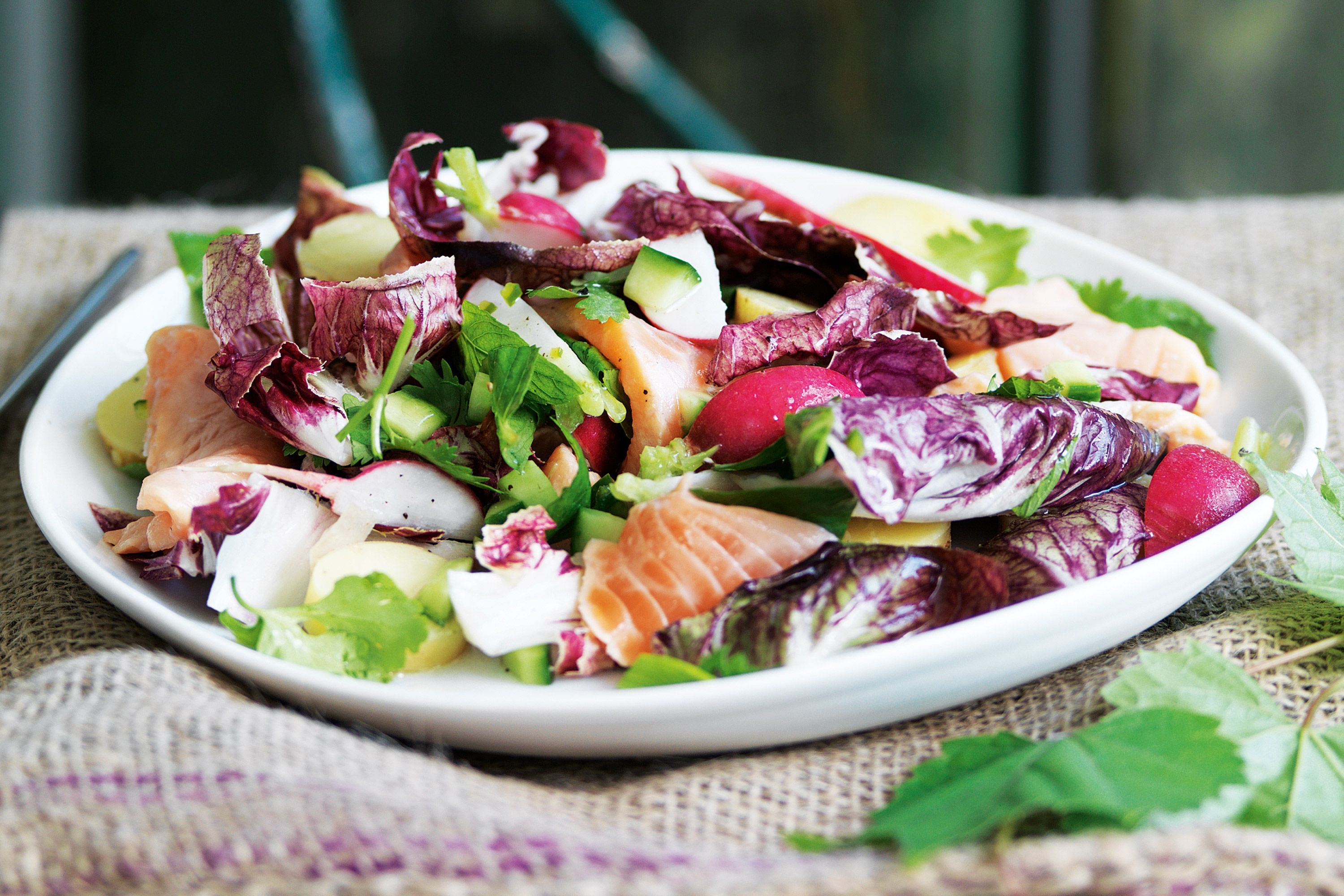
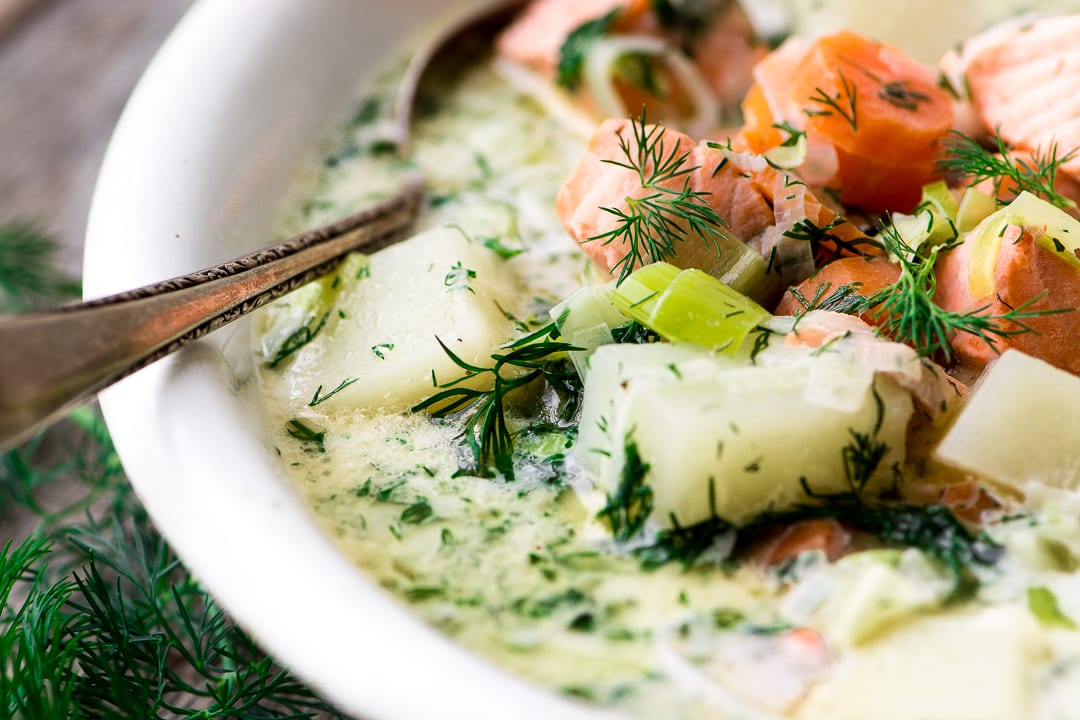
Sockeyes are rich and meaty, with a firm red flesh and a medium flavor that’s filling and satisfying. An Alaska staple for summer backyard grilling over open flames, they can also be baked, poached, seared, and smoked, with leftovers used in chowders, soups, cakes, and salmon salad.
Sockeyes run June through August, with July being prime time. Many dinner-oriented restaurants will serve sockeyes beginning in July. You can also find them sold fresh in grocery stores and specialty seafood retailers. After the season ramps up, you can often find fresh fillets selling at bargain prices in grocery and warehouse stores.
Coho Salmon
A popular sport fish known for its fight when hooked, coho (or silver) salmon return to Alaska's rivers from July to October, with the largest concentrations in August and September. While not as commercially important as sockeyes, and also not known for returning in the same dense concentrations, the 8- to 12-pound fish are the most sought-after salmon during the second half of the fishing season.
Cohos have a more delicate and subtle flavor than sockeyes or kings, with the flesh a bit more orange-red than bright red. They're prepared in the same ways as sockeyes—most often grilled, but also baked, seared, and poached. Some Alaskans argue they hit that just-right sweet spot for taste and texture.
You can find them fresh from July to September, with August as prime time. Many dinner-oriented restaurants will serve cohos beginning in late July or early August. You can also find them in grocery stores and specialty seafood retailers, often at about the same price as sockeyes.
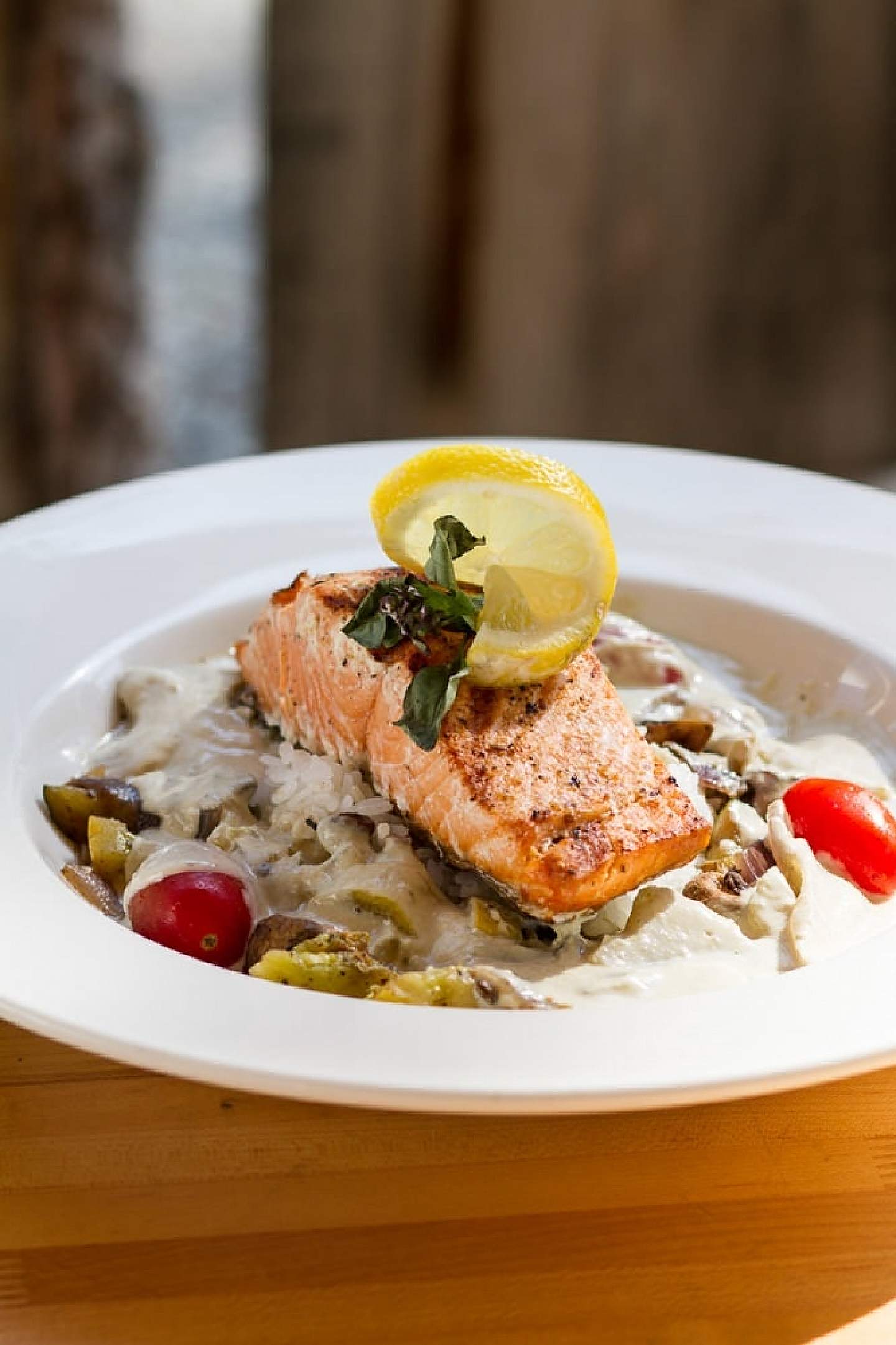
Pink Salmon
The smallest Pacific salmon, usually weighing 3 to 7 pounds, pink or humpy salmon converge on rivers and estuaries in vast numbers, dwarfing the catch of all other salmon combined. Male pinks develop a distinctive hump and hooked jaw when spawning (hence the “humpy” nickname.) They're easy to catch with a rod and reel.
While a staple of the canning and seafood products industry, pinks are not known for the same rich, oily flavor found in kings, sockeyes, and cohos. With soft, pink flesh and a trout-like presentation, pinks usually don’t make it onto any restaurant menu, unless as an ingredient in salmon cakes or chowder.
But if caught ocean-fresh before they've begun to morph, pinks are definitely worth grilling, perhaps well-seasoned with a spicy rub. Many Alaskans smoke pinks with tasty results. Don’t hesitate to try canned pinks for salmon salad, chowders, and soups.
Chum Salmon
These feisty, 10-to-15 pound salmon have the largest range of any Pacific salmon, returning to rivers throughout Alaska from July into the fall months. Along the Gulf of Alaska coast, chums (or dog salmon) often spawn in the intertidal reaches of streams, usually intermixed with returning pinks. But some chum populations swim more than 2,000 miles up Interior and Western Alaska rivers, where they've long been prized as a traditional dried winter subsistence food for people and dogs.
Many Alaskans don’t eat them. The pinkish-white flesh is generally not oily and lacks the irresistible flavor you’ll find in king, sockeye, and coho fillets. However, some chums that make long-distance migrations have evolved exceptionally high fat content, probably to sustain them on their 1,000-mile-plus spawning migrations. When caught commercially, these are marketed as “Keta” salmon and can rival sockeyes and
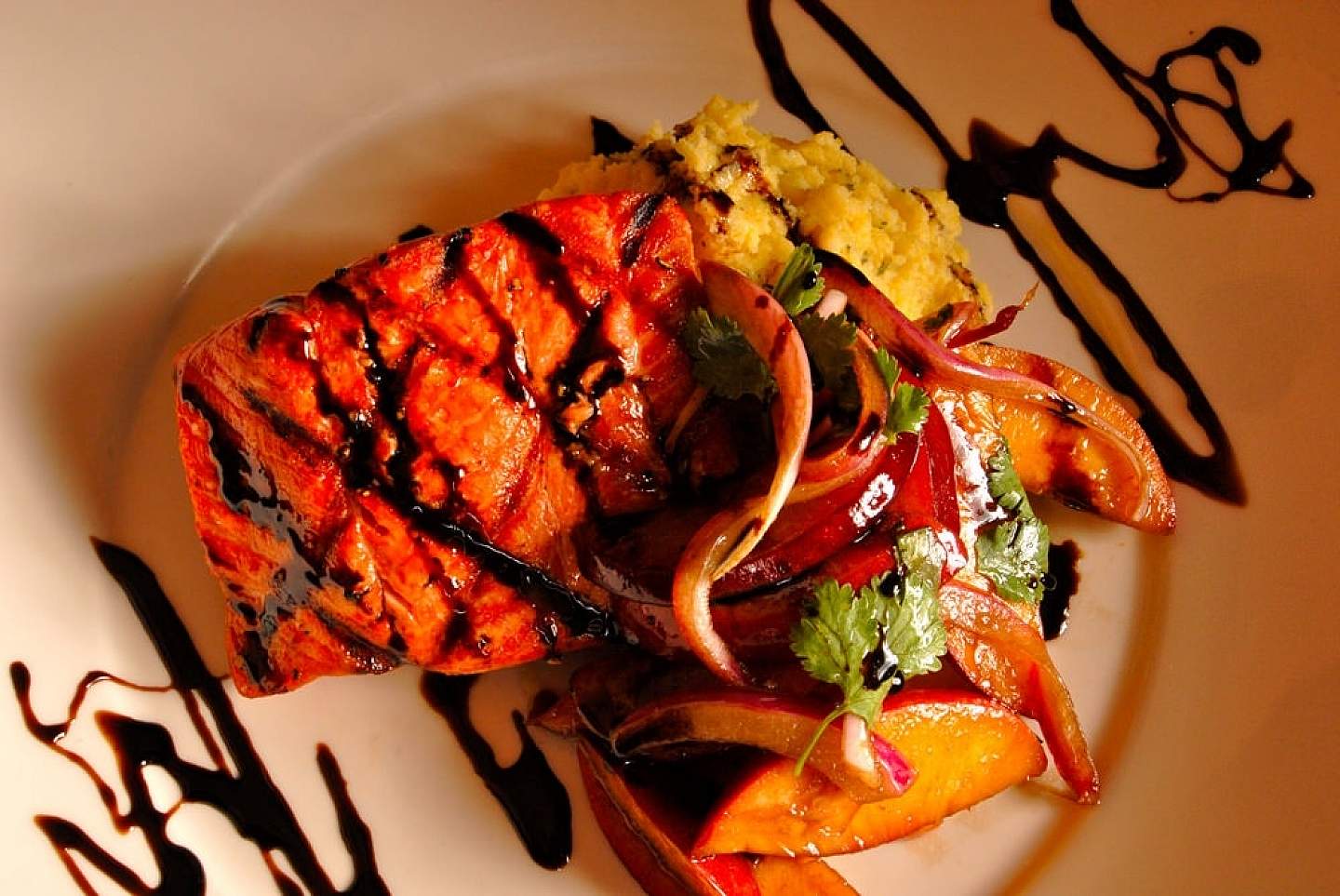
rs. For a particularly fun meal, try halibut deep fried in beer batter—basically Alaska’s version of boardwalk fish-and-chips. If you’re a purist, go for an expertly grilled fillet that's lightly seasoned. It can be as good as it gets.
Available fresh from spring to fall, with summer months as prime time. Many dinner-oriented restaurants serve halibut year-round. You can also find them in grocery stores and specialty seafood retailers. Depending on the catch and timing, halibut fillets can be relatively expensive, comparable in cost to Chinook salmon. Watch for bargains in grocery and warehouse stores in June and July.
Rockfish
Yelloweye and black are two of Alaska’s 37 rockfish species—deep-swimming fish that stick close to reefs and other underwater structures. Usually caught as by-catch by commercial halibut vessels, rockfish are also targeted by anglers on deep-sea trips. There are conservations issues that make it important to know which type of rockfish you’re catching. Certain species must be carefully handled and released at depth or they will die. (Catch-and-release fishing is not recommended.)
Rockfish meat is white, with a flaky texture and a mild, sweet flavor—considered a treat by many Alaskans. They're often baked, poached, or broiled. Though not as common as halibut, rockfish show up on menus from spring to fall, with summer months as prime time. Many dinner-oriented restaurants and specialty seafood retailers sell them year around, often at prices comparable to sockeye and coho salmon.
Pacific Cod, Black Cod (Sablefish), and Lincod
These three groundfish species (only one is a true “cod”) are denizens of the deep ocean off Alaska’s coast. Pacific cod and sablefish will make appearances on restaurant menus, and are usually taken by commercial boats operating far offshore. Lincod—ferocious predators that are fun to catch—are a favorite target by anglers, often while pursuing halibut.
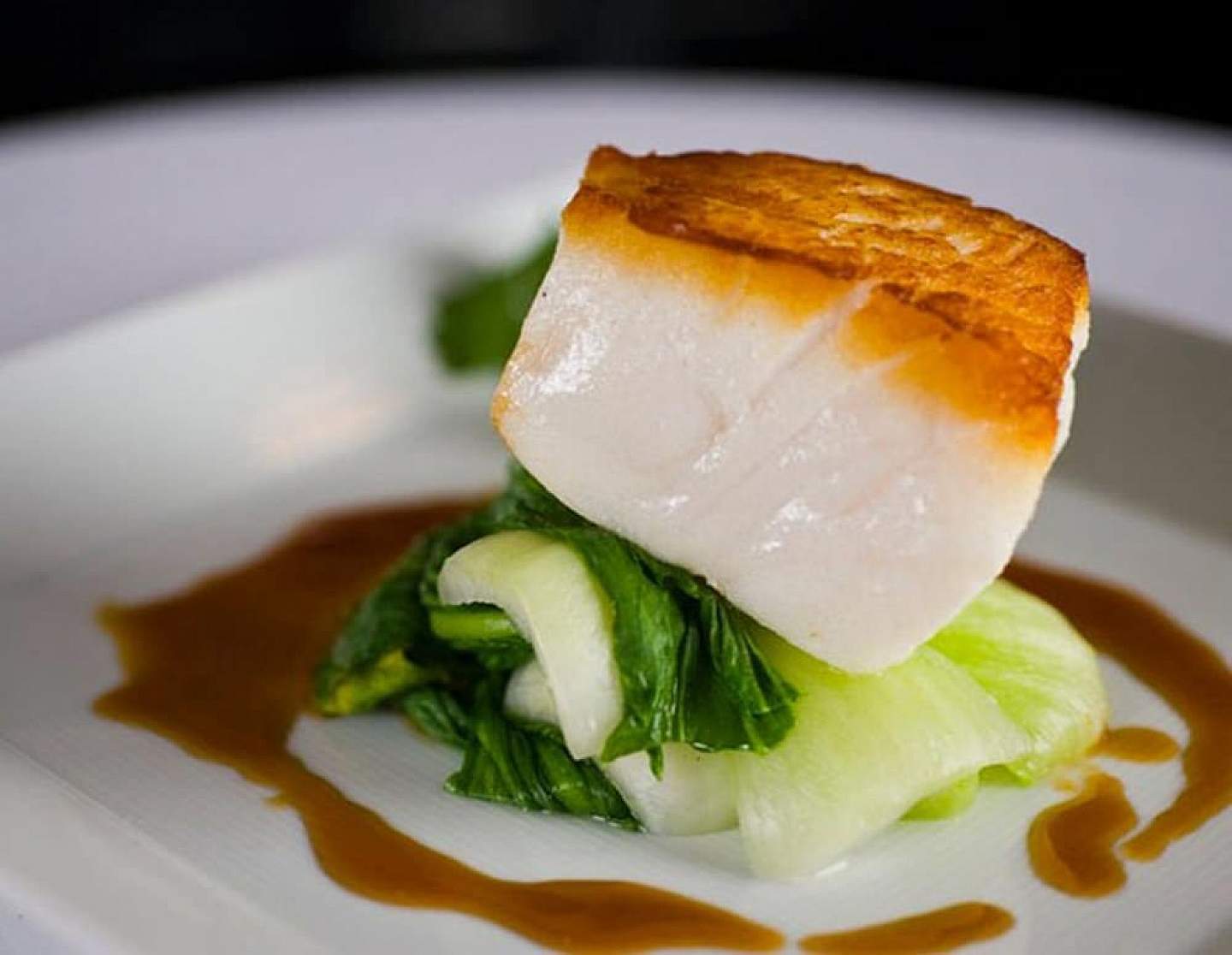
They all exhibit a white flesh with a mild flavor. Pacific cod (the true cod) meat is flaky and light, often deep-fried for fish-and-chips—inexpensive and widely available in grocery stores. Sablefish (or blackcod) are more buttery and rich tasting, considered almost exotic, with prices that rival those for halibut. Some dinner-oriented restaurants serve sablefish, and they can be found irregularly in grocery stores and specialty seafood retailers for a premium. Lincod presents similar to halibut, just as tasty if perhaps a bit softer, and is not generally available in stores or restaurants.
King Crab
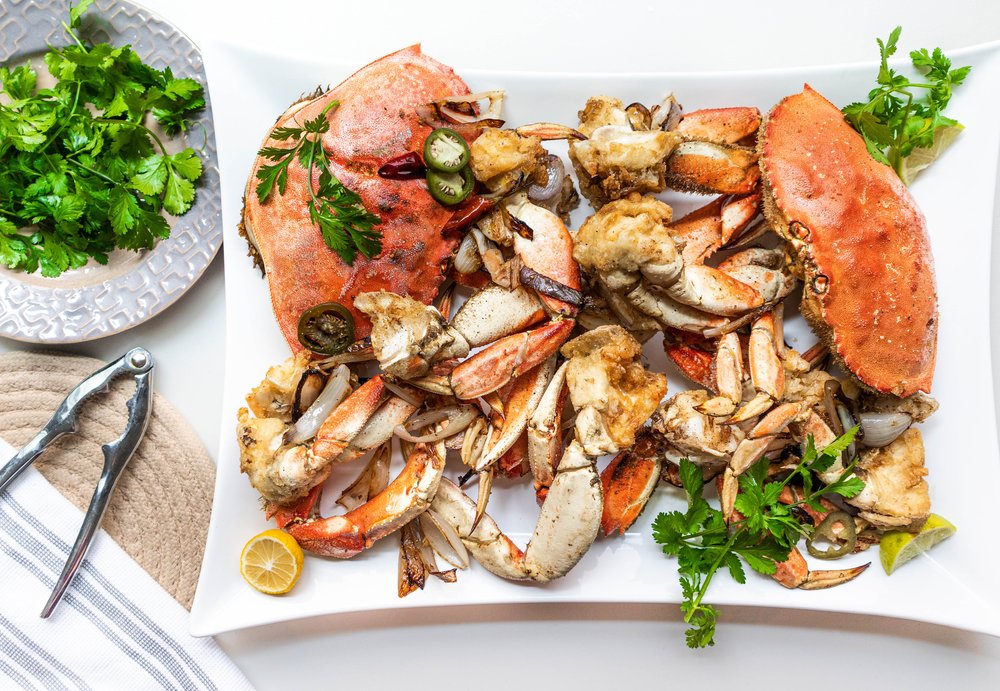
Alaska king crabs are an authentic world-class delicacy, not to be missed. They're harvested with pots from the deep waters of the Bering Sea and Southeast Alaska, often with some risk and significant expense. The three commercial species—blue king crab, red king crab, and golden king crab—are 10-legged crustaceans that scavenge and hunt across the sea floor. They sport a pair of large claws (the right one is usually biggest) and three pairs of powerful legs with meat within the shells. After cleaning, the crabs are steamed and then served broken in half or with the large legs and claws as separate pieces. Read More...