The housing crisis in urban Tanzania
-
 Loading...
 - Gladness Amiri
- 16 Sep 2022
- 473 Views
- 0 Like
- 0 Comment
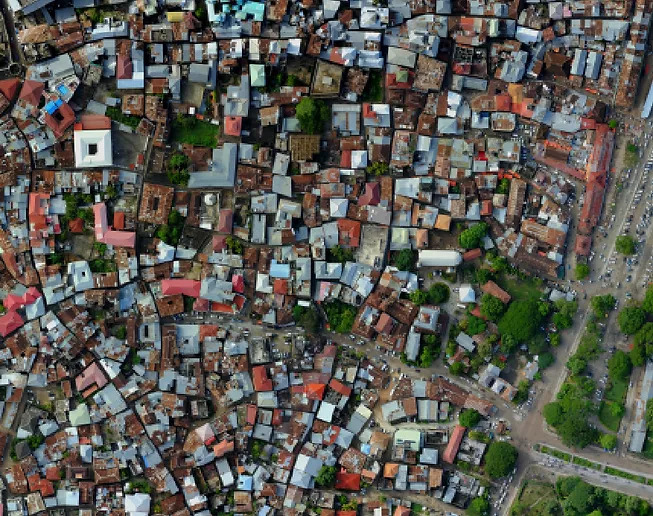
Tanzania is urbanising at one of the fastest paces in the world, and that comes with its own challenges in terms of housing for the low-income market.
This challenge is not being discussed enough, and, as Albert Nyiti, assistant researcher at Ardhi University, and Mariam Genes, a PHD candidate, recently established in a study published in Iglus, our beautiful language Kiswahili may have some thing to do in the whole issue of inadequate housing in Tanzania.
A drive around the countryside of Tanzania will show incredible evidence that rapid urbanisation is going on, and that what is missing is structured financing to support this pace.
It is not too far from the truth to note, as Nyiti and Genes found out, that our cultural trait including Kiswahili may well be at the centre of the problem of lack of affordable, well-planned structural housing to meet the needs of the citizens.
In Tanzania, it is not uncommon for random people one meets in social gatherings, including weddings, bars and sports gatherings, to conclude, when they ask where one resides that, “Ohh Umejenga Makongo Juu” to mean every man (worthy the moniker man), must have constructed a house for his family.
It is seen as a rite of passage and anyone who is still living in a rented house at a certain age is seen as a failure. Such terms as baba mwenye nyumba (man who owns a house), have become common place and determine how the society looks at one.
Global and continental statistics all point towards a housing deficit which then brings us to the questions, how do we deal with the rapid urbanization Tanzania faces and in the same deficit how do we confront the genie in the bottle, that of lack of adequate structure finance that can provide affordable housing to meet the growing deficit?
If we continue in the same trajectory, we are allowing growing roots of corruption to capture the body politic f a nation as young as Tanzania is because every young person, in their millions dreams of owning a house but a huge percentage do not have the means.
The ideal of an affordable house does not just end with a roof over one’s head. It includes the fact that the house (nyumba) is part of many in a well-planned housing area (makazi bora) there goes Nyiti and Genes findings in this subject matter. Read More…