The Ineffectiveness of Thai Education Reform: A Disappointing Outcome
-
 Loading...
 - Noi Wanchai
- 16 May 2023
- 73 Views
- 0 Like
- 0 Comment
The long-standing issue of low-quality education in Thailand has been a matter of concern for the nation for many years. Numerous attempts have been made by individuals in the education sector to bring about reform, particularly by introducing a competency-based curriculum at the primary and secondary levels as an alternative to the outdated content-based curriculum that has been in place for the past 15 years.
In October 2021, the Ministry of Education announced the timeline for the nationwide implementation of the new system, with plans to introduce it in the first semester of 2022 in schools that were adequately prepared. This announcement filled many people with hope and enthusiasm, as they eagerly anticipated the opportunity to try and test this new curriculum.
However, just 11 days before the start of the first semester in 2022, Deputy Prime Minister Wissanu Krea-ngam delivered an unexpected blow by informing reporters that the government had decided to cancel the launch of the competency-based curriculum. According to the deputy prime minister, the decision was made because changing the curriculum at this time would have significant implications for the publication of textbooks and would place an additional burden on teachers, parents, and students during the challenging economic conditions. The cancellation meant that all the preparations and efforts made by teachers and schools across the country went to waste, leaving them unsure of how to react to this sudden change.
The nullification of the competency-based curriculum was a great disappointment to many individuals involved in education, including Patchanan Khongwanitkitjaroen, the Founder of Genius Education Social Enterprise. She highlighted that the cancellation of such a significant national-level change, which had been in the works for years, was a setback. Teachers had undergone extensive training, and schools throughout the country had invested considerable efforts into preparing for the new curriculum. The sudden justification given for the cancellation, which revolved around avoiding the need to change textbooks, seemed illogical and left everyone feeling bewildered.
Competency-based curricula have been adopted in many countries as an effective approach to learning for students. Unlike content-centric education, competency-based education prioritizes the application of skills, knowledge, and abilities by learners. In Thailand, the core competencies of the competency-based curriculum include self-management, critical thinking, communication, management and teamwork, citizenship, and sustainable coexistence with nature and technology. Implementing a competency-based education system also offers solutions to various challenges faced by the current education system. By reducing the number of learning indicators, this approach streamlines the learning process and eases the burden of excessive paperwork on teachers.
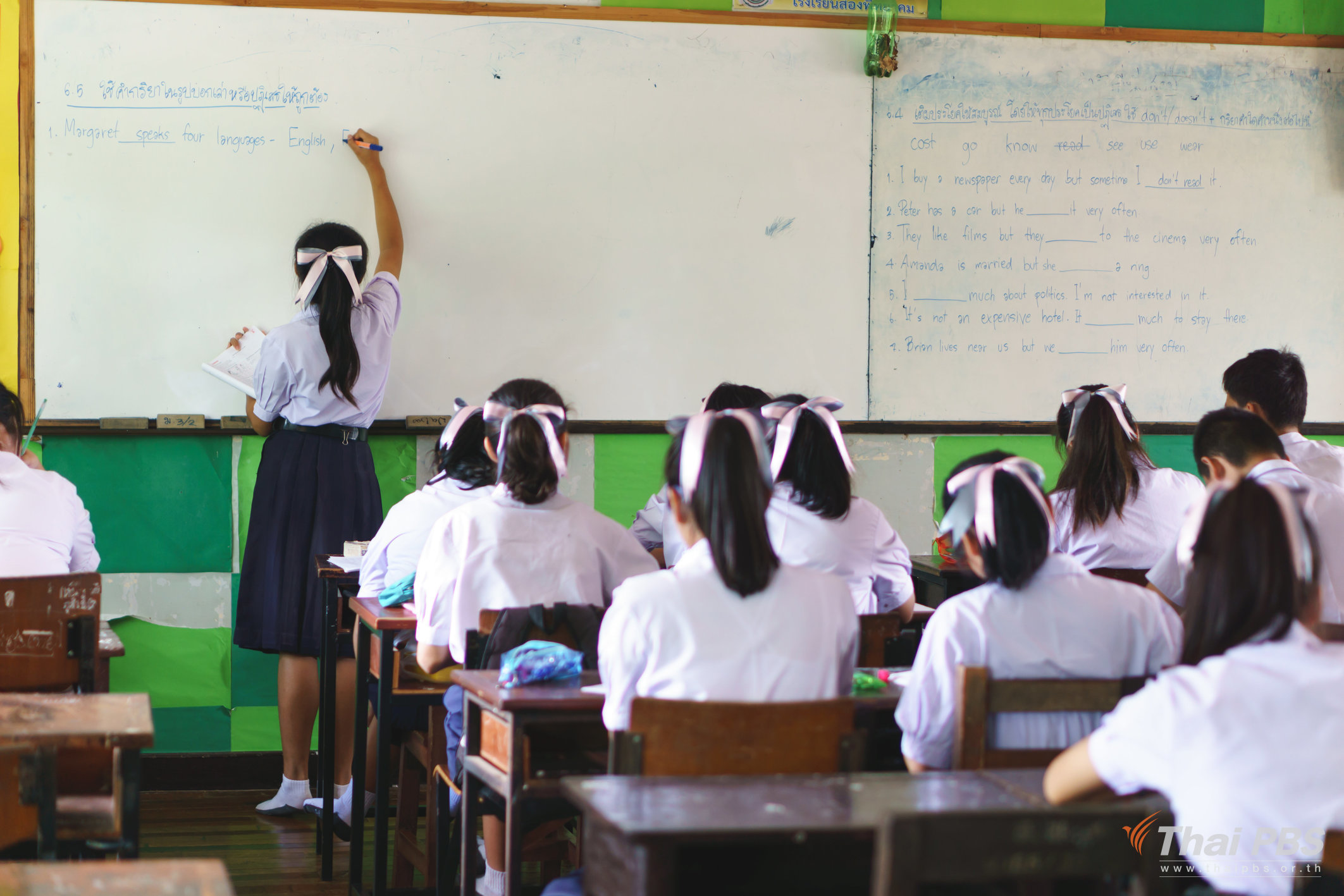
Patchanan emphasized the shortcomings of the traditional learning approach, which primarily focuses on rote memorization. With an extensive list of 2,000 learning indicators and thousands of lessons, students are expected to complete them without understanding their practical application. The children end up reciting textbook content in the classroom solely for examination purposes, lacking the ability to apply that knowledge in real-life situations. Competency-based education provides a clear solution to this problem. It shifts the focus from exam-oriented learning to practical application, emphasizing hands-on experience and the connection between skills, information, and real-life scenarios. As a result, classroom hours dedicated to theoretical subjects and academic lessons, as well as the reliance on textbooks, are reduced.
Deputy Prime Minister Wissanu Krea-ngam also mentioned the implementation of active learning in all state schools. He described active learning as an approach where students are actively engaged and participating in the learning process. In this method, teachers act as facilitators, creating an environment that stimulates children's cognitive abilities. However, Wissanu admitted that he had little understanding of what competency-based education truly entailed.
Woravut Suksatit, a Social Studies Teacher, explained that active learning should not be mistaken for physical movement or mere participation in activities. True active learning occurs when students engage with the subject matter, whether it involves listening attentively to the teacher or delving into topics that promote cognitive and advanced thinking.
For example, a teacher may share a philosophical or highly logical thinking story, and the students, while listening and nodding, actively stimulate their brains to develop advanced thinking skills. Therefore, it is crucial to have a clear understanding of what active learning truly entails.
Fifteen years have passed since the implementation of the Basic Education Core Curriculum in all state schools. While some subjects, such as science, mathematics, and geography, received minor adjustments in 2018, the majority of lessons and learning indicators remain outdated, failing to equip our children with the essential skills necessary to navigate the rapidly changing world.
According to Teacher Woravut, the current curriculum falls short in preparing children for the future, necessitating a change. Many education experts believe that the delay in implementing the competency-based curriculum and the persistence of an outdated curriculum can be attributed to political influences within the Ministry of Education and the influence of powerful lobbyists representing large textbook publishers.
In an attempt to find the best solution, some middle-class parents opt to send their children to alternative schools. These schools offer a departure from the antiquated learning approaches that may not provide the expected benefits for their children. However, the number of alternative schools remains limited in comparison to mainstream schools.
If Thailand's education system continues to produce unskilled laborers due to its inadequate and unequal structure, the country will struggle to escape the middle-income trap and meet the demands of the labor market.
It is high time for a comprehensive overhaul of Thailand's education system, taking into account the principles of competency-based education and active learning. The focus should be on equipping students with practical skills, fostering critical thinking and effective communication, promoting collaboration and responsible citizenship, and nurturing a sustainable coexistence with nature and technology.