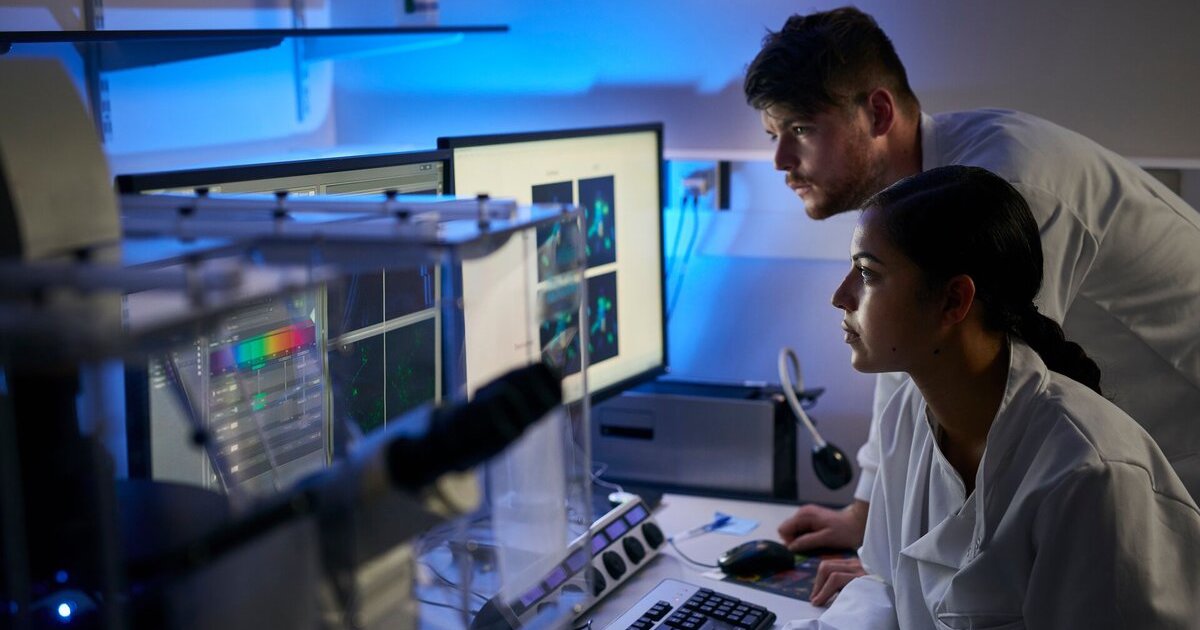
The institute has been able to complete a typical sequencing workflow 6.5 times faster using the Lenovo GOAST system.
-
 Loading...
 - Brinda Varma
- 19 Oct 2022
- 65 Views
- 0 Like
- 0 Comment
India's CSIR Institute of Genomics and Integrative Biology, a research institute under the Council of Scientific and Industrial Research, has tied up with Lenovo to accelerate cancer research using a high-performance genomics analytics infrastructure.
Under their partnership, CSIR-IGIB will use the Lenovo Genomics Optimization and Scalability Tool (GOAST) featuring second-generation Intel Xeon Scalable processors to power in-depth genomic sequencing workloads. According to Lenovo, GOAST leverages an optimised architecture and open-source software to offer a "GPU-level performance at CPU-level cost".
The institute has adopted a 28-node system, making it the largest site for GOAST in India and Asia-Pacific to date.
WHY IT MATTERS
CSIR-IGIB is involved in human genetics research that seeks to identify genetic disorders, characterise mutations that drive cancer progression, and track disease outbreaks. In genetic sequencing, computing speed and scale are important, said former Director Dr Anurag Agrawal.
It is the institute's goal to help its researchers analyse more samples faster by adopting a high-performing technology.
Since using Lenovo GOAST, CSIR-IGIB has seen a "significant performance impact' for both whole genome sequencing (WGS) and whole exome sequencing (WES) workflows. "On latency runs—where all resources of one node are assigned to executing a single job—the institute can complete a typical WGS and WES workflow 6.5 times faster," it explained.
"The higher computing throughput and capacity delivered by Lenovo GOAST is helping accelerate the pace of research and increase our output, thereby helping us drive scientific progress that makes a real impact on people’s health and lives," Dr Agrawal commented.
Furthermore, sustaining a more rapid pace of research will enable CSIR-IGIB to push further scientific work, driving breakthroughs in understanding diseases like cancer and finding better treatments that improve patient outcomes and save lives. Read More…