The key drivers for having more women work outside the house in Guatemala
-
 Loading...
 - Lara Vossen
- 06 May 2022
- 302 Views
- 0 Like
- 0 Comment
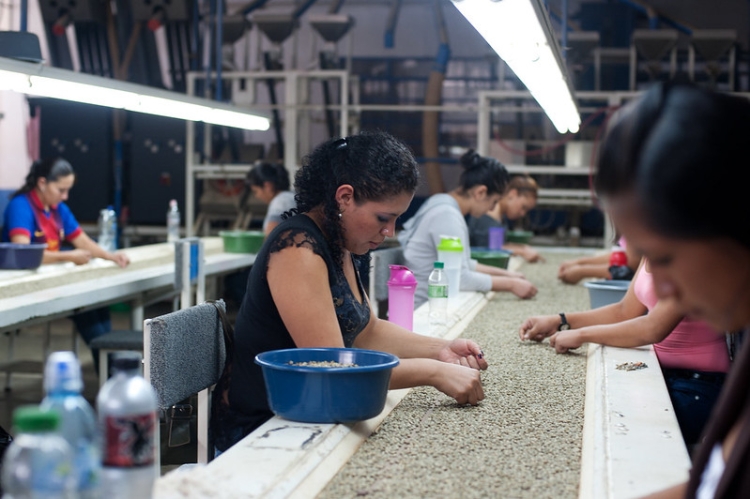
Only 1 out of every 3 women of active working age are either working or looking for a job in Guatemala, while the remining ones tend to work solely at home. This is, by far, one of the lowest rates in the Latin America and the Caribbean (LAC) region. It’s even one of the lowest in the entire world!
This under-utilization of female labor poses a huge cost to the country’s growth rate and, obviously, for its inclusion and socio-economic outcomes.
The number of women in the labor force is even lower in some of the poorest areas of the country, with only 1 out of 10 women working outside their home. In contrast, the participation rate of women in Guatemala City goes all the way to 54%.
The low participation rate is even more shocking as Guatemala had a solid economic trajectory over the last two decades. Between 2002 and 2018, nationwide participation of women in the workforce rose only from 26% to 32%. Yet, during this period, Guatemala made solid progress on many fronts. Economic growth averaged 3.5% compared with only 2.7% in LAC region. Women became more educated, with female completion of lower secondary education increased from 28.2% in 2000 to 55.2% in 2018. Women also got married later in life and had fewer children, as the number of births per woman declined from 4.6 in 2000 to 2.9 in 2018.
Now, how can women in Guatemala become more empowered to work outside the house? How to level the playing field for women in the workforce?
Recent World Bank analysis documents what many of us would be inclined to intuit: female participation is greater as the labor market is more dynamic and jobs are of higher quality. Women will be more encouraged to search and work outside the house if the local labor market presents greater and better opportunities.
Yet, there are other drivers for female participation in the labor market.
The key role of societal attitudes and public policies
We look especially into the drivers related with household characteristics, social norms and attitudes towards women at home and in the community, and social public policy.
Our research shows that existing social norms and societal attitudes towards women remain key drivers of the low female participation in the workforce:
- Women living in households, and in regions, with more gender-balanced societal norms tend to be more encouraged to participate.
- Participation in employment outside the house is higher when women actively participate in making decisions side-by-side with partners and other household members. This suggests that empowerment in the household reinforces self-confidence and encourages participation of women in employment opportunities outside the house.
- We also find that female workforce participation is higher when social aspirations on gender parity, measured as the local level of societal agreement with the idea of having gender parity in congress, are higher.
- Women’s participation in the labor market is higher when the rates of intra-family violence are lower, or when the difference in employment rates across men and women is lower. The latter could be perceived as an example of discrimination or bias in labor market which would naturally be a deterrent to women.
Public policies also have great potential to shape women’s incentives to work outside the house. For example, the local availability of public pre-primary schools is strongly associated with higher participation of women in the workforce when they have children aged 4 to 6 years. Similarly, areas with higher health investments have larger presence of women in the workforce that live with older adults in their own households. This suggests that with higher health spending, the home care needs are significantly reduced.
But other findings of the analysis also surprised us! For example, we do not find strong evidence that, all else constant, increased investments on road accessibility significantly change female participation in the workforce. We also do not find that more gender balanced views regarding the participation of women in the judiciary system lead to greater participation rates. The same applies to the presence of women in high-paying public sector jobs, which we thought could play as a visible role model.
Still, the analysis shows that, to level the playing field for women in Guatemala, investments that create good job opportunities are needed to be coupled with sound social public policies and more balanced-social norms. These results gain even more relevance in the context of the COVID-19 pandemic, that disproportionately impacted women’s already limited employment opportunities. Read More...


