The Living History of Colombian Art
-
 Loading...
 - Jorge Valencia
- 09 Sep 2022
- 87 Views
- 0 Like
- 0 Comment
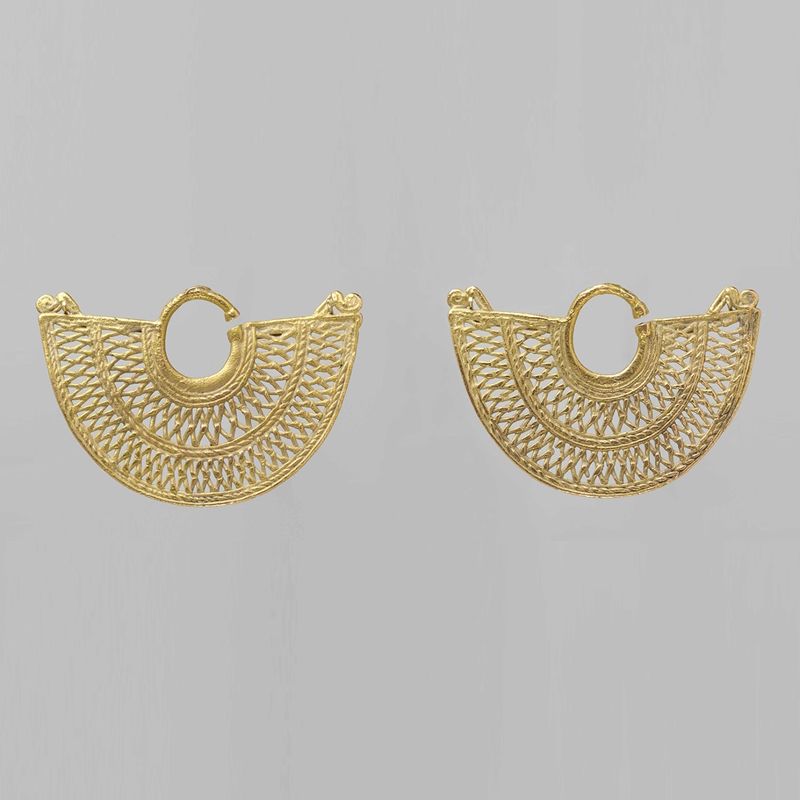
Two years ago, my sister gifted me a pair of earrings. I would later see a nearly identical pair in The Met’s collection of ancient American art: curved half moons with tendrils spread like sun rays and thinly woven metal braids. While my earrings had been crafted by an artisan in Bogotá, the pair at The Met was made thousands of years ago by the Zenú people in the Caribbean lowlands of Colombia. This was the first time I’d seen Colombian art in a museum outside of the country. It was also the day I realized the extent to which contemporary Colombian art and design is inspired by the country’s diversity and past.
After international outlets reported on civil unrest and police brutality in early 2021, I searched The Met’s collection to see what other stories of Colombia the Museum’s art could tell. A quick survey of these objects recall myths of golden treasures, mythological underworlds, and memories of childhood and everyday life. From landscapes to urban scenes, tapestries to golden artifacts, each object reveals a fragment of Colombia’s spirit.
* * *
The first time I saw a painting by a Colombian artist was at a restaurant in Miami. Above the cases of corn cakes, empanadas, and postre de natas hung two framed posters: One depicted a nude woman facing a mirror, her back as wide as the bathroom stall. The second poster reinterpreted the Mona Lisa, her swollen face pleating gently into her neck. I didn’t know the artist at the time, although he’s one of the most famous Colombian artists in the world. Fernando Botero is known for his gordos, or fat figures, and the style Boterismo is synonymous with humor and political commentary. The artist—who grew up in Medellín, trained as a bullfighter, and painted Pablo Escobar along with the drug-related violence of the 1990s—says that he paints the “sensuality of form.” Read More...