The Met Readies to Reveal ‘Kimono Style' Exhibition
-
 Loading...
 - Asuka Chiba
- 13 Jun 2022
- 248 Views
- 0 Like
- 0 Comment
However little or much you think you know about kimonos is surely likely to change after seeing “Kimono Style: The John C. Weber Collection” at the Metropolitan Museum of Art.
Opening to the public Tuesday, the exhibition highlights the artistic exchanges between the kimono and Western fashion through 60-plus examples of the T-shaped Japanese garments, as well as through Western couture, textiles, Japanese paintings, prints and decorative art objects. Just as collaborations reign supreme in fashion, so do they in the museum, as evidenced by the numerous entities — including the Costume Institute, the Departments of Asian Art, Textile Conservation and Scientific Research, among others — that worked together to coordinate the show.
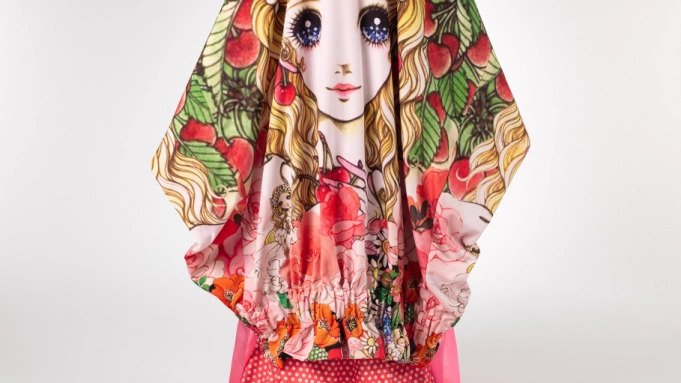
“’Kimono Style’ brings to light “the art of the kimono from a transnational perspective, highlighting the artistic conversations between Japan and the West, and the garment’s continued impact on designer’s around the world,” said Max Holbein, The Met’s Marina Kellen French director. It also celebrates the promised gift of 40 modern kimonos to the museum from the established collector of Japanese art John C. Weber. One defining element of Weber’s collection is the range of “meisen” kimonos, affordable ready-to-wear styles that took hold in the 1920s and drew from Western art. The show also highlights how the transformation of kimonos depicts women’s history and lifestyle, which was not recorded in books during the Edo period (1615 to 1868).
 Japan’s signature weaving, dyeing and embroidery techniques reached their peak of artistic sophistication in that time. Fashion, however, was not then a free choice, due to the military government’s control of society. The use of gold in attire and other pricey techniques were regulated by the Tokugawa shogunate. The samurai topped the social hierarchy, whereas commoners had three levels — farmers, artisans and merchants.
Ruling members of the military class weren’t the only ones selecting intricate kimonos — the merchant class sported them as status symbols. Stretching across 10 galleries, the exhibition highlights how kimonos evolved including during the Meiji period when Western clothing was introduced to Japan.

During a preview Friday, Mónika Bincsik, the Diane and Arthur Abbey associate curator for Japanese Decorative Arts, said one of the takeaways is that “the Japanese kimono is fashion. We sometimes think of these beautiful garments as art, which is true, because they are beautifully made. But also, Japan had a fashion system going back to the 17th century. It isn’t widely known in the West that they were promoting trends, fashionable patterns and colors. If you had a kimono for five or 10 years, it went out of fashion. You needed new ones if you were a high-ranking samurai lady or a wealthy merchant lady.”
Whiile Issey Miyake and Yohji Yamamoto are a few of the international designers inspired by the kimono, the garment’s influence on Western fashion dates back to the 16th century, when Portuguese travelers arrived in Japan and brought back kimonos to Europe, she said. That led to kimono-inspired morning gowns being made, according to Bincsik, who co-curated “Kimono Style” with Karen Van Godtsenhoven.

Over time the Japanese used European wool to make garments and learned such European techniques as producing inexpensive silk, which revolutionized the production of silk kimonos for women at the beginning of the 20th century. European intellectuals were among the first to popularize the loose-fitting, warm and padded garments. Visitors will see numerous examples of how the kimono has been a catalyst to inspire new motifs and silhouettes from such designers as Madeleine Vionnet, Paul Poiret, Cristóbal Balanciaga, Thom Browne, Hanae Mori, Comme des Garçons and John Galliano for Maison Margiela. One anchor piece is a 1919 “Paris” coat that was made by Poiret using a single 15-foot piece of silk velvet that required minimal cutting, similar to the kimono. Counter to the hourglass silhouette that was popular at that time, Poiret liberated women from the corset, Bincsik said. “The kimono was a very important part of a new avant-garde couture developing in France in the early 20th century,” she said.
On view are kimonos from the late 18th through the early 20th centuries, but the lasting influence can still be seen today in fashion, thanks to contemporary kimono designers inspired by Western ideals and styles, Bincsik said. Younger ones incorporate denim or streetwear elements and designers in the West remain deeply influenced by the silhouette or the idea of kimonos.
The lavender backdrop and graphic oversized lettering of “Kimono Style” above the entrance to the exhibition in the Arts of Japan galleries hints at its modernity and relevance. The first section showcases theatrical costumes that preserved ancient traditions in medieval times. Samurai and aristocrats sponsored Noh actors and in appreciation they gave their garments to actors. Later on, those aristocratic garments were turned into stage costumes, including the highly intricate few on view on robe stands in glass cases.
Gallery goers will get a crash course in the fashion system that operated in the Edo period from the 17th through the 19th centuries. On view is one of the earliest fashion books from Japan, the “1667 Kosode Book of Patterns,” which highlights the description, color preferences and dyeing techniques. “This was very important because women could look at the pattern and order the most fashionable kimonos. It was the predecessor of the modern kimono,” Bincsik said. Read More...