The newest investment destinations

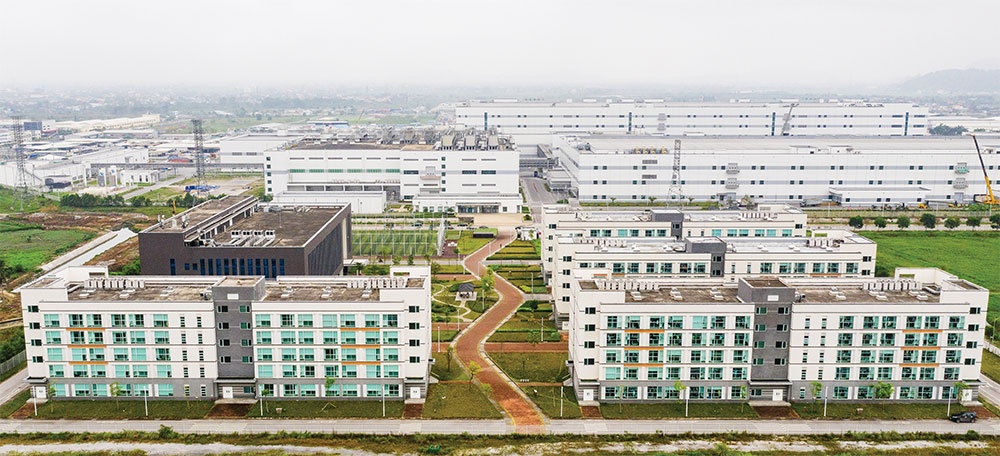
New investment destinations are arising in the northern industrial real estate market, as they are strongly appealing to investors by adding more supply to make up for the traditional markets.
A number of localities have developed industrial zones (IZs) and industrial clusters, with these localities experiencing significant changes to become prestigious investment destinations.
Among them, Quang Ninh province has 16 IZs included in the master plan on development of IZs and the general planning on construction of economic zones (EZs), with a total area of nearly 13,000 hectares.
In particular, Quang Ninh has two coastal EZs, Van Don and Quang Yen. The first Van Don covers over 217,000ha, while Quang Yen covers 13,000ha.
These EZs lay important foundations for Quang Ninh to become a new force in the industrial real estate market.
Similarly, Hai Duong is home to 11 existing IZs, with six new IZs being deployed in 2021, eight future IZs in the pipeline, and 53 industrial clusters. The province boasts a large supply of industrial real estate to meet the needs of investment projects of various sizes. Notably, Hai Duong still has an abundant industrial land fund, which is planned to reach more than 20,000ha over this decade.
Another destination is Bac Giang province. The construction planning of nine IZs have been approved for the province. Among them, eight have been greenlit for investment with a total natural land area of about 1,790ha. Meanwhile, five others are in operation.
By 2030, this northern province aims to have 29 IZs and 65 industrial clusters. It is also planning and arranging a land fund of more than 10,000ha for industrial development.
Comparative advantages
Besides plentiful new supply, these provinces have their own advantages in the eye of investors.
According to Chi Vu, industrial manager at Colliers International, Quang Ninh offers comparative advantages compared with other provinces in the northern region.
“First, the province boasts strategic location with gateways to the ocean and borders as well as large warehouses and logistics hubs. Second, the province has a complete infrastructure system with deepwater ports, airports, and highways. Third, the province still has more room for future development with competitive rental rate for preferential policies and a favourable investment climate,” Vu said. Read More…