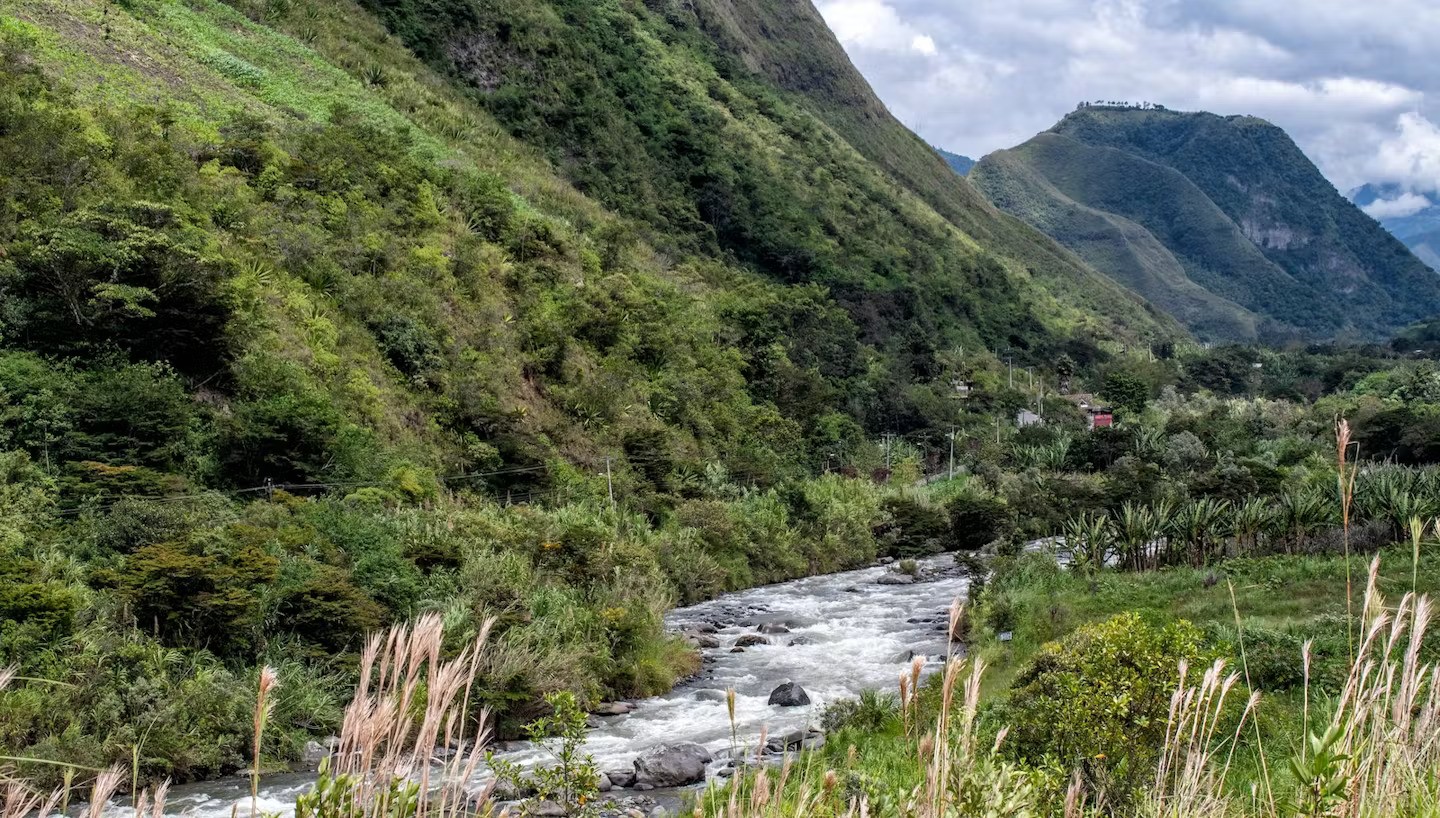
The Preeminence of Nature in Ecuador's Intag Mountains Over Mining Ventures
-
 Loading...
 - Farida Reda
- 17 Jul 2024
- 55 Views
- 0 Like
- 0 Comment
Ecuador's Intag region, a haven of cloud forests, rivers, lakes, native Andean páramos, and indigenous bamboo, harbors two of the globe's most ecologically crucial zones within the Tropical Andes Biodiversity Hotspot, including the Cotacachi Cayapas National Park. This area is not only a sanctuary of natural beauty but also home to over a hundred species teetering on the brink of extinction. Among these are 16 mammals, including two critically endangered monkey species, 22 frogs, 12 plants, two reptiles, and one fish species. The existence of these invaluable ecosystems and unique species faced significant threats from the proposed Llurimagua large-scale copper mining project.
A Conflict of Interest: Nature vs. Mining
In the 1990s, Bishi Metals, a Japanese company, identified vast copper deposits within the Intag’s Toisan mountain range. An estimated 318 million metric tons of copper ore (equivalent to 2.26 million tons of pure copper) lie beneath Intag’s rich biodiversity. With the burgeoning global demand for copper, which is projected to soar during the clean-energy transition, the mining prospect seemed economically advantageous. However, this extraction comes with profound environmental and social costs, often overlooked in traditional economic evaluations. Bishi Metals themselves anticipated "massive deforestation" that would exacerbate local desertification.
In 2008, Codelco, a Chilean mining giant, and Enami, Ecuador's state-owned mining company, forged a partnership to develop the Llurimagua mine, a $3 billion venture. This project, located 80km northeast of Quito, encompassed nearly 5,000 hectares, with plans to extract 120 kilotonnes of ore daily through open-pit mining.
Valuing Nature's Bounty
Earth Economics, a non-profit research organization, undertook a mission to quantify Intag’s ecosystem services. Collaborating with the local community, Earth Economics evaluated the benefits derived from carbon storage, flood protection, water quality and supply, wildlife habitat, pollination, and recreation. Their 2011 study, supported by Rainforest Concern and DECOIN (Defensa y Conservación Ecológica de Intag), revealed that 17 of 23 ecosystem services provided by Intag ecosystems contribute an average of $485 million annually in benefits (adjusted to 2022 USD). The study unequivocally concluded that the ecological and economic risks of mining far surpassed its potential benefits.
Legal and Environmental Victory
In 2022, Intag community leaders leveraged the findings of the 2011 report to support an amicus brief in a lawsuit challenging the Ecuadorian government over mining concessions. By March 2023, the Imbabura Provincial Court ruled against the Llurimagua mining project. The court found that the community's constitutional right to consultation and the rights of nature had been infringed upon, leading to the revocation of mining licenses and an immediate cessation of all mining activities.
In April 2024, the constitutional court upheld this ruling, rejecting the government’s appeal. This landmark decision underscored the importance of respecting ecological integrity and community rights over industrial pursuits.
Sustainable Development and Conservation
The future of Intag and similar regions hinges on sustainable development that prioritizes healthy communities, ecosystems, and local empowerment. Progress should be resilient to commodity price fluctuations and extend beyond traditional extractive industries. Investing in conservation, promoting sustainable economic alternatives, and finding ethical markets for ecosystem goods and services are vital for the long-term prosperity of this unique region.
As the Intag ecosystems face fragmentation and the cloud forests dwindle, it is crucial to bolster conservation and restoration initiatives. Integrating ecosystem service values into decision-making processes can illuminate the often-ignored broader benefits of nature. In the United States, this approach is gaining traction, supported by federal guidance and initiatives from agencies like the United States Army Corps of Engineers, which are increasingly valuing the co-benefits of investments in natural resources.
Ecuador's Intag region exemplifies the immense value of nature and the imperative to protect it against the encroachment of industrial interests. This region's story is a testament to the power of community-led conservation and the profound benefits of preserving our planet's irreplaceable ecosystems.