The Rubin Museum of Art in New York will return two ancient artifacts
-
 Loading...
 - Stephanie Shaw
- 10 Feb 2022
- 426 Views
- 0 Like
- 0 Comment
Kathmandu, onced dubbed an “open museum” by art historian Jurgen Schick for its abundance of high-quality art in public spaces, had for the very reason of being open become a haven for seekers of the relics, sculptures and ancient religious statuaries, which would fetch millions in the West.
Art-theft from Nepal started after the end of the Rana regime in the 1950s when the country opened up to the world. And the process began to be glaringly noticed after the 1960s. The Ancient Monument Preservation Act 1956 and subsequent amendments did little to prevent the theft of antiques, which peaked in the 1970s and 80s, and continued. But times are changing.
Some centuries-old relics, sculptures and idols, stolen and smuggled out of the country, are finding their way back home.
On Monday, the Rubin Museum of Art in New York announced that it would return two relics from its collection to Nepal after they were found to have been smuggled from two religious sites in Kathmandu Valley.
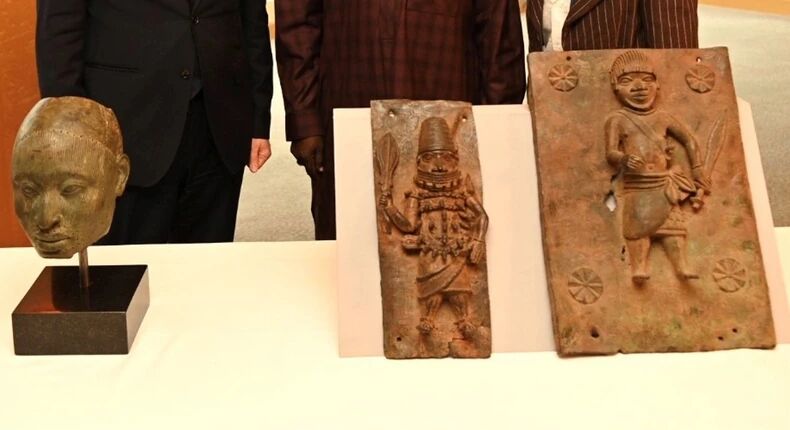
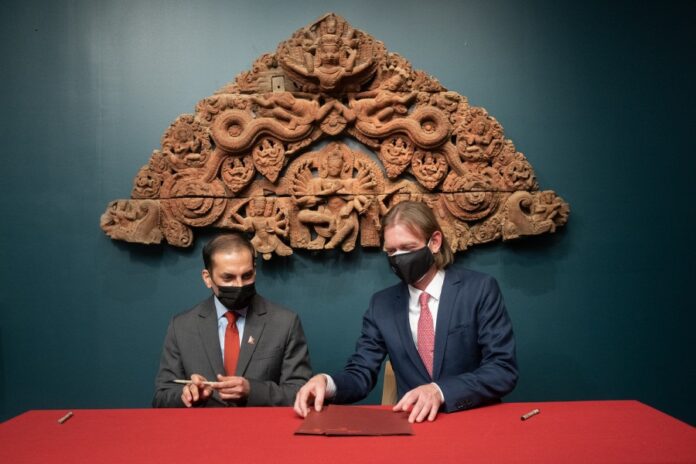
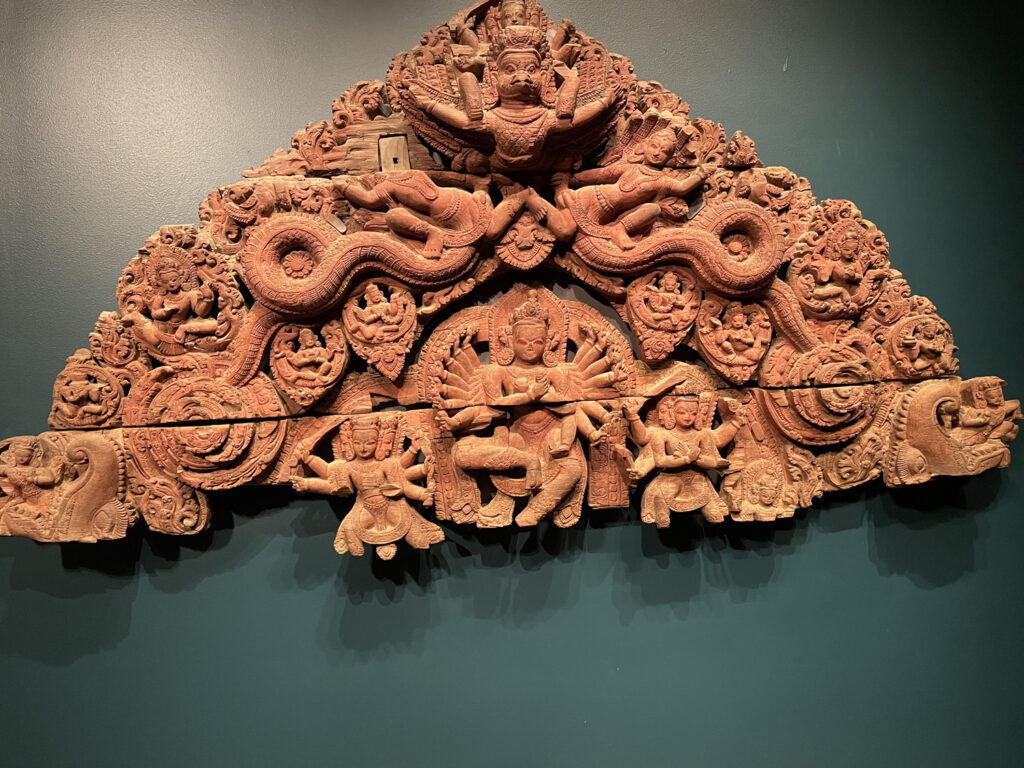
Bishnu Prasad Gautam, Nepal’s acting consul general in New York, and Jorrit Britschgi, executive director of Rubin Museum, signed a memorandum of understanding on returning the two sculptures—one 14th-century Flying Gandharva and another the upper section of a 17th-century Torana.
“The Rubin Museum has agreed to return the sculptures after we identified them and provided the required proof of their origins,” Gautam told the Post over the phone.
“Lost Arts of Nepal”, a group working towards identifying and locating lost artefacts from Nepal scattered around the world, in September said that it had located the two relics in the Rubin Museum.
Nepal Heritage Recovery Campaign then had written to the museum for the return of the artefacts. The Department of Archeology had provided inputs to determine the ownership and origin of the art works.
The museum said in a statement that these two relics were the first items in its collection that were found to have been unlawfully obtained, the New York Times reported.
According to museum officials, the Torana was lost from the main door of Yampi Mahavihara/I-Bahi, Patan, Lalitpur. The artwork arrived at the museum in 2010. The work of flying Apsara is originally from Keshchandra Mahavihara, Itumbahal, Kathmandu which was lost in 1999 and added to the museum’s collection in 2003, said the museum. Read More…