The story behind “Everyday Storiesâ€

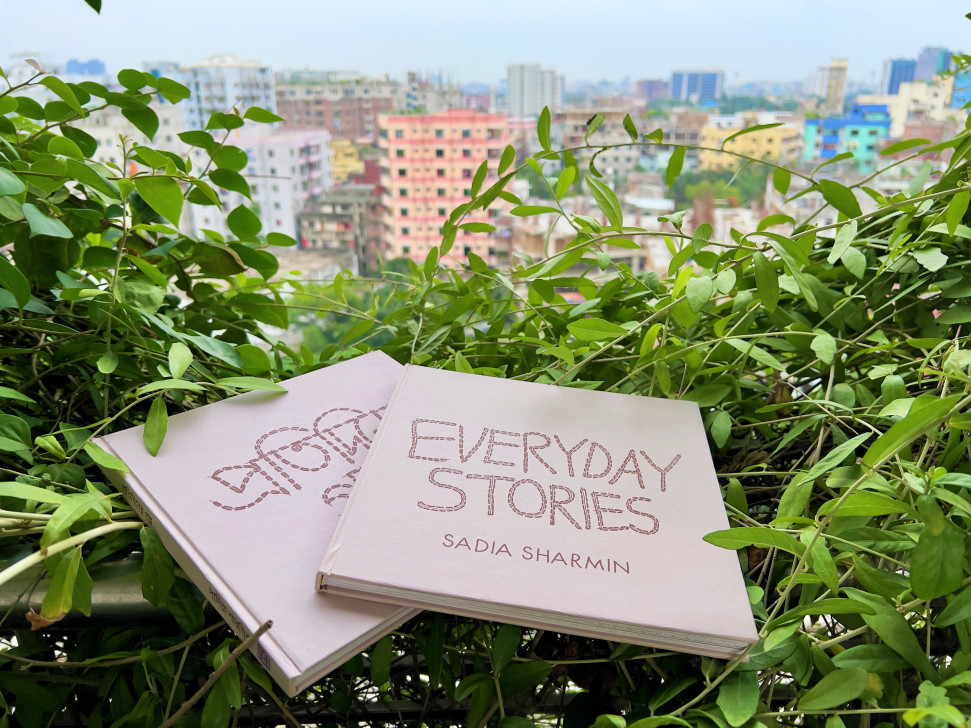
HerStory's most recent publication, Everyday Stories (April 2022), is a fictionalised account of the experiences of six young women from Dhaka's Korail, the largest informal settlement in the country. With the stories of these six women, who are members of the Shaheed Rumi Memorial Library, the book brings out the rampant patriarchy and subsequent gender-based violence that our women find themselves faced with every day. Daily Star Books talked to Sadia Sharmin, the author and illustrator of the book, to understand more about her experiences, inspirations, and the story behind Everyday Stories.
DS: How did you come across the women you wrote about and the library on which the book is based?
Sadia: Back in 2016, I was working with Habitat Firm, Berlin—a research-based, academic platform, pursuing a cross-culture fellowship where an interdisciplinary team of artists, photographers, and architects worked together to understand the many facets of the settlement.
After completing the fellowship, I met a network of community-based organisations, where I was introduced to a group of people.
When interviewing a mother one day, her 10-year-old daughter started talking about a science fiction book by Zafar Iqbal. Immediately, I was astonished at the eloquence with which she was describing the book at such a young age. I felt that it might've been due to a long formed habit of reading and discussing books.
When I asked, she told me they have a library where reading and stimulating discussions go hand in hand. It was 2018, and that's how I came across Shaheed Rumi Memorial Library.
DS: How did the idea of Everyday Stories occur to you?
Sadia: We started art sessions with the kids in the library. I planned to conduct a participatory community mapping with them as they know a lot about the settlement, things that we usually don't notice as outsiders. We used to do the mapping on different aspects, one of them being marking the places unsafe for women.
The mapping became a medium of storytelling for the girls. I used to spend a lot of time with them apart from the sessions. A lot of such stories were shared, of which I kept notes and recordings.
In 2020, when the pandemic hit, our in-person sessions came to a halt. CREA, BLAST and Brac made a call for a project on Gender-based violence, and that's when I thought about sharing the stories in some format, be that illustrations or writings.
I submitted my proposal responding to the call and even got a small grant. I spent three months on the entire production with the grant, when I transcribed the interviews, turned them into stories and made the illustrations. Read More...