The Vital Role of Contemporary Armenian Literature
-
 Loading...
 - Kuntum Chua
- 11 Mar 2025
- 27 Views
- 0 Like
- 0 Comment
Language is the heart of who we are as a nation. Armenian language and literature are not merely channels for our history, culture, and traditions; they are fundamental pillars of our identity. These elements shape our national pride, protect our heritage, and provide a narrative thread that connects generations. In contemporary society, the importance of modern Armenian literature is clear. Today’s Armenian writers are not only preserving this heritage but also reshaping it to address contemporary challenges and new ways of thinking.
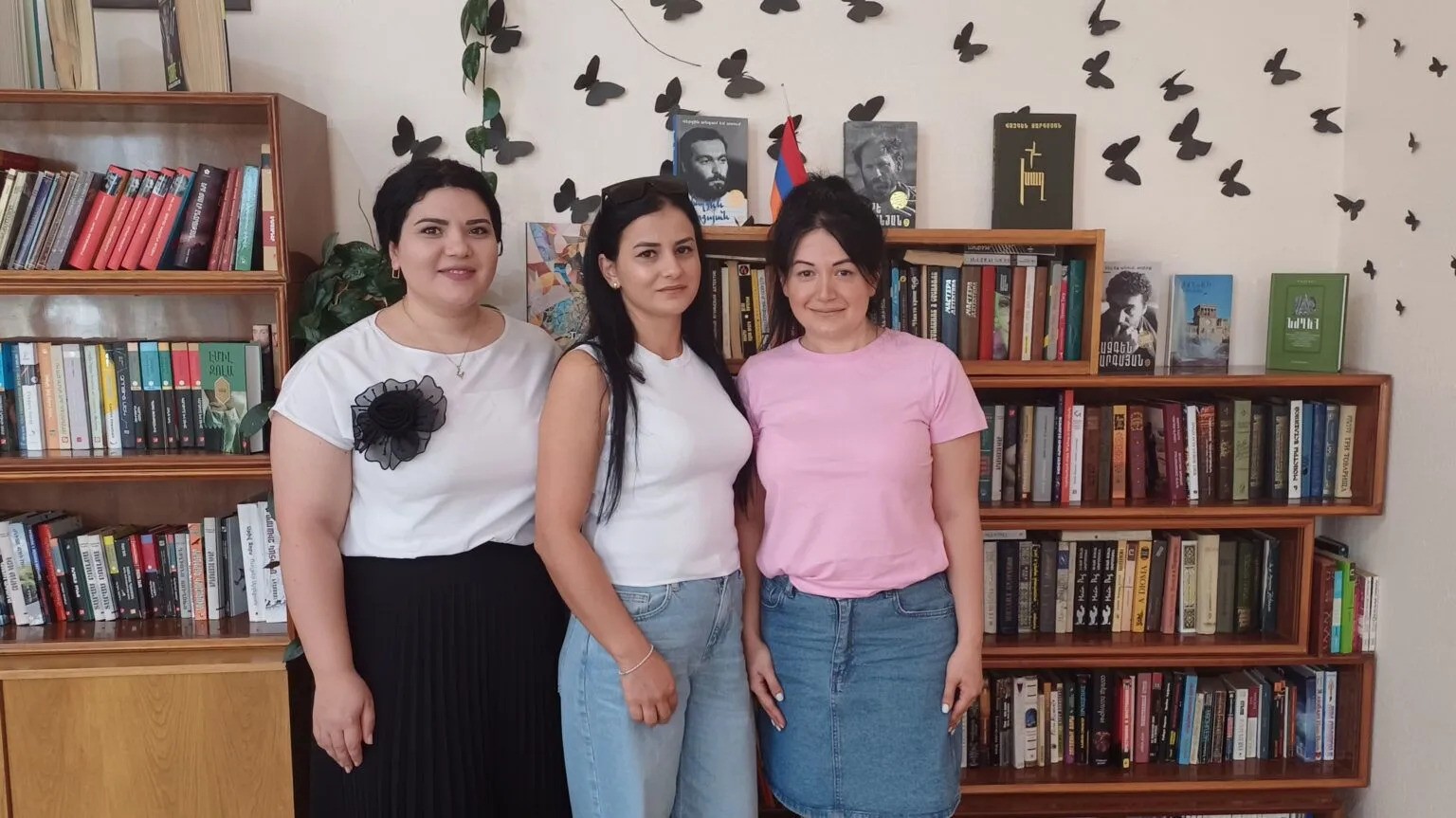
In the Erebuni administrative district of Yerevan, Armenia, a beacon of this literary revival is the number 11 library, which has been replenished with new books over the past three years. This revitalization has led to a surge in readers visiting the library. “Supply creates demand,” said Mary Hovhannisyan, an employee at the library. The expanding collection has sparked interest across generations—visitors include school children, university students, and older adults.
Despite the rise of electronic books and digital reading, the appeal of physical books persists, especially among younger readers. “We have young readers who come not only for the content but for the experience of holding and smelling the books. There’s something irreplaceable about the tactile experience of reading a real book,” Hovhannisyan said. Parents often bring their children during summer breaks, and once schools reopen, students arrive with reading lists but frequently explore other titles as well. “Agatha Christie is a popular choice among our younger readers, even though it’s not part of their required reading,” she added.
However, Armenian classics are still not as widely read as one might expect. One notable exception is Zabel Yesayan, whose works have seen renewed interest after being added to the school curriculum in Armenia. “Yesayan’s inclusion has definitely sparked curiosity, especially among younger readers. However, Armenian readers still tend to gravitate toward Russian classics, particularly Dostoevsky,” Hovhannisyan observed. This preference for foreign literature doesn’t overshadow the library’s efforts to promote Armenian authors. When readers come in without a specific list, the staff prioritizes recommendations of Armenian writers.
One author gaining significant attention is Ruben Esayan, a young writer whose latest book, Monks Have Secrets, quickly sold out after its release. His book launch earlier this year attracted a large crowd, indicative of a growing appetite for contemporary Armenian literature. Esayan, a fan of entertainment literature since childhood—especially in the genres of mysticism and detective fiction—is carving out a space for himself in the Armenian literary world.
His debut novel, 13 km from the Tunnel, was the first Armenian horror-thriller, a risky venture as this genre was previously unexplored. “There wasn’t really a precedent for this type of book in Armenia, so I wasn’t sure how it would be received,” Esayan said.
His second novel, Monks Have Secrets, is set in the United States and follows a group of Armenian youth who study and live together, intertwining their lives with a local monastic community. “In a typical detective novel, the mystery revolves around discovering the criminal or murderer,” Esayan explained. “But my book also carries an educational dimension. The monks’ secret is a central plot point, but I’ve layered the story with themes about human relationships and spiritual values.”
Esayan’s innovative marketing strategy included using social media to introduce his characters prior to the book’s release, generating buzz among readers. He shared descriptions of his characters’ appearances and personalities, allowing readers to visualize them before the book hit the shelves. This approach, blending traditional storytelling with modern marketing tactics, has proven effective. “The feedback was overwhelmingly positive. People liked having a visual reference for the characters, but I left plenty of room for their imagination since there are no illustrations in the book,” he said.
Esayan has worked hard to make his books accessible and engaging for readers of all ages. He receives letters from readers who had never finished a book before but couldn’t put his book down, as well as from retirees who completed his latest work in a single day. His ability to connect with such a broad audience is a key factor in his success.
Looking ahead, Esayan revealed that a film adaptation of 13 km from the Tunnel is slated to begin production in the summer of 2025. He encourages young writers to take risks and not be afraid of failure. “Many young people hesitate to write because they’re afraid it won’t turn out well. But I always tell them to try. If it works, great. If not, that’s okay too. The important thing is to believe in yourself and seek feedback to improve,” he said.
Abgar Apinyan, president of the Pan-Armenian Writers’ Union, sees a significant issue facing Armenian literature: the absence of strong literary criticism. He argues that without it, Armenian literature risks becoming disconnected.