The way to school is not child's play
-
 Loading...
 - tyler matilda
- 02 Sep 2022
- 58 Views
- 0 Like
- 0 Comment
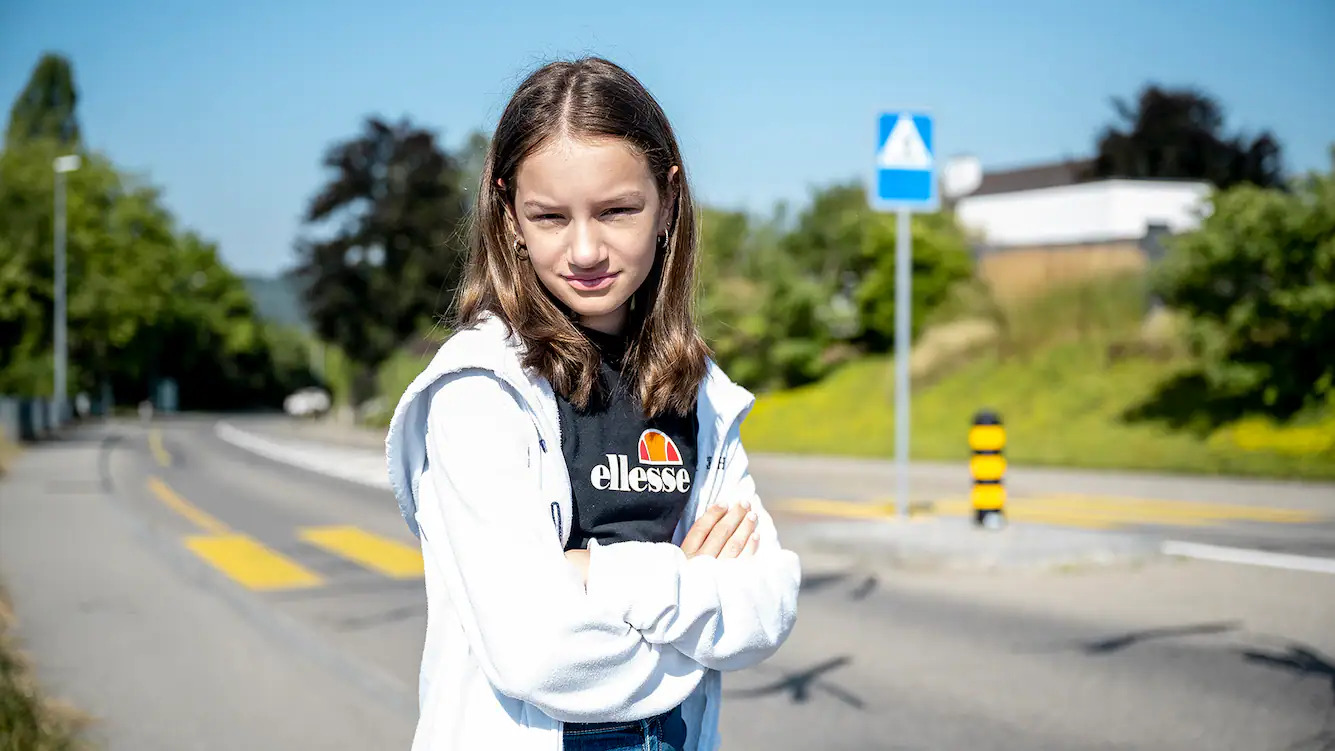
March 25, 2021, a spring-like Thursday, could have changed the life of Annika Fischer and her family forever. It is the day when the twelve-year-old crosses the pedestrian crossing and is hit by a car.
That afternoon, the fifth-grader and her friend Svenja are working on a project in the Huben school building, at the top end of Frauenfeld. At 3.35 p.m., Annika takes her scooter out of the bike stand. She doesn't know any more. Five minutes later, Jeannette's mother's phone rings. "The mother of a classmate told me that Annika was lying on the street."
The girl lies unconscious a few meters behind the pedestrian crossing, an oxygen mask over her mouth and nose. Agitated schoolmates stand around lost, somewhere the car driver who hit the girl. The ambulance takes Annika to the cantonal hospital, where she is put into an artificial coma. Then a helicopter flies the child and mother to the St. Gallen children's hospital.
The number of accidents is stagnating
Last year, 169 children had an accident on the pedestrian crossing, 129 of them like Annika on the way to school. Of the 1,235 children injured on Swiss roads in 2021, more than a third were on their way to or from school. Around every sixth child suffered serious injuries.
Many victims on the way to school

It's true that routes to school have become safer, and the number of seriously injured and killed children has fallen over the past 30 years. But it has stagnated for some time. Why is that? The growing traffic? The ever larger and heavier cars? Or are children getting distracted more and more easily?
There is no easy answer. "No way to school in Switzerland is super difficult or dangerous," says Sabine Degener. The engineer is a consultant for traffic engineering at the Advice Center for Accident Prevention (BfU). Several factors often come together: a child doing something unforeseen, a driver who is briefly inattentive or driving a little too fast. But the fact is: half of the children who have an accident on foot cause the accident themselves. With the bicycle it is even more than 70 percent.
"Many parents don't understand why they should accompany their children to school," says Degener. It's not enough just to teach the little ones to look left and right at the pedestrian crossing: "They move their heads, but like in a gymnastic exercise." Only when they are about twelve can they focus their attention on possible dangers and recognize and correct their own mistakes. “Adults have to learn that children have to learn and, above all, have to practice a lot.” Read More…