Home Upload Photo Upload Videos Write a Blog Analytics Messaging Streaming Create Adverts Creators Program
Bebuzee Afghanistan Bebuzee Albania Bebuzee Algeria Bebuzee Andorra Bebuzee Angola Bebuzee Antigua and Barbuda Bebuzee Argentina Bebuzee Armenia Bebuzee Australia Bebuzee Austria Bebuzee Azerbaijan Bebuzee Bahamas Bebuzee Bahrain Bebuzee Bangladesh Bebuzee Barbados Bebuzee Belarus Bebuzee Belgium Bebuzee Belize Bebuzee Benin Bebuzee Bhutan Bebuzee Bolivia Bebuzee Bosnia and Herzegovina Bebuzee Botswana Bebuzee Brazil Bebuzee Brunei Bebuzee Bulgaria Bebuzee Burkina Faso Bebuzee Burundi Bebuzee Cabo Verde Bebuzee Cambodia Bebuzee Cameroon Bebuzee Canada Bebuzee Central African Republic Bebuzee Chad Bebuzee Chile Bebuzee China Bebuzee Colombia Bebuzee Comoros Bebuzee Costa Rica Bebuzee Côte d'Ivoire Bebuzee Croatia Bebuzee Cuba Bebuzee Cyprus Bebuzee Czech Republic Bebuzee Democratic Republic of the Congo Bebuzee Denmark Bebuzee Djibouti Bebuzee Dominica Bebuzee Dominican Republic Bebuzee Ecuador Bebuzee Egypt Bebuzee El Salvador Bebuzee Equatorial Guinea Bebuzee Eritrea Bebuzee Estonia Bebuzee Eswatini Bebuzee Ethiopia Bebuzee Fiji Bebuzee Finland Bebuzee France Bebuzee Gabon Bebuzee Gambia Bebuzee Georgia Bebuzee Germany Bebuzee Ghana Bebuzee Greece Bebuzee Grenada Bebuzee Guatemala Bebuzee Guinea Bebuzee Guinea-Bissau Bebuzee Guyana Bebuzee Haiti Bebuzee Honduras Bebuzee Hong Kong Bebuzee Hungary Bebuzee Iceland Bebuzee India Bebuzee Indonesia Bebuzee Iran Bebuzee Iraq Bebuzee Ireland Bebuzee Israel Bebuzee Italy Bebuzee Jamaica Bebuzee Japan Bebuzee Jordan Bebuzee Kazakhstan Bebuzee Kenya Bebuzee Kiribati Bebuzee Kuwait Bebuzee Kyrgyzstan Bebuzee Laos Bebuzee Latvia Bebuzee Lebanon Bebuzee Lesotho Bebuzee Liberia Bebuzee Libya Bebuzee Liechtenstein Bebuzee Lithuania Bebuzee Luxembourg Bebuzee Madagascar Bebuzee Malawi Bebuzee Malaysia Bebuzee Maldives Bebuzee Mali Bebuzee Malta Bebuzee Marshall Islands Bebuzee Mauritania Bebuzee Mauritius Bebuzee Mexico Bebuzee Micronesia Bebuzee Moldova Bebuzee Monaco Bebuzee Mongolia Bebuzee Montenegro Bebuzee Morocco Bebuzee Mozambique Bebuzee Myanmar Bebuzee Namibia Bebuzee Nauru Bebuzee Nepal Bebuzee Netherlands Bebuzee New Zealand Bebuzee Nicaragua Bebuzee Niger Bebuzee Nigeria Bebuzee North Korea Bebuzee North Macedonia Bebuzee Norway Bebuzee Oman Bebuzee Pakistan Bebuzee Palau Bebuzee Panama Bebuzee Papua New Guinea Bebuzee Paraguay Bebuzee Peru Bebuzee Philippines Bebuzee Poland Bebuzee Portugal Bebuzee Qatar Bebuzee Republic of the Congo Bebuzee Romania Bebuzee Russia Bebuzee Rwanda Bebuzee Saint Kitts and Nevis Bebuzee Saint Lucia Bebuzee Saint Vincent and the Grenadines Bebuzee Samoa Bebuzee San Marino Bebuzee São Tomé and Príncipe Bebuzee Saudi Arabia Bebuzee Senegal Bebuzee Serbia Bebuzee Seychelles Bebuzee Sierra Leone Bebuzee Singapore Bebuzee Slovakia Bebuzee Slovenia Bebuzee Solomon Islands Bebuzee Somalia Bebuzee South Africa Bebuzee South Korea Bebuzee South Sudan Bebuzee Spain Bebuzee Sri Lanka Bebuzee Sudan Bebuzee Suriname Bebuzee Sweden Bebuzee Switzerland Bebuzee Syria Bebuzee Taiwan Bebuzee Tajikistan Bebuzee Tanzania Bebuzee Thailand Bebuzee Timor-Leste Bebuzee Togo Bebuzee Tonga Bebuzee Trinidad and Tobago Bebuzee Tunisia Bebuzee Turkey Bebuzee Turkmenistan Bebuzee Tuvalu Bebuzee Uganda Bebuzee Ukraine Bebuzee United Arab Emirates Bebuzee United Kingdom Bebuzee Uruguay Bebuzee Uzbekistan Bebuzee Vanuatu Bebuzee Venezuela Bebuzee Vietnam Bebuzee World Wide Bebuzee Yemen Bebuzee Zambia Bebuzee Zimbabwe
Blog Image

There and back again: Mantle xenon has a story to tell

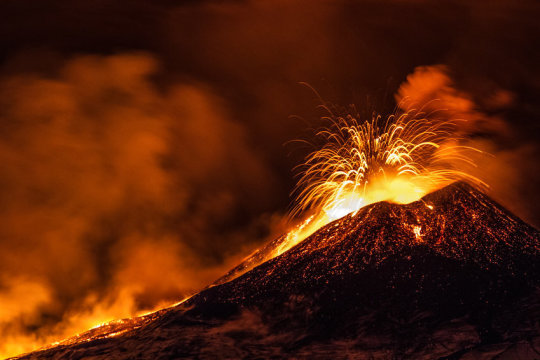
Etna eruption, Catania, Sicily. Credit: © Wead / Fotolia

The Earth has been through a lot of changes in its 4.5 billion year history, including a shift to start incorporating and retaining volatile compounds from the atmosphere in the mantle before spewing them out again through volcanic eruptions.

This transport could not have begun much before 2.5 billion years ago, according to new research by Washington University in St. Louis, published in the August 9 issue of the journal Nature.

"Life on Earth cares about changes in the volatile budget of the surface," said Rita Parai, assistant professor of geochemistry in Earth and Planetary Sciences in Arts & Sciences and first author of the study. "And there's an interplay between what the deep Earth was doing and how the surface environment changed over billion-year timescales."

Volatiles -- such as water, carbon dioxide and the noble gases -- come out of the mantle through volcanism and may be injected into the Earth's interior from the atmosphere, a pair of processes called mantle degassing and regassing. The exchange controls the habitability of the planet, as it determines the surface availability of compounds that are critical to life -- such as carbon, nitrogen and water.

The new model presented by Parai and collaborator Sujoy Mukhopadhyay, of the University of California, Davis, also establishes a range of dates during which the Earth shifted from a net degassing regime -- again, think about those oozy volcanoes -- to one that tilted the balance to net regassing potentially enabled by subduction, the conveyor-belt action of tectonic plates.

Mechanical properties change as water is added or removed from the mantle, so the onset of regassing had an important effect on the internal churning of the mantle, known as convection, which controls plate motions at the surface, Parai said.

Parai uses noble gases to address questions about how planetary bodies form and evolve over time. In this new research, she modeled the fate and transport of volatile compounds into the Earth's mantle using xenon isotopes as tracers.

"Xenon is an excellent volatile tracer, because all minerals that carry water also carry xenon," Parai said. "So if xenon regassing was negligible, water regassing must also have been negligible during the Archean (4 billion-2.5 billion years ago)."

Substantial regassing began sometime between a few hundred million to 2.5 billion years ago, the researchers found.

If plate tectonics and subduction began earlier than 2.5 billion years ago, then perhaps by then the Earth's interior had cooled sufficiently for volatiles to remain in subducting plates, rather than getting released and percolating back to the surface through magmatism, Parai suggests.

"Most people rarely have an occasion to think about volatiles trapped in the Earth's interior," Parai said. "They're present at low concentrations, but the mantle is huge in terms of mass. So for the Earth's total volatile budget, the mantle is an important reservoir."

She plans to focus her future research on pushing the limits of precision in xenon isotopic measurements in a variety of geological samples.

"The more observational constraints we have, the better," she said.

Previous Post

Mojave Desert birds crashed over the last century due to climate change

Next Post

Marine mammals lack functional gene to defend against popular pesticide

Comments