Home Upload Photo Upload Videos Write a Blog Analytics Messaging Streaming Create Adverts Creators Program
Bebuzee Afghanistan Bebuzee Albania Bebuzee Algeria Bebuzee Andorra Bebuzee Angola Bebuzee Antigua and Barbuda Bebuzee Argentina Bebuzee Armenia Bebuzee Australia Bebuzee Austria Bebuzee Azerbaijan Bebuzee Bahamas Bebuzee Bahrain Bebuzee Bangladesh Bebuzee Barbados Bebuzee Belarus Bebuzee Belgium Bebuzee Belize Bebuzee Benin Bebuzee Bhutan Bebuzee Bolivia Bebuzee Bosnia and Herzegovina Bebuzee Botswana Bebuzee Brazil Bebuzee Brunei Bebuzee Bulgaria Bebuzee Burkina Faso Bebuzee Burundi Bebuzee Cabo Verde Bebuzee Cambodia Bebuzee Cameroon Bebuzee Canada Bebuzee Central African Republic Bebuzee Chad Bebuzee Chile Bebuzee China Bebuzee Colombia Bebuzee Comoros Bebuzee Costa Rica Bebuzee Côte d'Ivoire Bebuzee Croatia Bebuzee Cuba Bebuzee Cyprus Bebuzee Czech Republic Bebuzee Democratic Republic of the Congo Bebuzee Denmark Bebuzee Djibouti Bebuzee Dominica Bebuzee Dominican Republic Bebuzee Ecuador Bebuzee Egypt Bebuzee El Salvador Bebuzee Equatorial Guinea Bebuzee Eritrea Bebuzee Estonia Bebuzee Eswatini Bebuzee Ethiopia Bebuzee Fiji Bebuzee Finland Bebuzee France Bebuzee Gabon Bebuzee Gambia Bebuzee Georgia Bebuzee Germany Bebuzee Ghana Bebuzee Greece Bebuzee Grenada Bebuzee Guatemala Bebuzee Guinea Bebuzee Guinea-Bissau Bebuzee Guyana Bebuzee Haiti Bebuzee Honduras Bebuzee Hong Kong Bebuzee Hungary Bebuzee Iceland Bebuzee India Bebuzee Indonesia Bebuzee Iran Bebuzee Iraq Bebuzee Ireland Bebuzee Israel Bebuzee Italy Bebuzee Jamaica Bebuzee Japan Bebuzee Jordan Bebuzee Kazakhstan Bebuzee Kenya Bebuzee Kiribati Bebuzee Kuwait Bebuzee Kyrgyzstan Bebuzee Laos Bebuzee Latvia Bebuzee Lebanon Bebuzee Lesotho Bebuzee Liberia Bebuzee Libya Bebuzee Liechtenstein Bebuzee Lithuania Bebuzee Luxembourg Bebuzee Madagascar Bebuzee Malawi Bebuzee Malaysia Bebuzee Maldives Bebuzee Mali Bebuzee Malta Bebuzee Marshall Islands Bebuzee Mauritania Bebuzee Mauritius Bebuzee Mexico Bebuzee Micronesia Bebuzee Moldova Bebuzee Monaco Bebuzee Mongolia Bebuzee Montenegro Bebuzee Morocco Bebuzee Mozambique Bebuzee Myanmar Bebuzee Namibia Bebuzee Nauru Bebuzee Nepal Bebuzee Netherlands Bebuzee New Zealand Bebuzee Nicaragua Bebuzee Niger Bebuzee Nigeria Bebuzee North Korea Bebuzee North Macedonia Bebuzee Norway Bebuzee Oman Bebuzee Pakistan Bebuzee Palau Bebuzee Panama Bebuzee Papua New Guinea Bebuzee Paraguay Bebuzee Peru Bebuzee Philippines Bebuzee Poland Bebuzee Portugal Bebuzee Qatar Bebuzee Republic of the Congo Bebuzee Romania Bebuzee Russia Bebuzee Rwanda Bebuzee Saint Kitts and Nevis Bebuzee Saint Lucia Bebuzee Saint Vincent and the Grenadines Bebuzee Samoa Bebuzee San Marino Bebuzee São Tomé and Príncipe Bebuzee Saudi Arabia Bebuzee Senegal Bebuzee Serbia Bebuzee Seychelles Bebuzee Sierra Leone Bebuzee Singapore Bebuzee Slovakia Bebuzee Slovenia Bebuzee Solomon Islands Bebuzee Somalia Bebuzee South Africa Bebuzee South Korea Bebuzee South Sudan Bebuzee Spain Bebuzee Sri Lanka Bebuzee Sudan Bebuzee Suriname Bebuzee Sweden Bebuzee Switzerland Bebuzee Syria Bebuzee Taiwan Bebuzee Tajikistan Bebuzee Tanzania Bebuzee Thailand Bebuzee Timor-Leste Bebuzee Togo Bebuzee Tonga Bebuzee Trinidad and Tobago Bebuzee Tunisia Bebuzee Turkey Bebuzee Turkmenistan Bebuzee Tuvalu Bebuzee Uganda Bebuzee Ukraine Bebuzee United Arab Emirates Bebuzee United Kingdom Bebuzee Uruguay Bebuzee Uzbekistan Bebuzee Vanuatu Bebuzee Venezuela Bebuzee Vietnam Bebuzee World Wide Bebuzee Yemen Bebuzee Zambia Bebuzee Zimbabwe
Blog Image

There's Been a Huge Stellar Explosion in the Serpent Bearer Constellation

Two stars spurred a massive nova, flinging out particles that might help us solve a long-standing cosmic riddle.

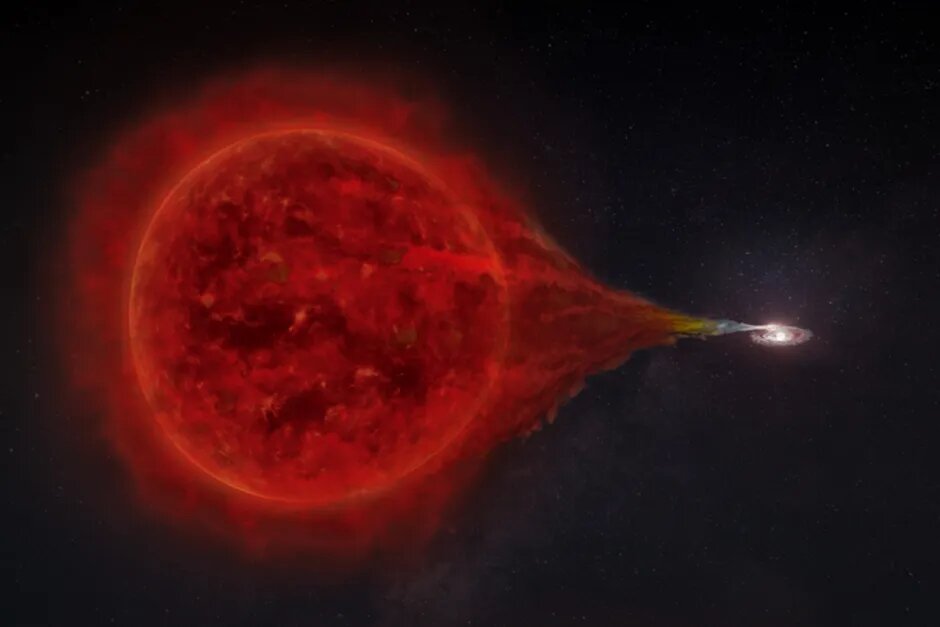
Lurking in the outer folds of deep space, some 5,000 light-years from Earth, two stars are stuck in a poetic lockstep. One is a red giant, blood-colored, colossal and dying. The other is a white dwarf, ghostly white, compact and dead. They lie in the Serpent Bearer constellation, and together they are known as RS Ophiuchi. 

For decades, the burned-out corpse star has been dancing around its withering companion, feeding off its outer layer made of hydrogen. But this waltz has a timer. Every 15 years or so, the binary star system sort of overheats, igniting one of space's most extreme events -- a thunderous nova, or explosion, that releases a shower of particles that quickly accelerate to near the speed of light. 

Scientists watched RS Ophiuchi reach this tipping point in 1898, 1907, 1933, 1945, 1958, 1967, 1985 and 2006. 

Then, in 2021, it happened again.

According to a paper published Thursday in the journal Nature Astronomy, two Earth-based telescopes caught the dramatic eruption's aftermath just last year. And though we don't have a Hubble-esque image of a space-borne mushroom cloud, we might have something even more fascinating: gamma ray observations.

Gamma ray clues

Basically, when super high-energy particles, usually protons, collide, the study explains they're expected to emit two things -- a fleeting new particle and a gamma ray. These rays are among the most energetic things in the universe. A single burst of them could emanate more energy than the sun will in its entire lifetime, and they're strong enough to travel across thousands of light-years without fading.

So, due to the ultra-high power of RS Ophiuchi's cyclic explosion, scientists had long theorized that some hyper-fast particles flung from the system would probably bump into one another and produce those intense gamma rays. With the new study, this theory might've just turned to truth. 

Last year, two telescopes, dubbed the MAGIC (Major Atmospheric Gamma Imaging Cherenkov) telescopes, in the Canary islands recorded some of the most energetic gamma rays ever seen coming from the red and white nova. The study researchers measured the radiation to be 250 gigaelectronvolts, which is a hundred billion times more energetic than visible light rays we're used to. 

This discovery is especially striking for two reasons. 

Cosmic rays?

First off, making the find with MAGIC was a tremendous effort. The researchers had to quickly move these telescopes into place as soon as other instruments alerted them that RS Ophiuchi was about to blow. There wasn't much room for error.

"The spectacular eruption of the RS Ophiuchi shows that the MAGIC telescopes' fast response really pays off: It takes them no more than 30 seconds to move to a new target," David Green, a scientist at the Max Planck Institute for Physics and co-author of the paper, said in a statement. Read More…

Previous Post

Psilocybin for depression could help brain break out of a rut, scientists say

Next Post

Feast for stargazers in April: Alignment of four planets could be seen with naked eye

Comments