Tunisia extremely polarized and politically fragmented
-
 Loading...
 - Theo Kennedy
- 10 Oct 2022
- 70 Views
- 0 Like
- 0 Comment
Invested in a messianic mission more than a bearer of a political or partisan programme, the election of Kais Saied to Tunisia's supreme office represented the victory of an anti-system and anti-elite rhetoric used by the candidate throughout his election campaign. He promised to bridge the gap between citizens and decision-makers by reversing the pyramid of power through institutional reform inspired by a vague and populist concept of sovereignty. The idea was to give more power to local representatives and to himself, as guarantor of the interests of the people and the nation, underlines an analysis delivered by the think tank Atlantic Council .
The new constitution, which replaces the one established in 2014, has the hidden purpose of ensuring that the authority Saied seized in July 2021 remains firmly in his hands, giving that status legal form. Thus, the two main pillars of Saied's project became clear. First, it is to expand the powers of the president by giving him control of the executive while weakening the authority of parliament and the judiciary. Second, the new constitution will emphasize a particular process of bottom-up political functioning.
This constitution ratifies a new ascending system of representation. It theoretically empowers local leaders and assemblies to the detriment of political parties, whose centralized influence is undermined. However, on closer inspection, it is clear that this system demonstrates a double strategy: to weaken political parties, organized movements, and therefore any structured opposition to the president; and above all, keeping real executive power entirely in the hands of the president himself. This system gives the illusion of popular power (somehow resembling the ideological aspiration of Muammar Gaddafi's Libyan Jamahiryya), but seems devoid of any real chain of transmission to power in effect.
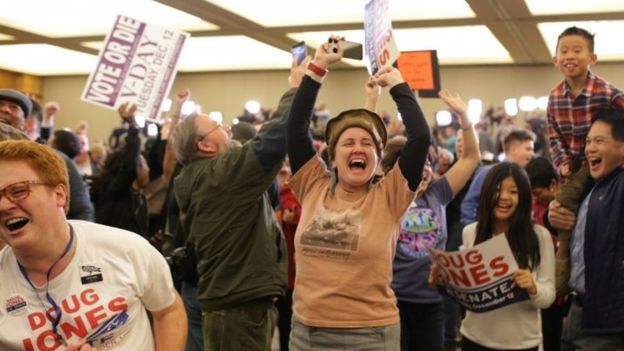
Were Tunisians aware of the changes introduced by the new constitution before the vote? The think tank believes it has to raise the question only to find that few of them had already read the draft text, which clearly shows that the 94.6% of "yes" (although the participation rate was only 30% or so) represent a vote against the political system, rather than a real consensus on the new constitution. Nevertheless, the vote confirms the presence of a persistent popular base for the president, while the exultation which greeted the final result of the referendum underlines the failure of the boycott campaign launched by the political parties and the neutral position adopted by Tunisian trade unions. The final picture is of an extremely polarized and politically fragmented country. Read More...