
Twitter is currently experimenting fresh limitations on individuals to whom you can send direct messages (DMs)
-
 Loading...
 - ellis maisie
- 09 Jun 2023
- 72 Views
- 0 Like
- 0 Comment
Twitter is currently testing new measures to combat spam and improve user experience on its platform. One such measure is the implementation of restrictions on direct messages (DMs) within the app. Specifically, these restrictions will only allow Twitter Blue users to send DM requests to individuals who do not follow them.
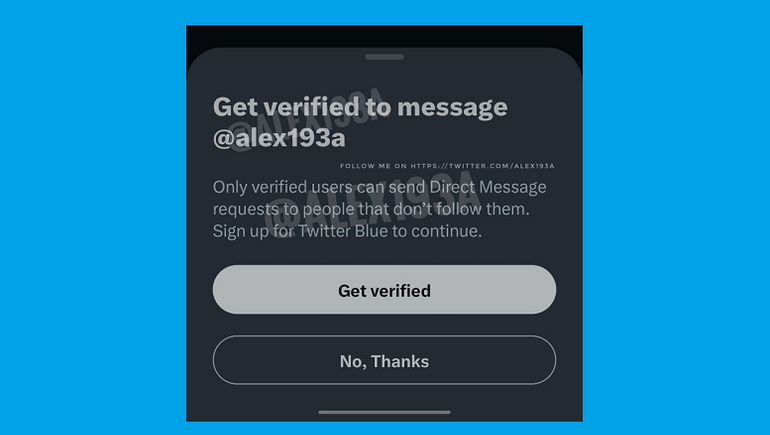
This change, as observed in the app's backend code by researcher Alessandro Paluzzi, means that users will no longer be able to send DMs to people who are not already following them on Twitter. While this may limit messaging options, especially for those who rely on Twitter DMs for outreach purposes, it seems to be a move aimed at encouraging users to subscribe to Twitter Blue, a paid monthly service priced at $8.
For many, Twitter has been an essential tool for connecting with others and exploring potential partnerships or collaborations. However, with the introduction of these DM restrictions, reaching out to new contacts may become more challenging for non-subscribers. It is likely that users will seek alternative platforms to contact individuals they are interested in.
Nevertheless, these restrictions may have a positive side as they can serve as an effective anti-spam measure. By limiting the use of DMs as a tool for spammers, Twitter aims to make it less economically viable for them to send spam messages. Although the effectiveness of this measure can be undermined if spammers choose to sign up for Twitter Blue, it is still a step towards making spamming and scamming on the platform less prevalent.
Ultimately, this change aligns with Twitter's subscription program's main goal of reducing spam and improving the overall quality of content on the platform. By making spamming and scamming more costly, Twitter hopes to combat the flood of irrelevant and unwanted content. Consequently, users may experience fewer random invitations and notifications in their DM stream.