Ukrainian Author Warns the West Through Literature of War
-
 Loading...
 - Thomas Bourgeois
- 11 Dec 2024
- 46 Views
- 0 Like
- 0 Comment
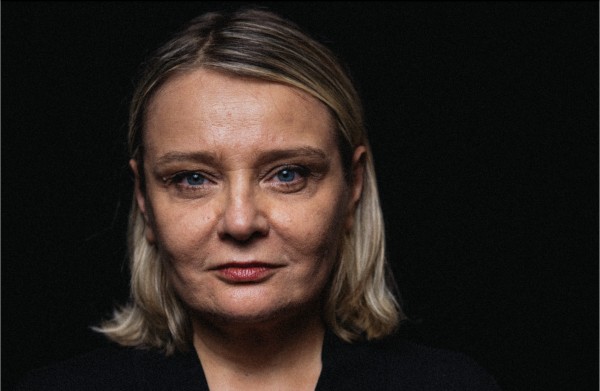
Ukrainian historian and author Olena Stiazhkina is using her literary voice to shed light on the ongoing Russian-Ukrainian conflict, arguing that the war began long before the West acknowledges. Through her recently translated works, she aims to serve both as a testament to Ukraine's resilience and a warning to the international community.
"This war started not in February 2022, but in 2014," Stiazhkina stated, emphasizing the long-standing nature of the conflict. "The world gave us three days, maybe one week, but we survived, and we are fighting." A former professor at Donetsk National University, where she taught Slavic history for over two decades until the Russian invasion in 2014, Stiazhkina has become a vital voice in documenting Ukraine's transformation through both fiction and nonfiction.
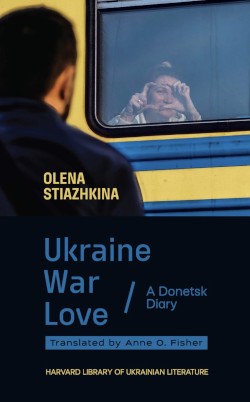
Her latest works, Ukraine, War, Love: A Donetsk Diary and Cecil the Lion Had to Die, published by the Harvard Ukrainian Research Institute and Harvard University Press, provide distinct perspectives on the conflict. These titles are part of the Harvard Library of Ukrainian Literature series, which aims to broaden understanding of Ukrainian culture and history, and were supported by Razom, a Ukrainian advocacy organization.
Ukraine, War, Love: A Donetsk Diary, translated by Anne O. Fisher, offers a firsthand account of the initial Russian invasion of Donetsk in 2014. Stiazhkina describes the constant threat of Russian attacks, stating, "We are still living in the world of last words. Every day we think about what would be our last words, because it could be at any moment in any town, village, library, or school."
However, Stiazhkina emphasizes that Ukrainian literature seeks to convey more than just suffering. "We are not victims; we don't want to be remembered as victims," she asserted. "We would like to be remembered as fighters—as funny, strong fighters for freedom." She draws a parallel to Abraham Lincoln's description of America, stating, "Ukraine now is both place and concept. The concept of freedom is central to our identity, and that is why, if we will have last words, they will be about freedom."
Her novel Cecil the Lion Had to Die, translated by Dominique Hoffman, explores Ukrainian identity through the experiences of four families in Donetsk. Written in 2020, before the full-scale invasion, the novel serves as what Stiazhkina calls "not a prediction, but a prognosis" of escalating tensions.
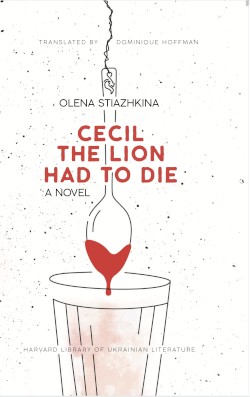
The novel's unique bilingual format reflects Stiazhkina's own linguistic journey. A native Russian speaker, she transitioned to writing in Ukrainian, a shift visually represented in the book's design, with Russian text appearing on black pages and Ukrainian text on white pages. "I will be the last person in my family who can dream in Russian," she remarked. "It is my choice."
Stiazhkina believes that writing can counter propaganda and misinformation, and that personal stories are an effective way to understand larger conflicts. "Personal experience is a great way to explain something true," she said.
Her warnings about Russian aggression carry particular weight, given her observations from the conflict's early days. "In 2014, there were many inscriptions on Russian tanks saying 'On to Kiev, on to Lviv,'" she recalled. "Many people told us that it is bullshit, nothing happened, nothing will happen. But in 2022, it happened." Now, she notes, new inscriptions on Russian tanks read, “On to Warsaw, on to Berlin, on to Washington."
"These inscriptions are not bullshit," Stiazhkina added. "It is a strategy of Russia, and I want to warn people about it." Through her literature, she hopes to raise awareness and foster a deeper understanding of the ongoing conflict, urging the West to recognize the realities faced by Ukraine.