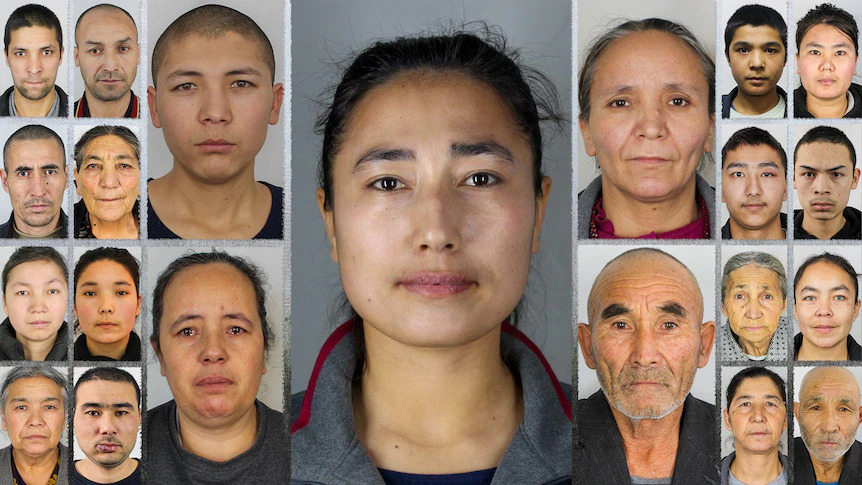
Uyghurs in Australia scour through thousands of leaked photos from Xinjiang Police Files searching for loved ones
-
 Loading...
 - Oliver Smith
- 25 May 2022
- 266 Views
- 0 Like
- 0 Comment
Hawagul Tewekkul's eyes brim with tears as she stares down the barrel of a camera.
Her photograph is one of 2,884 mugshots revealed in the Xinjiang Police Files, an unprecedented data leak that sheds new light on China's treatment of Uyghurs.
The source of the files claims to have hacked and downloaded the documents from several police computer servers in China's far-western region of Xinjiang, before decrypting and leaking them to Adrian Zenz, a US-based scholar, who shared the cache with international media.
Thousands of kilometres away, Uyghurs in Australia spent much of the night searching frantically through the database hoping to find a glimpse of their family members.
In many cases, they have not had contact with their loved ones in years.
Rayhangul Abliz told the ABC she trawled through the photographs searching for her parents, who live in a neighbouring area, but in vain.
"I couldn't stop my tears," she said.
"All of them look like my dad or my brothers, every [pair of] eyes looks like [they are] asking me … 'Please help me'."
She said it was distressing to see hundreds and hundreds of faces, and the feeling for many Uyghurs in Australia was funereal.
Human rights groups estimate more than a million people from Muslim ethnic groups, including Uyghurs and Kazakhs, have been detained in re-education facilities — which China calls vocational training centres — in Xinjiang in recent years.
There have also been reports of forced labour and forced sterilisation, as well as accusations of genocide, which China denies.
Ramila Chanisheff described the "devastation" many felt when looking at long sentences handed down for "absurd" reasons.
"It was extremely painful to read the report and see the thousands of innocent faces on the screen," she said.
"We have relatives over there. So [we've been] scouring through the pictures.
"You can hear the anxiety and the stress and sadness in their voices.
"Other people were thinking, 'Well, my family members whom I haven't spoken to in the last five, six years, their pictures are not there. But where are they?'"
Fatimah Abdulghafur, whose father was detained in Xinjiang in 2017 and died the following year, said looking at the photos was "retraumatising".
"It entered our consciousness all over again, even though it never left me or us, the Uyghur people," she said.
At the same time, she said there was a kind of relief in seeing more evidence – directly from Chinese police stations – that contradicts the Chinese Communist Party's narrative and led some to doubt the "huge atrocity" unfolding.
What do we know about the files?
The photos were taken in the first half of 2018 in detention centres and police stations in Konasher county – called Shufu in Chinese – in Kashgar prefecture.
The identity of the source of the files remains a mystery — the BBC said they have connected with the source, but they were not willing to reveal their whereabouts.
For Ms Tewekkul, who was 46 at the time, the reason for her internment is unknown.
The youngest face in the files belongs to Rahile Omer, 15, who was subjected to "re-education".
Others were detained for travelling to "sensitive" countries, or for "growing a beard under the influence of religious extremism", or for listening to "illegal lectures".
The files also contain images captured inside detention centres, as well as information indicating at least 12 per cent of ethnic adults in the county were detained, as well as 15 children.
In some images, minders or police with batons can be seen standing to the edge of the frame. Many depict men with their heads shaved.
The files also include a set of 452 spreadsheets, classified speeches by senior officials and internal police protocols.
Photos from inside the centres appear to show an interrogation in a "tiger chair" — a chair designed to restrain detainees — and a row of detainees watching a speech from a local politician under the watchful eyes of guards.
Other files show surveillance of worshippers at mosques, as well as images of confiscated items, including prayer rugs and hand-written passages from the Qur'an.
One transcript of a May 2017 speech tells police to "handcuff them, blindfold them and use ankle shackles if needed", while another 2017 speech by Xinjiang's leading official instructed police to "shoot dead" anyone who tried to escape.
Dr Zenz and his team at the Victims of Communism Memorial Foundation analysed and authenticated the documents and published peer-reviewed research on the data.
The BBC and a consortium of investigative journalists have also been able to authenticate significant findings from the leak.
Chinese Foreign Ministry spokesperson Wang Wenbin dismissed the new findings as "the latest example of the anti-China forces' smearing of Xinjiang".
"It is just the same trick as they used to play before," he said.
"The lies and rumours they spread cannot deceive the world, nor can they hide the fact that Xinjiang enjoys peace and stability, its economy is thriving and its people live and work in peace and contentment." Read More...