Wellington’s hidden reptile: Moko Kākāriki Green Gecko
-
 Loading...
 - Fraser Gary
- 22 Feb 2023
- 60 Views
- 0 Like
- 0 Comment
There was little to no information about Green Geckos in Wellington city until about 20 years ago. This was due to their cryptic nature – they are tricky to find based on their quick movements and colours, even if you have them in your garden.
Over the years, there has been extensive research into the importance of these little green reptiles that are predominantly found in the Lower North Island, but their growth was being stunted by predation.
These Geckos are often hard to find with the human eye, but they are easy targets for household animals and common pests, says Ben.
“Green Geckos are ectothermic. This means they need the heat to move. So, on a winter’s day these guys could be snuggled up in a burrow or something of that nature, but something like a mouse or a rat could sniff them out. Because they’re so cold, they won’t be able to move and get away.
“The camouflage geckos have is specifically adapted to prevent predation against their main natural predators, birds. But the camouflage is ineffective against introduced mammalian predators such as rats and cats.”

A gravid (pregnant) Gecko from the Wellington Zoo breed for release programme. Image from Wellington Zoo.
With declining populations, Wellington Zoo began a breed for release programme in 2016, which provides an insurance population where they breed the geckos before releasing them into the wild.
All geckos that are released are monitored closely by the Zoo Conservation Team, who head out on yearly trips to check that they are adapting well to their new environments.
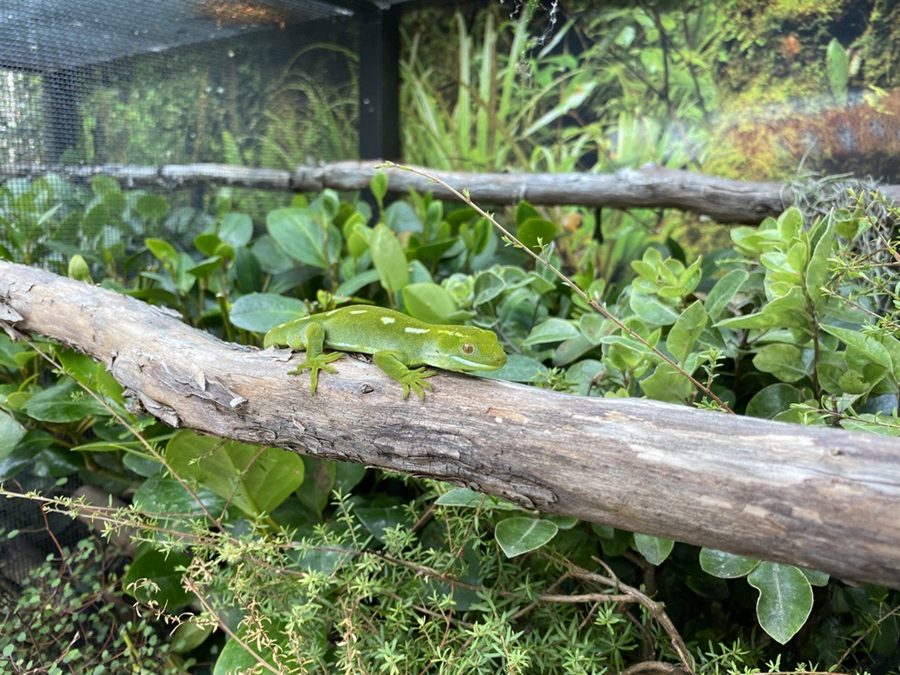
At the Wellington Zoo, you can see Green Geckos in a special habitat by HeroHQ, where you can often see pairings of the geckos as part of the programme and learn about what makes them special, Ben says. Read More…