What are the “bitcoin bonds†that Nayib Bukele is preparing, how viable are they and how should Guatemala analyze them

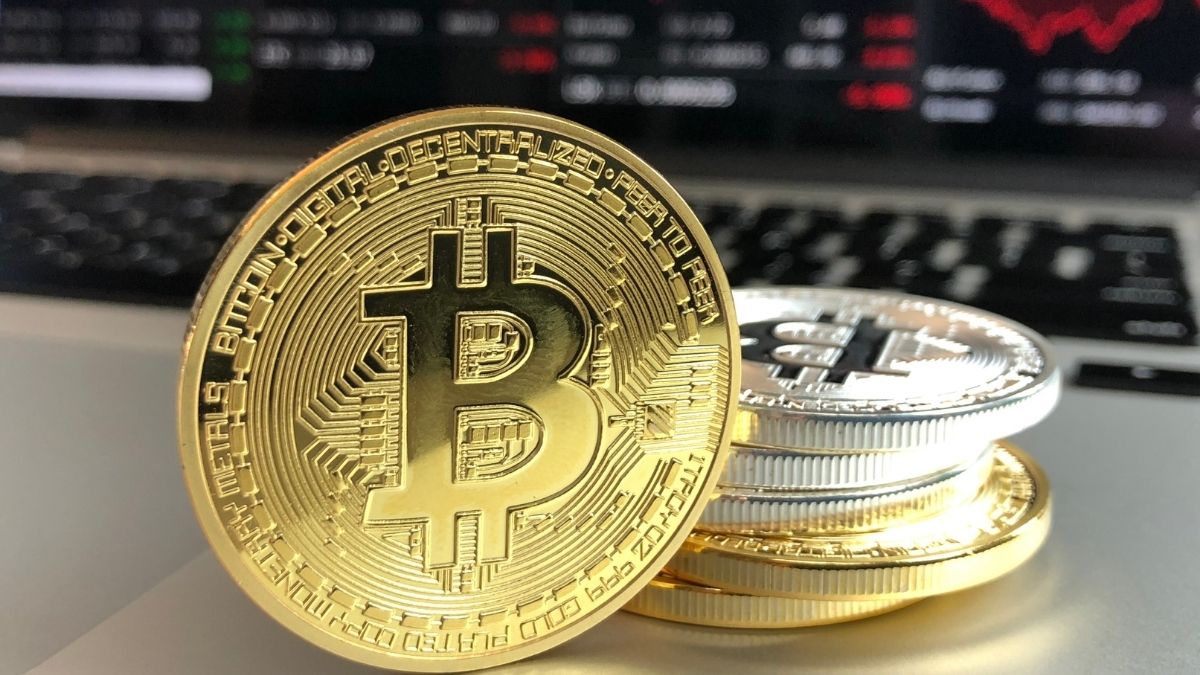
The government of El Salvador announced that it will soon launch a Bitcoin Bond issue, with the aim of providing more confidence to the local market so that it uses this type of instrument, as a new investment option. However, specialists believe that it could trigger consequences that would put its macroeconomic stability at risk.
The issuance of these debt securities for US$1 billion would be backed by bitcoins for a term of 10 years and they intend to place them at a rate of 6.5%, funds that would be used for the construction of Bitcoin City. It is expected that they will be available between February and March, informed the Minister of Finance, Alejandro Zelaya.
The official stated that there are already investors interested in some US$200 million and recently assured that the traditional securities market will not be abandoned, so they will continue to issue government bonds, while the new bonds are being analyzed.
Zelaya added that the bitcoin bond issuance strategy "could be quite interesting as a mechanism for managing El Salvador's debt and it opens a new financing window for us to better manage our repayment curve."
“There are risks, but it is the future”
In the opinion of the financial advisor Irving de la Cruz, the Bitcoin Bonds are derived from the same type of instruments, that is, it is another type of investment, only in that cryptocurrency, and is interpreted as a diversification of the sources of fundraising because Currently, there are already investment funds of this type.
“El Salvador's announcement to issue Bitcoin Bonds is to give the local market more confidence, so that it uses these instruments as a new investment option. Let us remember that every investment has risks and this is not the exception”, he emphasized.
Clynton López Flores, director of Economics at the Faculty of Economic Sciences of the Francisco Marroquín University (UFM), pointed out that the markets have recently added a significant risk premium to traditional El Salvador bonds.
"It is risky and I would dare to say that it will work, if the big central banks (the United States and the European Central Bank) continue with the policies of excess liquidity that have led to the atypical form of bubble in these assets," he said. .
López says he respects the investor's right to decide where to put his money, “but for a country to use its macroeconomic stability to speculate on the whims of a president is terrible. It would be different if El Salvador had a fiscal surplus and was looking for innovative ways to return those taxes to its citizens.”
In his opinion, “it is a bad sign that authoritarian governments do not have a good institutional framework that restricts them because they are examples that other countries can take to abuse. For example, in the Banco de Guatemala the rules that govern it have been weakening; for example, in the neutrality of intervention on the exchange rate.”
And he explained that it is a financial instrument that represents a debt between the issuer and the holder of the bond. In this case, the repayment obligation would be backed by bitcoins and the base return of 6.5% would be paid with the extraordinary profits derived from the value of bitcoin at a given time.
“The idea is to use half of the proceeds for certain purposes and the other half to buy bitcoins and speculate with them. They base the repayment of the bond on a future appreciation of that cryptocurrency,” he stated.
How should Guatemala analyze it?
María Antonieta del Cid de Bonilla, former president of the Bank of Guatemala (Banguat) and the Monetary Board (JM), commented that it is the first time that a country has ventured with an issue of this nature. "In the case of El Salvador, the debt was already high before the pandemic and increased to around 80% of the Gross Domestic Product (GDP) as a consequence of the health crisis."
And he indicated that, at the moment, investors have lost confidence in El Salvador's bonds that are already on the market, due to the macroeconomic imbalances that said country faces, in such a way that to acquire them, they demand a very high interest rate. , which is one of the largest in the region.
But in the case of achieving the placement of these bonds, in the short term it would give the neighboring government a breather of liquidity, taking into account that in 2023 they have significant maturities. “But the macroeconomic problem will not be solved with this; moreover, it can get worse if bitcoin is considered to be a speculative asset and therefore its price is quite volatile,” he warned.
Regarding the impact for Guatemala of this negotiation, De Bonilla considered that none is seen at the moment, although De la Cruz believed that this type of investment only adds to those already existing in the regional market and may be one more option. , now that its price has had a certain drop.
“This new market is gaining strength in the world and someone has to take that big financial step, which is what El Salvador is doing. Each investor is free to choose how to allocate their resources and the so-called “sophisticated” participate in this type of negotiations, because they have enough experience in trading in volatile markets such as bitcoin, ”he said. Read More…