What are the Christmas traditions in Spain?
-
 Loading...
 - Robert Armstrong
- 14 Dec 2021
- 451 Views
- 0 Like
- 0 Comment
Christmas is the most wonderful time of the year. All around the world people celebrate the holiday and enjoy the festive period, and of course Spain is no different in that regard. However, Christmas and New Years in Spain is not quite the same as many other countries: here the locals have many of their own typically Spanish Christmas decorations and activities and New Year customs that may be a bit surprising to foreigners. We've put together some of the weirdest and wackiest Christmas and New Year celebrations in Spain:
1. What is Christmas called in Spain?
2. There is no Santa Claus
3. The fat lottery
4. Spaniards eat grapes to celebrate New Year
5. Christmas food in Spain
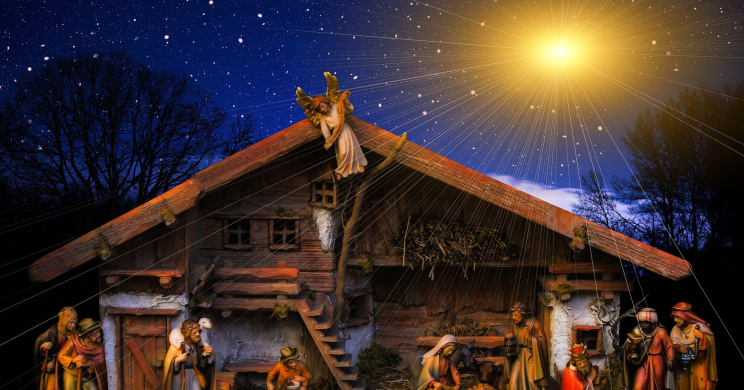
6. Portal de Belén
7. The Caga Tió
8. The Basque Santa Claus
9. April Fools’ in December
10. Midnight mass
What is Christmas called in Spain?
Before we get into the nitty gritty of the most wonderful Spanish Christmas traditions which take place between 24th December and 6th January, you may need to know what Christmas is called in Spain. Spain truly comes alive to celebrate Christmas, or "Navidad" in Spanish. However Spain's various regions with their own languages of course have their own ways of wishing a "Feliz Navidad"; if you visit Catalonia then it's 'Bon Nadal'; in Galicia 'Bo Nadal' and in the Basque Country the locals will say 'Eguberri on'.
There is no Santa Claus

Traditionally, Spanish people have never celebrated Father Christmas coming to town in December, although it is becoming more common. Instead, the presents are usually delivered to children on 6th January by the Reyes Magos, the Three Wise Men. This means Spanish kids have to wait a full twelve days more than most of us to receive their gifts, although nowadays this is starting to change, and many get Christmas presents on both Christmas Day and 6th January, which is the Feast of the Epiphany.
What’s more, the Reyes Magos parade down the streets of every village and city in Spain on 5th January every year, riding on big parade floats and throwing sweets and candy to the children. This parade, known as the ‘cabalgata’, is a Spanish Christmas tradition you simply can’t miss. In 2020/2021 many of these wonderful cabalgatas were cancelled but this year they will hopefully be on, to provide a unique spectacle that you won't find elsewhere.
The fat lottery

Every Spanish person plays the lottery at Christmas, often buying a tenth of a ticket and playing the same numbers as their group of friends or coworkers. This special Christmas lottery is called ‘El gordo’, or ‘the fat one’, and the numbers are normally announced throughout the whole morning of 22nd December on live TV. Not only that, but they actually have school children singing the winning numbers and jackpot totals!
Spaniards eat grapes to celebrate New Year

The clock is counting down to the New Year, and in every household in Spain, people are holding a handful of 12 grapes to say goodbye to 2021... 3… 2… 1… and instead of shouting “Happy New Year!” and kissing each other, the Spaniards are busy trying to eat the twelve grapes before the twelve chimes of the bells are over. If you don’t manage to eat them all, they say you’ll have bad luck for the following year. You might not be superstitious, but best to get all those New Year grapes down for a lucky 2022... just in case!
Christmas food in Spain

We all know that Spain does great food, and at Christmas they have some great festive specialties. The main Crimbo meal normally takes place on 24th December, Christmas Eve, and while of course they eat the obligatory Serrano ham, seafood and fish also play a big part in the menu, especially king prawns, which might seem odd to some anglophones. For dessert, there is the almond sweet turrón which is like nougat, and the star of the show, the Roscón de Reyes, a cake filled with whipped cream with candied fruits on top and a bean and a figurine baked inside. If you get the slice with the little toy, you win the honour of wearing a crown, but if your slice contains the bean, you’ll have to pay for next year’s roscón! Read More…