What is a Baitcasting Reel?
-
 Loading...
 - Leroy Kowalski
- 30 Dec 2021
- 416 Views
- 0 Like
- 0 Comment
Exactly what is a baitcasting reel?
People often ask me, what is a baitcasting reel as opposed to a spin-casting reel? So, I’d like to clear everything up and explain the differences between the two. The different types of reels definitely have both advantages as well as disadvantages over each other. And, you generally will find that fishermen will prefer either one or the other, but not both.
Position of the Reel
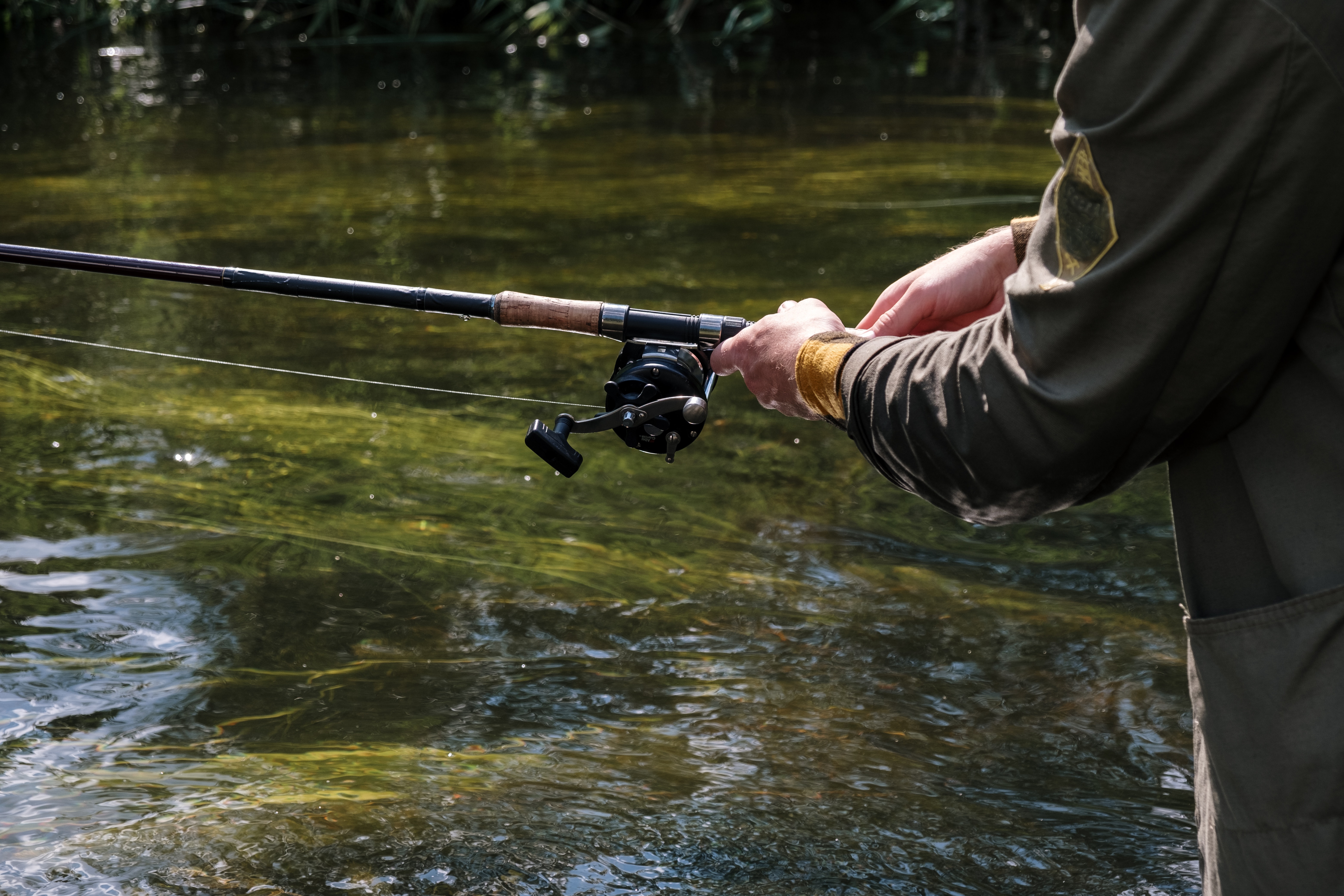
The position of the baitcasting reel to the fishing pole is parallel, where the spin-casting reel is perpendicular to the pole. This means that the line in a baitcasting reel comes off of the side of the reel, whereas in a spin-casting reel, the line comes off of the top of the reel.
Advantages
The advantages of the Baitcasting reel are mostly in the size of the fish that can be landed by using one. Because of the reels characteristic orientation to the pole, the baitcasting reel traditionally accepts much heavier line, and can also be paired with a much heavier pole that allows you to go after much larger fish.
The Disadvantages
However, baitcasting reels also present the fishermen with their own unique quirks of the design, and have to be cast and used differently than you cast and use a spin-casting reel. Also, Baitcasting reels have a greater number of adjustable parts, and it’s important to make sure all of these adjustments are made correctly, in order to assure the fisherman of the correct operation of the reel.
The Reel Release Button
The baitcasting reel has a release button at the base of the reel, approximately in the same position as it would be on the spin-casting reel. This button is operated by the thumb, and normally pushed during casting of the rod at the apex of the cast, when the rod is pointing out from the fisherman at approximately a 45 degree angle.
The Drag Mechanism
The baitcasting reel also has a star-shaped wheel with prongs coming off of it that is positioned between the reel’s crank and the side of the reel. This wheel is used to set the drag on the line after the cast has been made.
The Centrifugal Brakes
One area where the baitcasting reel differs from the spin-casting reel is that it has a centrifugal braking system. This braking system is contained in the drum of the reel, and the fisherman can access the brakes to set them by simply raising the cover of the reel on the opposite side of the reel from the crank and drag. The reel typically has as many as six brakes arrayed in a circle facing outward inside the reel’s spool.
Setting these brakes is necessary as they work automatically to slow the reel down from winding off line too quickly. The faster the line speeds up in unwinding the line, the more pressure that the brakes apply to the side of the spool to slow it down.
Left and Right Reels
Like spin-casting reels, the baitcasting reel typically comes with the crank on the right side of the reel to be operated by the right hand. If you are not comfortable with this set-up, there are manufacturers that make baitcasting reels with the crank on the left side.
Use of the Thumb
In casting the baitcasting reel the most important tool in your arsenal is your thumb, Practice casting until you are able to control the speed at which the line leaves reel after the cast, easily with your thumb. This will be invaluable to keep from having a problem occur which is called backlash, and which is explained in the next paragraph.
Backlash
One of the most annoying quirks of the baitcasting reel occurs because the line winds off from the side of the reel. If the line winds off too quickly and is stopped too suddenly, the reel develops what is called a backlash. This happens when the momentum of the reel continues to unwind line from the reel while the momentum of the line already in the water has stopped. What you end up with is a tangled mess of line on the reel itself.
Casting
Once you have mastered using your thumb in order to control the speed of the line winding off of the reel, and can prevent the reel from experiencing backlash. You are ready to try casting the baitcasting reel. The trick to remember is that the idea in baitcasting that every cast is a lob. You build up to full strength casts by continuously and easily lobbing the lure towards the target. This is a way to ensure that you are still able to control the speed of the line coming off of the reel.
As you work on this technique, you’ll find yourself making longer and longer casts while still maintaining control of speed of the line. You’re now getting close mastering the art of baitcasting.
Fixing a Backlash
Let’s say that you haven’t quite mastered the art of using the thumb, and your baitcasting reel has developed a backlash. Here’s how to untangle it. Pull out the line of the snarl as far as it will go until it stops. Hold your thumb over the snarl on the reel, engage the crank, and start winding in the line. When it gets to a place where you can’t reel it in anymore, place your thumb on the snarl again, engage the crank again and wind the line in again.
By repeating this back and forth movement of the line on the reel, you’ll be able to untangle the snarl affecting your reel and get back to fishing as soon as possible.
Applications of Baitcasting Reels
Baitcasting reel are one of the earliest reel that were developed and so, they were made for about every type of fishing. They are commonly used for slat-water applications, as the typically are able to hold much heavier weight line that a spin-casting rig.
Marlin fishermen swear by the baitcasting reels. They are typically the only type of reel that you’ll find on a large marlin fishing boat. By learning their quirks and how to control the line through the baitcasting reel, you’ll enjoy the thrill of catching bigger and stronger fish.


