What's extraordinary about the ordinary?
-
 Loading...
 - Asir Hoque
- 10 Jun 2022
- 275 Views
- 0 Like
- 0 Comment
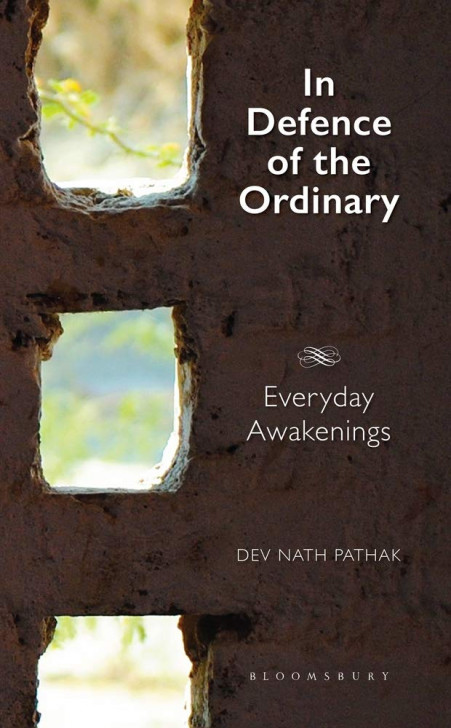
The idea of the ordinary idea in everyday life as a critical issue has been meticulously diagnosed by a New Delhi-based anthropologist, Professor Dev Nath Pathak, in his recent biographical ethnography, In Defence of the Ordinary: Everyday Awakenings (Bloomsbury Academic, 2021). One of the bittersweet problems of this book is that it is hard to categorise into conventional genres. Rather, it dilutes the conventional binary of academic and non-academic. Pathak has taken a number of exemplified "templates" of ordinariness in this book from different literary sources, including Rabindranath Tagore's celebrated rejoinder, Gora (1910).
In his book, the author allows us to rethink the concept of the ordinary versus the extraordinary, giving precedence to the former. It "invites us to rethink provocative ideas like why we don't value ordinariness", according to the publisher's website.
For all latest news, follow The Daily Star's Google News channel.
Gora, the protagonist in Tagore's novel, is initially imbibed in the idea of being a "pure race" Hindu nationalist which makes him extraordinary in his eyes. But when Gora gets to know that he is not from a lineage of "pure blood", he changes from an extraordinary human to an ordinary one. Taking into account this transformation, the author of In Defence of the Ordinary calls us to look at how Tagore ennobles the idea of the ordinariness of his protagonist. Another example Pathak uses is from the novel Dharmputra, written by Acharya Chatursen. According to the cinematic adoption of the novel, the protagonist Dileep is born to a Muslim mother, gets lost as a child, and is eventually found and brought up by a Hindu parent. Dileep grows up to be a militant fascist sworn to decimate Muslims— and his first kill, by fate, is his biological Muslim mother. It is in this moment of catharsis where Dileep discovers that he is not the pure, "extraordinary" Hindu that he thought he was. This superlative, pure, and hierarchical notion of the "extraordinary" ends with a realisation that essentially everyone is ordinary.
In Pathak's book we see instances of how the distinctive ordinary tendencies of everyday life are dipping and are capitalised under different industrial markets such as the child care industry that turns ordinary parenting on its head; the marriage market, which demands a classist, elitist, and somewhat racial match-making of virtues between bride and bridegroom; even the teaching vocation has become a service providing industry that submerges the mutual ordinary dialogue of respect and understanding between teachers and students.
By and large, the author warns us that the sublime notions of being extraordinary imbibe regulatory morals without understanding our ordinary tendencies—and this creates a repressive self and ultimately, a repressive society. The author has taken on the task of researching vast discursive materials for this book from incongruence sources like folklore, mythology, film, music, poetry, novel, story, art and aesthetics, scripture, language, philosophy, psychoanalysis, and political polemics on the ground of dialogical illumination.
He begins his book with a tiny story. "It is ridiculous to feel ordinary these days. A 6-year-old child in Class 1 says innocently, "I am not like some of those other kids who can do everything difficult. I give up easily; I am so simple and ordinary." It sounds as though giving up is the crime of ordinary people, while taking up is the heroism of the extraordinary. In a number of other chapters, we are able to see that Pathak, growing up, was too infatuated by the extraordinary heroism of Amitabh Bachchan, who seemed to take on feats of extraordinariness to win over the ordinary world. Read More...