What to watch out for and how to use laminar flow hoods in the lab ?
-
 Loading...
 - Celeste Auclair
- 19 Apr 2023
- 63 Views
- 0 Like
- 0 Comment
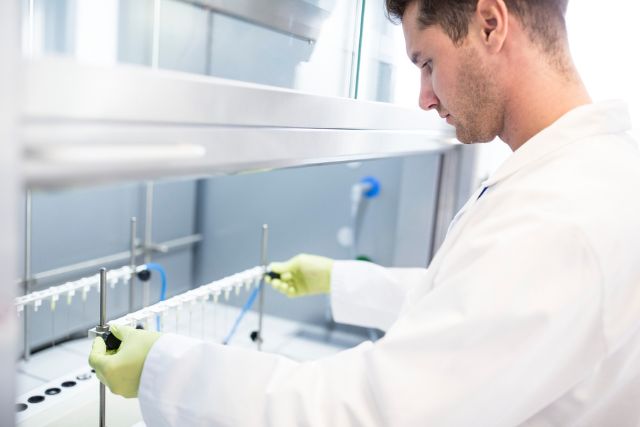
Examples of laminar flow hoods are biological safety cabinets and clean benches (a.k.a. cell culture hood or tissue culture hood). These are HEPA-filtered laboratory enclosures that are carefully aimed. Several of these hoods guard against contamination of objects put on the work surface. Others shield the user from pollutants in the working environment.
A laminar flow hood or cabinet, also known as a tissue culture hood, is an expertly constructed bench intended to keep semiconductor wafers, biological samples, and other particle-sensitive materials free of contamination. A HEPA filter is used to extract air, which is then blown in a very even, laminar flow in the direction of the user. The sample is protected from the user due to the direction of air movement, but the user is not protected from the sample. Often composed of stainless steel, the cabinet has no cracks or crevices where spores could grow.
Both horizontal and vertical versions of these hoods are available, and there are numerous cabinet kinds with various permissible applications and airflow patterns.
Laminar flow hood or cabinet operating procedure:
- Before turning on the laminar flow hoods or cabinet, it is necessary to inspect the cabinet to make certain that it does not contain anything that could be damaged by exposure to ultraviolet light.
- Following this, the glass barrier of the hood is retracted, and the ultraviolet light is activated. To guarantee that the surface of the operating bench has been properly sterilised, the UV light needs to be turned on for approximately 15 minutes.
- Following this, the ultraviolet (UV) light is turned off, and a pause of approximately ten minutes is allowed before the airflow is activated.
- Around five minutes before the start of the surgery, the airflow will be activated.
- After this step, the glass shield is opened, and the fluorescent light is also turned on while the operation is being performed.
- The work surface of the cabinet can be sanitised with different disinfectants such alcohol that is 70% strength in order to provide an additional layer of safety.
- After the task has been finished, the airflow and the fluorescent lamp are both turned off, and the glass shield is likewise turned off. Read More…