What will 2023 bring for Spain after record year of drought and fire?
-
 Loading...
 - Lara Moreno
- 24 Mar 2023
- 53 Views
- 0 Like
- 0 Comment
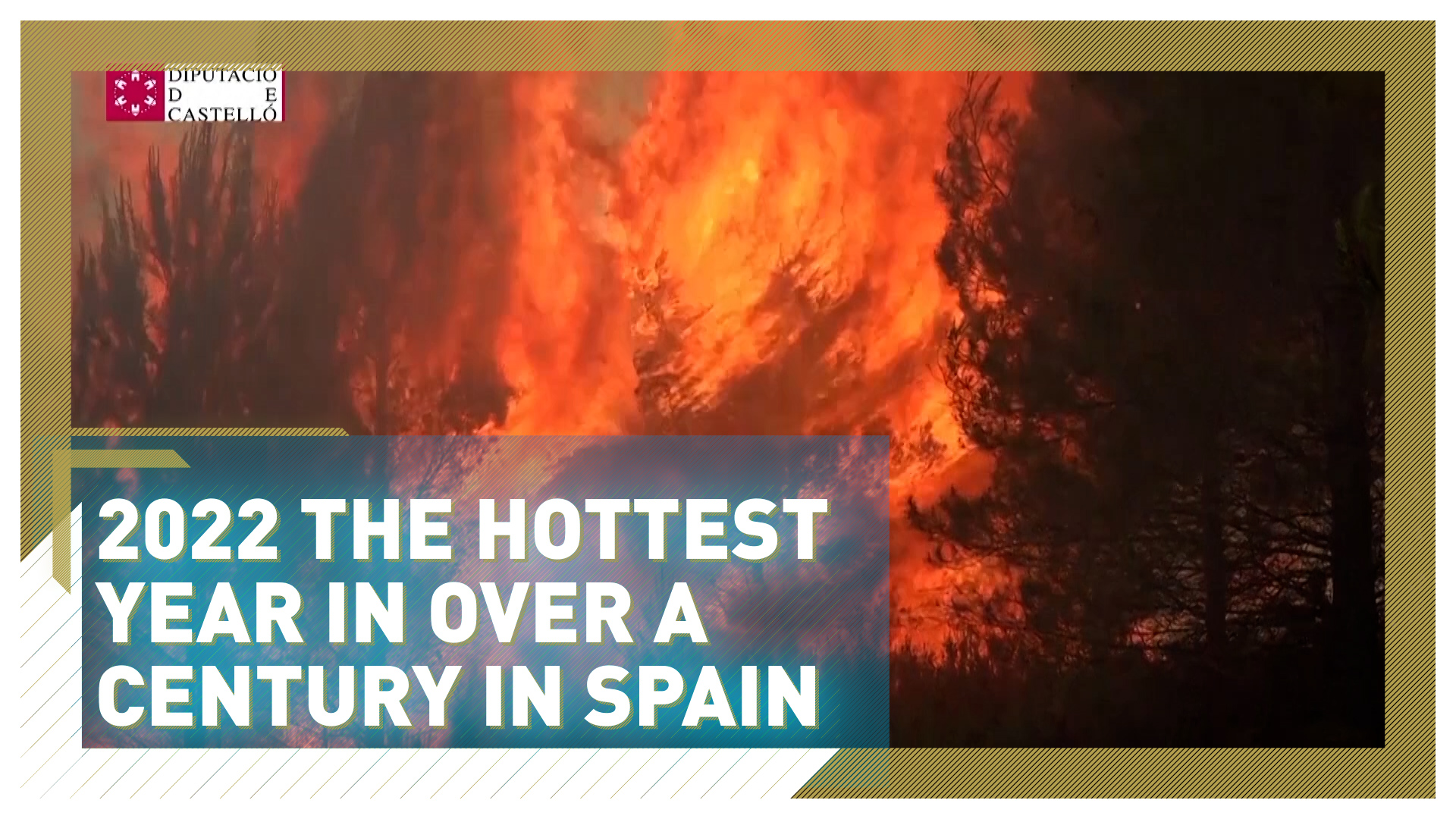
The worst year of wildfires ever recorded in Spain happened amidst record-breaking heat waves across Europe in a summer that seemed like it would never end.
Thousands of people were evacuated from their homes across the country as sustained temperatures well above 40C (104F) swept across southern Europe. Personal tragedies are still fresh in the minds of many, like the firefighter and farmer who lost their lives in a blaze in Zamora in July. Or the train passengers who panicked and broke windows to escape an out-of-control fire in Valencia in August.
Dangerous feedback loop
Over 300,000 hectares burned across the country in 2022 - the most ever - and unseasonably hot weather in October turned many dry areas into a tinderbox. Many experts point to climate change as a key cause of this lethal rise in heat and fire. "It is clearly a major factor," climatologist Martin Barreiro told CGTN. "Droughts produce a lack of hydration in the vegetation and the fires spread faster." "The fact that temperatures continue to rise also means more evaporation and it becomes a feedback loop - the droughts are more intense and the fires more violent."
Europe heating twice as fast
Concerning data appears to show that temperatures are rising more than twice as fast as the global average in Europe and experts point to Spain as one of the most vulnerable countries in the EU to climate catastrophe. Higher temperatures, average sea level rises and a reduction in water availability are great threats in both the short and long term. The consequences are already becoming clear with the scale of the wildfires, and the people tasked with fighting the fires face an ever-increasing danger. Read More…