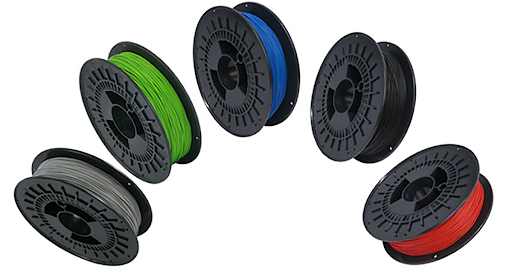
Which 3D Printing Jobs Require Soft PLA Filament & Why
-
 Loading...
 - 3D Printing USA
- 04 Apr 2025
- 35 Views
- 0 Like
- 0 Comment
This article explores the characteristics of PLA flexible filament, the advantages it offers in practical settings, and the types of 3D printing tasks where it becomes the material of choice.
In the diverse world of additive manufacturing, material choice can significantly impact the success and functionality of a printed part. Among the many options available, soft PLA filament—a variation of standard PLA—has gained traction for applications requiring both flexibility and ease of use. Unlike rigid thermoplastics, flexible PLA filaments offer a unique balance between pliability and printability, making them suitable for a wide range of specialized jobs.
This article explores the characteristics of PLA flexible filament, the advantages it offers in practical settings, and the types of 3D printing tasks where it becomes the material of choice.
What Is Soft PLA Filament?
Soft PLA filament is a flexible derivative of polylactic acid, a biodegradable and plant-based polymer commonly used in desktop 3D printing. While standard PLA is known for its stiffness and ease of printing, soft PLA incorporates added plasticizers or alternative polymer structures to improve elasticity and impact resistance.
Key Properties:
- Shore hardness between 85A–95A, depending on the brand
- Higher elongation before break compared to rigid PLA
- Good layer adhesion and reduced warping
- Biocompatibility and low environmental impact
Unlike materials such as TPU or TPE, soft PLA is easier to print with on standard setups and requires fewer adjustments, making it an attractive option for beginners and professionals alike.
Advantages of Using PLA Flexible Filament
Flexible PLA filaments provide several benefits, particularly in use cases that demand stress absorption, bending, or repeated movement.
Primary Advantages:
- Ease of printing on standard FDM machines
- No heated bed required, although beneficial for larger prints
- Low odor emissions, making it suitable for office or classroom environments
- Good surface finish and minimal stringing with tuned settings
- Eco-friendliness due to its plant-derived source material
These features allow manufacturers, hobbyists, and educators to experiment with flexible printing without investing in high-end hardware or exotic materials.
Which 3D Printing Jobs Benefit from Soft PLA?
Soft PLA filament shines in projects where both form and function require elasticity, durability, or cushioning. Below are some of the most common applications:
1. Wearable Components and Accessories
From wristbands and watch straps to custom-fit headphone covers, soft PLA is ideal for producing flexible parts that interact with the human body. The filament provides comfort while maintaining enough structure to hold shape over time.
2. Protective Bumpers and Shock-Absorbing Elements
For parts that need to endure impact—such as corner guards, phone cases, or drone landing pads—PLA flexible filament helps absorb energy and reduce cracking. It is often used in prototype development for consumer electronics where impact resistance is key.
3. Custom Gaskets and Seals
Soft PLA can be used to print low-pressure seals, spacers, or gaskets where a moderate degree of flexibility is sufficient. While it may not replace rubber in all industrial settings, it's a valuable material for prototyping form-fitting components.
4. Footwear Prototypes and Orthotic Inserts
Shoe soles, insoles, and other ergonomic supports benefit from soft PLA’s combination of compressibility and durability. Designers can create footwear elements that mimic real-world conditions for comfort and responsiveness during testing phases.
5. Educational and Interactive Models
In classroom settings, teachers and students use flexible PLA filaments to create bendable parts or models that demonstrate movement, such as hinge-based mechanisms or anatomical representations. Its printability makes it accessible in educational environments.
6. Grips, Handles, and Ergonomic Add-ons
Tools, utensils, or custom handles designed for improved grip can be printed with 3D printer filament that includes soft PLA. The material conforms slightly to the hand while resisting tearing, enhancing user experience in custom products.
7. Toy and Articulated Part Design
For hobbyists creating figurines, articulated joints, or soft-contact toys, PLA flexible filament allows for both creativity and functionality. It produces safe, flexible results suitable for interaction or display.
Tips for Printing with Soft PLA
To get the best results from soft PLA filament, certain print settings and techniques can improve quality and consistency:
- Print speed: Reduce to 20–40 mm/s to maintain layer control
- Retraction: Use minimal retraction to prevent filament buckling
- Nozzle temperature: Typically between 200–220°C, depending on the brand
- Cooling: Moderate part cooling can help maintain shape during bridging
- Bed adhesion: Use a PEI surface or glue stick to avoid warping
While it prints similarly to standard PLA, slight adjustments are essential for optimal performance.
Final Thoughts
Soft PLA filament offers a compelling combination of flexibility and ease of use that makes it a preferred material for numerous 3D printing tasks. Whether designing wearable items, impact-resistant parts, or interactive prototypes, PLA flexible filament adapts to a wide range of requirements with minimal hardware limitations.
As the range of 3D printer filament options continues to expand, soft PLA stands out as a material that bridges the gap between rigidity and elasticity, offering accessible innovation to users across all skill levels.