Which Schengen area countries have border controls in place and why?
-
 Loading...
 - Bailey Egger
- 11 May 2022
- 324 Views
- 0 Like
- 0 Comment
The European Court of Justice has recently said that checks introduced by Austria at the borders with Hungary and Slovenia during the refugee crisis of 2015 may not be compatible with EU law.
Austria has broken the rules of the Schengen area, where people can travel freely, by extending temporary controls beyond 6 months without a new “serious threat”.
But Austria is not the only European country having restored internal border checks for more than six months.
Which countries have controls in place and what does the EU Court decision mean for them?
When can EU countries re-introduce border checks?
The Schengen area, taken from the name of the Luxembourgish town where the convention abolishing EU internal border controls was signed, includes 26 states: the EU countries except for Ireland, Bulgaria, Cyprus, Croatia and Romania, plus Iceland, Norway, Lichtenstein and Switzerland, which are not EU members.
The Schengen Borders Code sets the rules on when border controls are permitted. It says that checks can be temporarily restored where there is a “serious threat to public policy or internal security”, from the organisation of a major sport event to a terrorist attack such as those seen in Paris in November 2015.
However, these checks should be a “last resort” measure, should be limited to the period “strictly necessary” to respond to the threat and not last more than 6 months.
In exceptional circumstances, if the functioning of the entire Schengen area is at risk, EU governments can recommend that one or more countries reintroduce internal border controls for a maximum of two years. The state concerned can then continue to impose checks for another six months if a new threat emerges.
Which countries keep border checks in place?
Countries reintroducing border controls have to notify the European Commission and other member states providing a reason for their decision.
Based on the list of notifications, these countries currently have controls in place at least at some of their borders:
- Norway – until 11 November 2022 at ferry connections with Denmark, Germany and Sweden. These measures have been in place since 2015 due to terrorist threats or the arrival of people seeking international protection and have sometimes extended to all borders.
- Austria – until November 2022 11th, since 2015, at land borders with Hungary and with Slovenia due to risks related to terrorism and organised crime and “the situation at the external EU borders”.
- Germany – until November 11th 2022, since November 12th 2021, at the land border with Austria “due to the situation at the external EU borders”.
- Sweden – until November 11th 2022, since 2017, can concern all borders due to terrorist and public security threats and “shortcomings” at the EU external borders.
- Denmark – until November 11th 2022, since 2016, can concern all internal borders due to terrorist and organised criminality threats or migration.
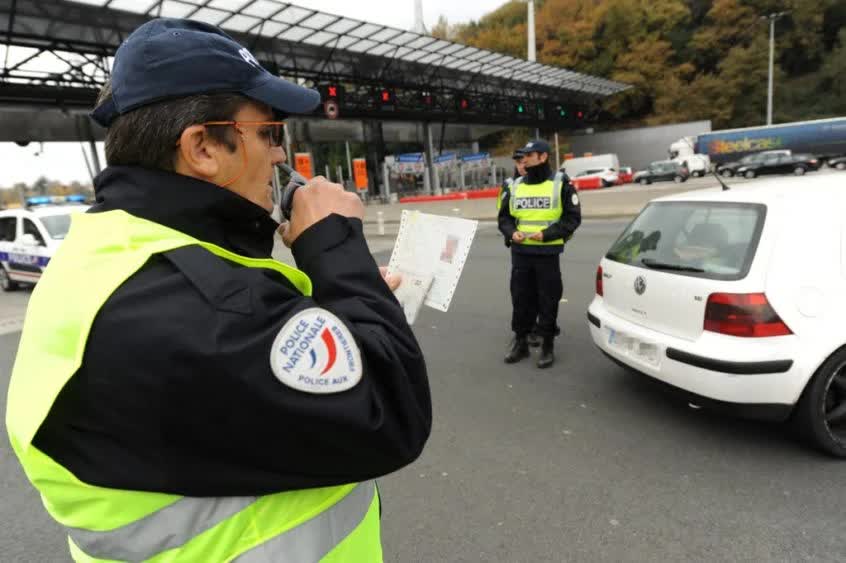
- France – until October 31st 2022 since 2015, due to terrorist threats and other events, including, since 2020, the Covid-19 pandemic.
- Estonia – until May 21st 2022, from April 22nd 2022, at the border with Latvia “to facilitate the entry and reception of people arriving from Ukraine”.
Norway, Austria, Germany and France also said they are operating checks on non-EU citizens.
Can Schengen rules survive?
Despite the exceptional nature of these measures, there have been continuous disruptions to the free movement of people in the Schengen area in the past 15 years.
Since 2006, there have been 332 notifications of border controls among Schengen countries, with increasing frequency from 2015. In addition, 17 countries unilaterally restored border controls at the start of the pandemic.
In December 2021, the Commission proposed to reform the system to ensure that border controls remain an exception rather than becoming the norm.
According to the proposals, countries should consider alternatives to border controls, such as police cooperation and targeted checks in border regions.
When controls are restored, governments should take measures to limit their impacts on border areas, especially on the almost 1.7 million people who live in a Schengen state but work in another, and on the internal market, especially guaranteeing the transit of “essential” goods.
Countries could also conclude bilateral agreements among themselves for the readmission of people crossing frontiers irregularly, the Commission suggested.
If border controls have been in place for 6 months, any notification on their extension should include a risk assessment, and if restrictions are in place for 18 months, the Commission will have to evaluate their necessity. Temporary border controls should not exceed 2 years “unless for very specific circumstances,” the Commission added.
At a press conference on April 27th, European Commissioner for Home Affairs Ylva Johansson said the EU Court ruling about Austria is in line with these proposals.
“What the court says is that member states have to comply with the time limit that is in the current legislation. Of course we can propose another time limit in the legislation… and the court also says that it’s necessary for member states, if they would like to prolong [the border controls] to really do the risk assessment on whether it’s really necessary… and that’s exactly what’s in our proposal on the Schengen Border Code.”
Criticism from organisations representing migrants
It is now for the European Parliament and EU Council to discuss and adopt the new rules.
A group of migration organisations, including Caritas Europe, the Danish Refugee Council, Oxfam International and the Platform for International Cooperation on Undocumented Migrants (PICUM) have raised concerns and called on the EU institutions to modify the Commission proposals. Read More...