Why Bonds, Not Stocks, Could Predict the Next Economic Crisis in the US
-
 Loading...
 - Jenab Chan
- 16 Apr 2025
- 24 Views
- 0 Like
- 0 Comment
Recent turmoil in the bond market has raised alarms among economists, suggesting that the next economic crisis in the United States may be signaled by developments in Treasury yields rather than stock market fluctuations. A sell-off in US Treasuries has sparked concerns that long-term investor confidence in the US economy is waning, particularly in the wake of President Donald Trump’s aggressive tariff policies.
Bonds are investment instruments where buyers lend money to governments or corporations for a specified period in exchange for regular interest payments and the return of the principal amount at maturity. While bonds typically offer lower returns than stocks, they are considered low-risk investments, especially US Treasury bonds, which are viewed as safe havens due to the backing of the US government.
In normal market conditions, the prices of Treasury bonds and stocks move in opposite directions; when stock prices fall, investors often flock to bonds, driving their prices up and yields down. However, recent events have disrupted this pattern, raising concerns about the underlying health of the economy.
Recent Developments in the Bond Market
Following Trump’s announcement of sweeping tariffs on April 2, 2025, there was a significant sell-off of longer-maturity US Treasuries, leading to a sharp increase in yields. For instance, the yield on the 10-year Treasury rose to 4.58 percent, a notable jump from less than 3.9 percent just a week prior. This sell-off occurred despite substantial losses in the stock market, which typically would prompt investors to seek the safety of bonds.
The rise in Treasury yields is viewed as a troubling indicator for the US economy, suggesting that investors are increasingly uncertain about the government's ability to manage its debt in the long term. Anastassia Fedyk, an assistant professor of finance at the Haas School of Business, noted that while investors may not expect an immediate default, the uncertainty surrounding the US economy is palpable.
Implications of Rising Yields
Higher Treasury yields can have far-reaching consequences. They increase the cost of borrowing for the US government, which currently faces a national debt exceeding $36.22 trillion. This situation raises the risk of default and complicates the government's ability to service its debt. Additionally, rising yields affect borrowing costs for consumers and banks, which are critical to the overall health of the financial system.
The bond market's influence on government policy is well-documented, as seen in the case of former UK Prime Minister Liz Truss, whose resignation was precipitated by a spike in bond yields following her controversial budget proposals. Trump himself acknowledged the bond market's volatility, stating that people were becoming “a little queasy” about the situation.
Future Outlook for the Bond Market
While Treasury yields have decreased since Trump announced a 90-day pause on most tariffs, they remain elevated amid ongoing uncertainty regarding trade policies. The potential for new tariffs on imports, including semiconductors and pharmaceuticals, adds to the market's fragility. Fedyk emphasized that the uncertainty surrounding the trade war with China, particularly given that China is the second-largest foreign holder of US government debt, could lead to further instability in the bond market.
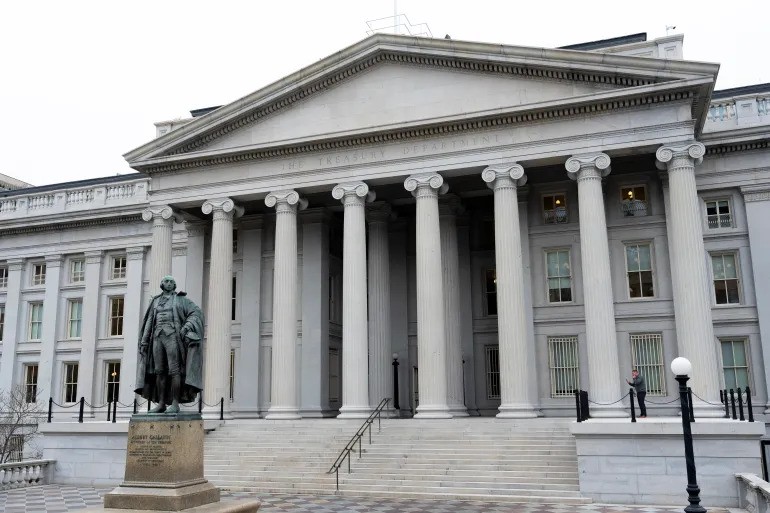
US Treasury Secretary Scott Bessent downplayed the sell-off in Treasuries, asserting that the country’s status as a financial safe haven is not at risk. He mentioned that the Treasury has various tools at its disposal, including the option to expand its debt buyback program, to stabilize the situation.
In conclusion, the current dynamics in the bond market suggest that investors are grappling with significant uncertainty, which could foreshadow broader economic challenges. As the situation evolves, the bond market will likely continue to serve as a critical barometer for the health of the US economy, potentially predicting the next economic crisis.