Wild Delta: Pelican, Symbol Of Danube Delta
-
 Loading...
 - robyn anna
- 25 Jul 2022
- 108 Views
- 0 Like
- 0 Comment
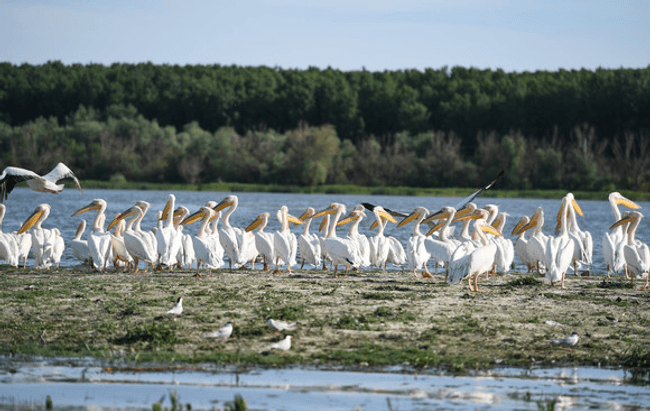
The common pelican, a summer guest of the Danube Delta Biosphere Reserve (RBDD) and a symbol of the area, is one of the most attractive species for tourists who arrive in the Delta, admiring from a distance the many white islands formed by birds, but also their way special feeding.
The end of July and the beginning of August is the period when the Delta counts the most birds, says the representative of a tourism agency, Daniel Petrescu.
"Basically now all the nesting birds have chicks flying out of the nest and there are areas of pelicans and cormorants. Now the pelicans have reached the point where they have to feed their little ones very frequently. It's the most spectacular time for those who are not initiated into ornithology. It is a show that anyone can appreciate, even if they are not specialists," Petrescu declared.
The pelican is a symbolic species for the Delta, the RBDD Administration, the institution subordinate to the Ministry of the Environment that imposes the rules for exploitation of the area, having this bird as its logo.
According to the data provided to AGERPRES by the Danube Delta National Research and Development Institute (INCDDD), the pelican, a species of impressive size, is one of the largest flying birds on the globe, along with the crested pelican and the albatross.
"The Danube Delta Biosphere Reserve houses the largest nesting population of the species in the northern hemisphere. 60-100 years ago, it was a common nesting species along the entire lower course of the Danube. Between 1990 and 2000, the population remained stable in Romania, registering between 3,000 and 4,000 pairs. Recent studies carried out by INCDDD expert teams have highlighted the fluctuating nature of the nesting population in the Danube Delta, even registering a maximum of 19,000 pairs in 2016. These large numerical fluctuations are determined by several factors, some of them being local, such as the availability of food and nesting places, and others are global, such as climate change," says INCDDD. Read More…


