Yoko, an artist in her own-o right
-
 Loading...
 - Eric Robert
- 21 Mar 2022
- 402 Views
- 0 Like
- 0 Comment
In the mainstream narrative of pop culture Yoko Ono, who turned 89 last month, is nothing short of a witch who cast a spell over John Lennon and was responsible for the Beatles splitting up in 1969.
British tabloids portrayed her as an enigmatic Asian woman shrieking in the background of celebrity rock concerts. Outside the conceptual and pop art circles of the Sixties and Seventies, her work – and its influence on the Fluxus movement (see below) – was barely mentioned.
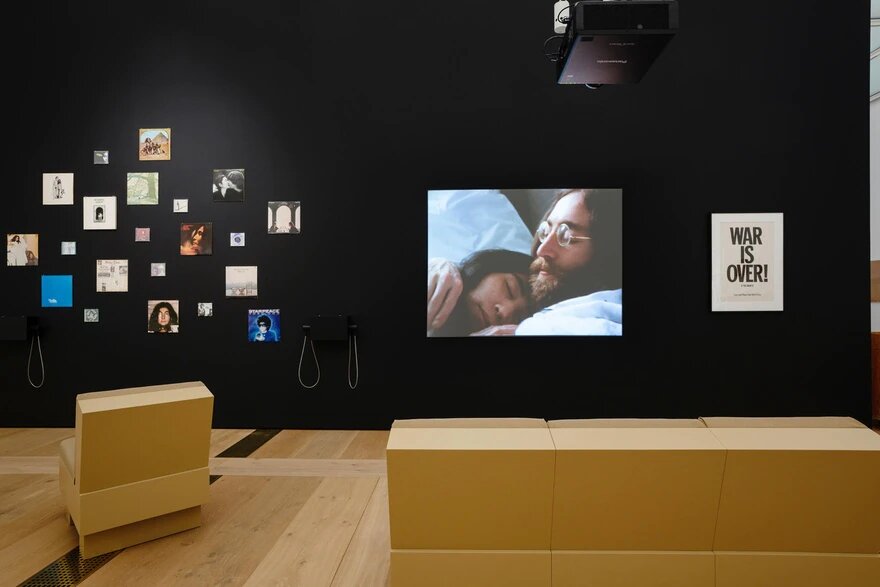
The exhibition at the Zurich Museum of Fine Arts (Kunsthaus Zurich) comes in the wake of a “rehabilitation” of Ono’s reputation. This is in part thanks to the recent release of Peter Jackson’s eight-hour documentary Get Back, a new edit of the extensive footage shot during the Beatles’ rehearsals for what would become the legendary Abbey Road rooftop concert, the band’s last public appearance.
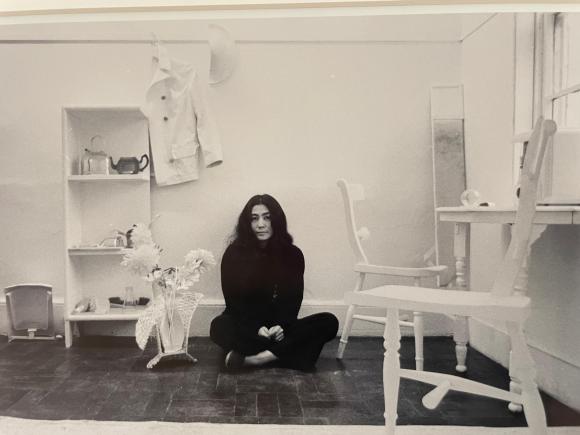
Ono attends the band’s daily work, quietly and patiently. She simply accompanies Lennon, without interfering in the band’s creative drive. But this brief Beatles moment is just an interlude in Ono’s long career, which stretches through several artforms, combining the personae of artist, poet, performer, lyricist, singer and political activist.
Flowing with the flux
“Yoko had no preferred form a priori,” American artist and Ono’s friend Jon Hendricks tells SWI swissinfo.ch. “She always took the medium that she needed at a particular moment.”
Hendricks, who collaborated with Kunsthaus curator Mirjam Varadinis on the Ono exhibition, has been working on a comprehensive archive of the Fluxus movement. Also known as the Gilbert & Lila Silverman collection, this collection was eventually donated, in 2008, to the Museum of Modern Art (MoMA) in New York.
Fluxus is an important first step in gauging Ono’s place in the fuzzy map of contemporary art since the 1960s. Based around the Lithuanian-American artist George Maciunas, Fluxus was more than a movement – it was an international community of creators of multiple forms including artists, architects, composers and designers.
Long before the internet, it connected people from Korea and Japan to Germany, Britain and the United States, and, via mail art, other people in more peripheral parts of the international arts circuit, for example in South America. Mail art was a way of exchanging art via mail in the 1960s and 1970s, especially from and between countries under dictatorships.
In the specific case of Yoko Ono, what is striking is her particular intent to not only reach out to the audience, but to touch it and be touched.
“Touch” is a vital concept in her works, many of which mention the act in their titles: Touch Piece, Touch Poem, or in her songs, from Touch Me (by the Plastic Ono Band, 1970) to the track Kiss Kiss Kiss with its refrain “touch touch touch touch me love” (1980). Read More…