Zimbabwean scientist explains rare discovery
-
 Loading...
 - Robert Wainaina
- 01 Aug 2022
- 96 Views
- 0 Like
- 0 Comment
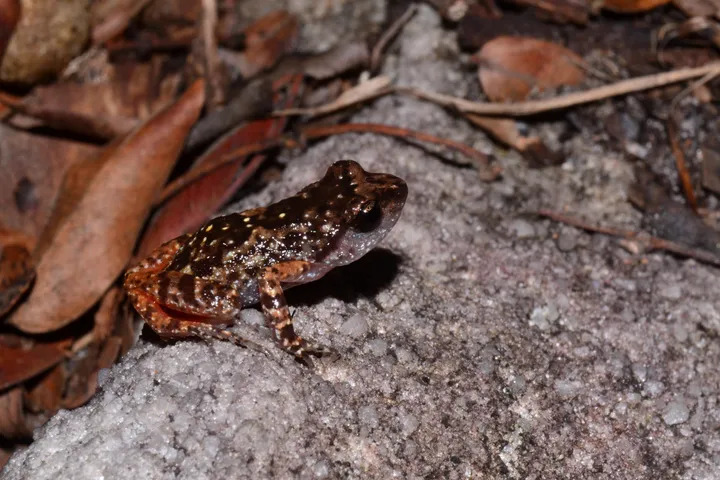
A tiny frog called the cave squeaker had not been seen for more than half a century and it had been placed on the international red list of threatened species.
Dr Robert Hopkins (80) of Parklands suburb who is an associate researcher at the Natural History Museum in Bulawayo and an internationally acclaimed frog research academic, led a team of researchers to find the frog species last seen in 1962.
After searching for 10 years they found it in December 2016, making headlines globally.
A man who had developed a strong passion for frogs from the age of six, had made history.
The ground breaking search team had Dr Hopkins' wife, Veronica, Francios Becker, who at the time was a MSc student at the University of Cape Town and Zimbabwean entomologist Herbst Scott, then a BSc student in entomology from Rhodes University.
The team also included Fungayi Mafudze and Tor Simonson who were guides from Outward Bound School with the help of the Conservation Club of Chimanimani.
Their mission was to find the existence of Cave squeakers, a breed of small frogs known by their scientific name: Arthroleptis troglodytes. Fifty-four years had gone by and successive annual searches had yielded no results. With funding from the Mohamed bin Zayed Conservation, Dr Hopkins made a breakthrough.
According to the scientific research, Cave squeaker are only found in their natural habitat in Chimanimani in the vicinity of Bundi River in an area covering 100 hectares.
Over the years, it was speculated that the rare frogs could be found across the river well into Mozambique, However, no specimen was found there.
In an interview, Dr Hopkins, who holds a doctorate degree in ecology from Rhodes University, said he was raised in a scientific family.
"I was born in a scientific family in East London in South Africa and my aunt Marjorie Eileen Doris Courtenay-Latimer was a director at the East London Museum. She would tell us that some years back when she was a young girl, she was called to the harbour to look at some fish," he said.
"She spotted some fish that she suspected had never been seen before. She placed it on a wheelbarrow and took it all the way to the museum." Read More…