10 Times South Africans Used Humour & Satire to Fight for Human Rights
-
 Loading...
 - Janet Vilakazi
- 13 Jun 2022
- 248 Views
- 0 Like
- 0 Comment
On March 21, 1960, a group of civilians in Sharpeville peacefully protested the apartheid government’s racist pass laws. The day ended tragically, with 69 people killed and 180 wounded by the police. Today, South Africans commemorate the Sharpeville Massacre on Human Rights Day; in remembrance of the lives lost that day, and the high price paid for freedom.
South Africa’s Bill of Rights is entrenched in the Constitution, and constitutional supremacy mandates the preservation and protection of our rights. Despite this, we continue to be plagued with racism, homophobia, and other affronts to our human rights.
South Africans are notorious for our use of humour in shining the light on the issues facing our country, and using satire and jokes as a tool for social reconciliation. Below are some of the most memorable times South Africans have used humour to call for human rights.
1. Marc Lottering
Marc Lottering is a South African comedian who has over two decades of experience in entertaining people and making them laugh. Lottering did his first stand-up comedy show After the Beep in 1997, which debuted at the Coffee Lounge in Cape Town.
The comedian became a household name by telling jokes that are weighted at the core by gently exposing issues of race, class, gender, sexuality, and politics. Lottering told Times Live that, “Comedy does not run away from dark issues. It runs towards it and is born out of it.”
Over the years, he has developed an alter ego named Aunty Merle Abrahams (which he tattooed on his forearm) who is based on his mother. What made this character so loveable was the relatability — we all know someone like Aunty Merle.
At the beginning of the COVID-19 lockdown, Lottering and Craig Lucas created a song addressed to President Cyril Ramaphosa asking What About the People? Far from a funny moment, the song was a call for help to relieve the rising hunger that plagued many in the country during restrictions, described by the Daily Maverick as “one of the most authentic and raw representations of South Africa’s hunger pandemic.”
2. Leon Schuster
South Africans know and love him because he pulls pranks and creates and stars in funny films — it could only be Leon Schuster. In addition to being a filmmaker, actor, and comedian, Schuster is a singer and presenter. But there’s a bigger reason he has made a home in our hearts.
On the surface level, Schuster’s movies are hilarious in a way that has you grabbing your seat in tears. But with a closer look, the viewer can sense the jokes are there to keep us from crying.
There’s a Zulu on my Stoep is a 1993 movie exploring a childhood friendship between an Afrikaner and Zulu man borne out of a system that implemented racial segregation. But they fall out, and 25 years later, destiny sees them cross paths in the shadow of a political plot. Reddit fans describe this as “a legendary South African movie… that used comedy and empathy to bridge the racial divide.”
3. Trevor Noah
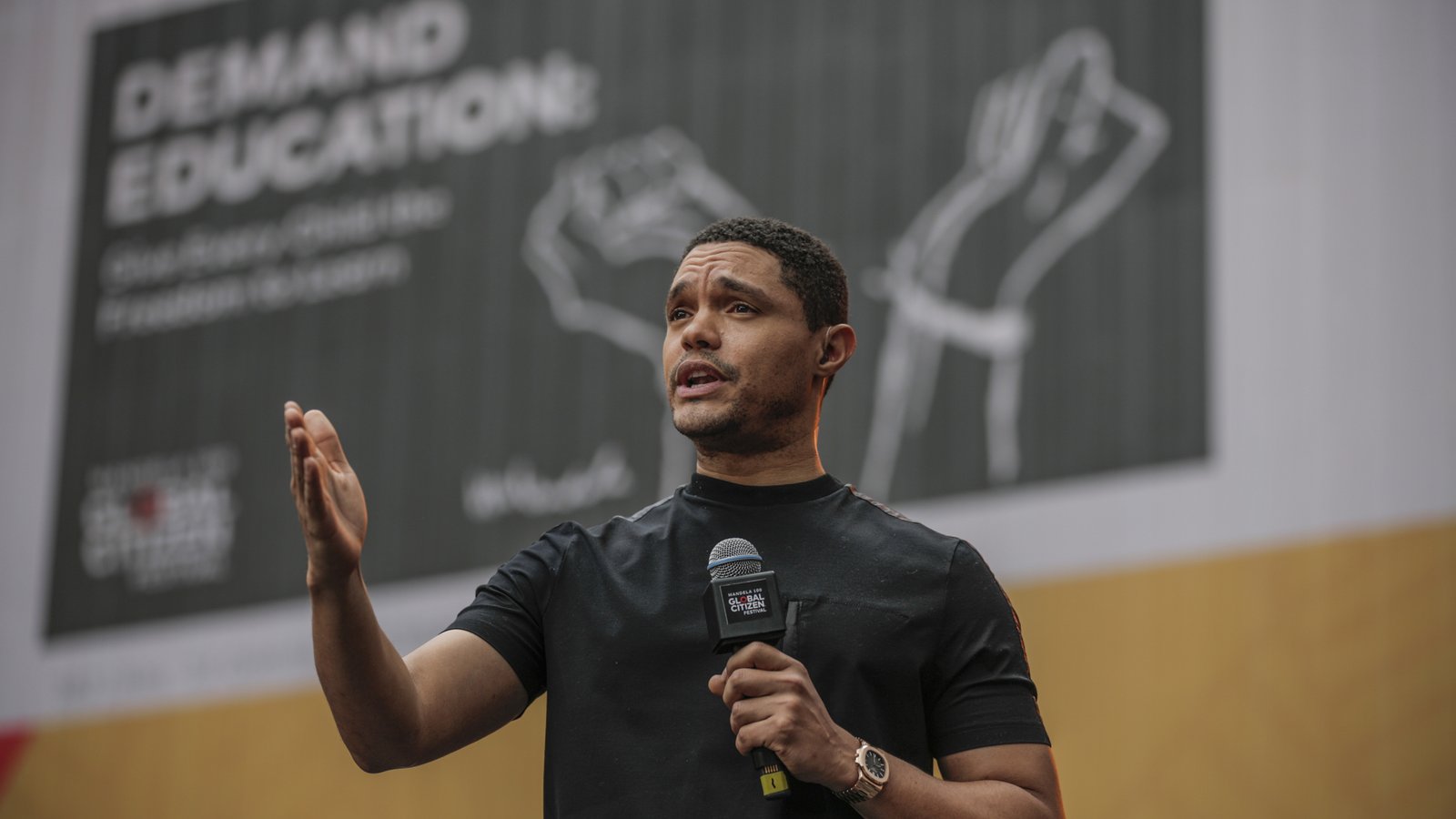
Best known as the current host of The Daily Show on Comedy Central, Trevor Noah is an award-winning comedian and social commentator — who also hosted Global Citizen Festival: Mandela 100 in Johannesburg back in 2018. His comedy special That’s Racist pokes fun at Black and white people alike; with commentary on the way Africans and Black people are stereotyped in the media and wider society.
As host of The Daily Show, Noah uses his sensational comedic timing and wit to engage with topics such as police brutality, cancel culture, and most recently, Kanye West. His ascent to the international stage came as no surprise following his success as a stand up comedian here in South Africa.
Noah’s autobiographical book, Born a Crime, tells the story of his childhood starting with his birth — Noah was born to a Black Xhosa mother and a white Swiss father at a time when interracial marriages were punishable by five years in prison under apartheid. Noah skillfully and humorously narrates the story of his childhood in a world where he wasn’t meant to exist. Read More…