13 Hungarian Dishes for People Who Really Love Food!
-
 Loading...
 - Khalish Jasmay
- 20 Jun 2022
- 248 Views
- 0 Like
- 0 Comment
Hungarian cuisine is definitely not for people on a diet! I realized that after my first trip to Budapest, when I returned home with 7 extra pounds! But even though I know I’ll pay the price, I can’t refrain from eating the fattening but delicious Hungarian dishes, every chance I have.
Characteristics of the Hungarian Dishes
Bread plays an important item in the Hungarian diet. Hungarians eat bread with almost everything and at every meal. They eat it at breakfast, with butter and jam; at lunch, with soup, salami, or sausages; and also eat it at dinner, with meat gravy or lard.
Hungarians also use a lot of bread when cooking. Many of their meat dishes are dipped in bread and then baked or fried.
Hungarian Signature Dishes
I love Hungarian food (and wines!) and because I’m married to a Hungarian, I learned to cook some of these dishes over the years. So here are some of my favorites:
Gulyás (goulash)
Goulash is the most popular Hungarian dish, something between a soup and a stew, made with beef, potatoes, tomatoes, onion and paprika.
The recipe varies a little in each region of Hungary. Some cooks make it with pork and also add carrots to the mix. However, the traditional Goulash is made exclusively from beef or veal.
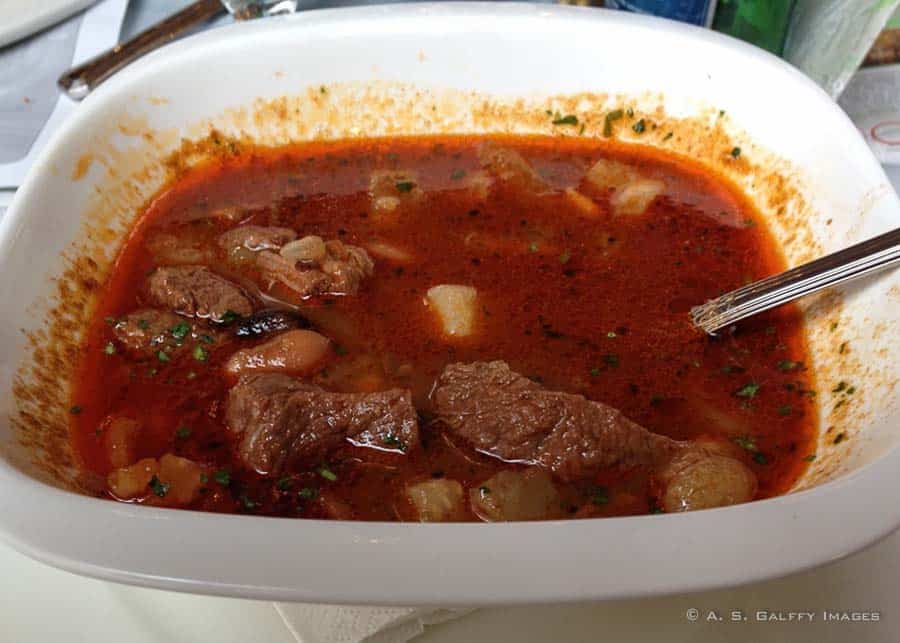
The meat, tomatoes, onion and paprika are cooked for several hours at a slow fire. Diced potatoes are added only when the meat is very tender. The potatoes will make the goulash thicker and smoother.
is a very popular food in Hungary and in the 1800s it was declared a national dish. They serve Goulash in almost any restaurant in Budapest, but if you want the real deal, look for a traditional Hungarian restaurant.
Pörkölt (meat stew)
Pörkölt is a rich stew made of any kind of meat, tomato, paprika, and onions. It’s usually served with a side of Hungarian noodles called nokedli. The taste is very similar to that of Goulash, which is why many visitors don’t make a distinction between the two dishes.
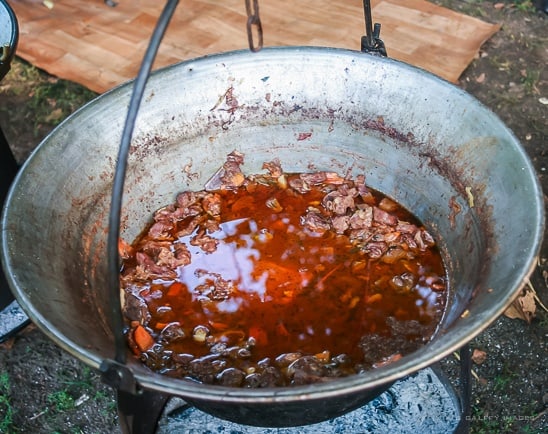
For best results, the meet needs to be cooked for hours. Traditionally, Pörkölt is cooked outside, over an open fire, in a heavy metal pot called bogrács.
Meggyleves (sour cherry soup)
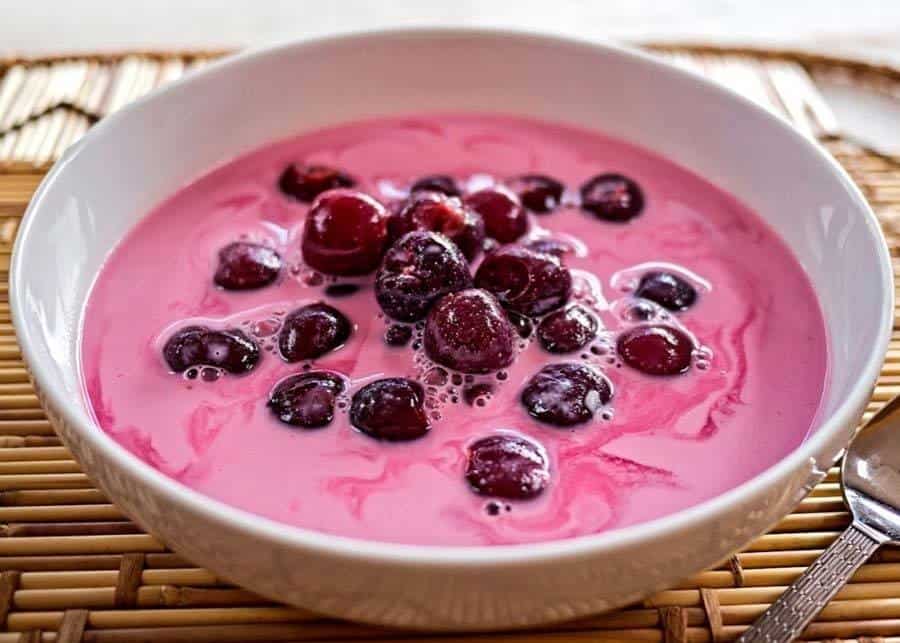
Meggyleves is a sweet soup made of sour cherries, sour cream, and sugar. The first time my mother in law served this to me, I thought it was a desert. The fresh creamy soup is served cold, with sour cream on top. The dish looks and tastes like a delicious desert, but it’s actually eaten at the beginning of the meal, as a regular soup.
Lángos (deep fried flat bread)
Lángos is a deep fried flat bread which many people eat with shredded cheese and sour cream. I personally like to eat the Lángos plain, without any other ingredients. If they are properly fried, the dough is crunchy and very tasty.
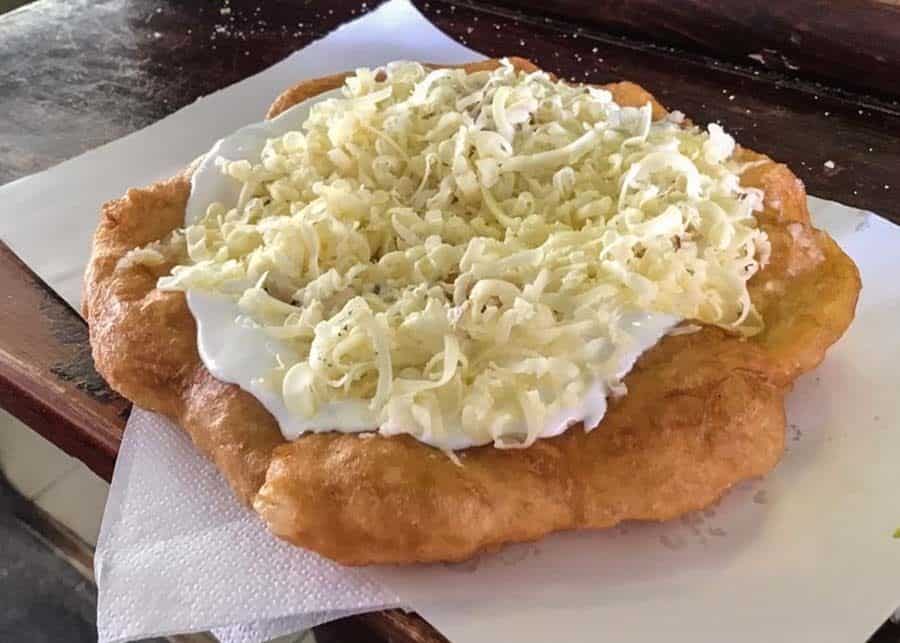
Langós is a very well liked Hungarian food, but don’t look for it in restaurants. It’s one of the most popular street foods in Budapest and you can find it on any food stands around the city. The best Langós I ever tried was at the Great Market Hall in Budapest.
Töltött Káposzta (Hungarian stuffed cabbage rolls)
Although a traditional Hungarian food, Töltött Képoszta is actually common to many other Eastern European countries. However, the Hungarian recipe has a very specific flavor.
The Stuffed Cabbage Rolls are made with sauerkraut, sour cabbage leaves, beef and pork, onion, tomato sauce and paprika. The Romanian version of this dish has no paprika, but instead it uses cumin and thyme. In Polish cuisine there is also a variation of this dish, called Polish Golumpki.
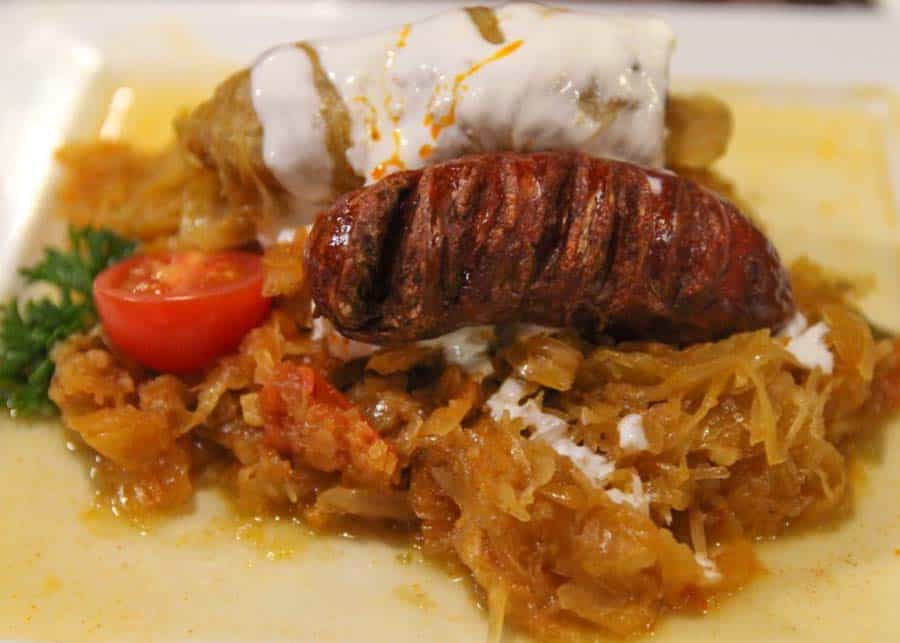 Also, Hungarians eat their Stuffed Cabbage Rolls (Töltött Káposzta) with sausage, sour cream and bread. As opposed to Romanians who eat their Stuffed Cabbage Rolls (Sarmale) with polenta. Read More...