14 portrait photography tips you'll never want to forget
-
 Loading...
 - Noelle Clarke
- 30 Aug 2022
- 69 Views
- 0 Like
- 0 Comment
Portrait photography tips can run the gamut from simple tweaks to your camera settings to the seemingly impossible task of getting children to stay still.
Although many photographers upgrade to a decent DSLR or one of the best mirrorless cameras to give them more control when they take family portraits or pictures of friends, getting great shots of people is always a challenge.
The difference between amateur and professional portraits can be vast. So we've compiled this list of 14 of the most important portrait photography tips for any photographer to know.
We'll start off with the basics on aperture, shutter speed and lens choice, then move on to focusing and photo composition techniques, before showing you how to use natural light and reflectors to dramatically improve your results.
We'll then discuss some of the more advanced portrait photography tips, such as the benefits of using flashguns and other accessories when shooting portraits.
Whether you're taking portraits of your friends or you've been commissioned to photograph a family, and whether you're shooting in a pristine studio or outside in your local park, the helpful advice below will help you become a better portrait photographer.
1. When to use Exposure Compensation
Your camera's metering system plays a vital role in picture-taking. It works out how much light should enter the camera to make a correct exposure. It's very clever, but it's not completely foolproof. The problem with multi-zone metering systems is that it takes an average reading, and this reading is assumed to be a midtone, or in other words, halfway between white and black.
More often than not this assumption comes out right, but a metering system can struggle when a frame is dominated by areas of extreme brightness or darkness.
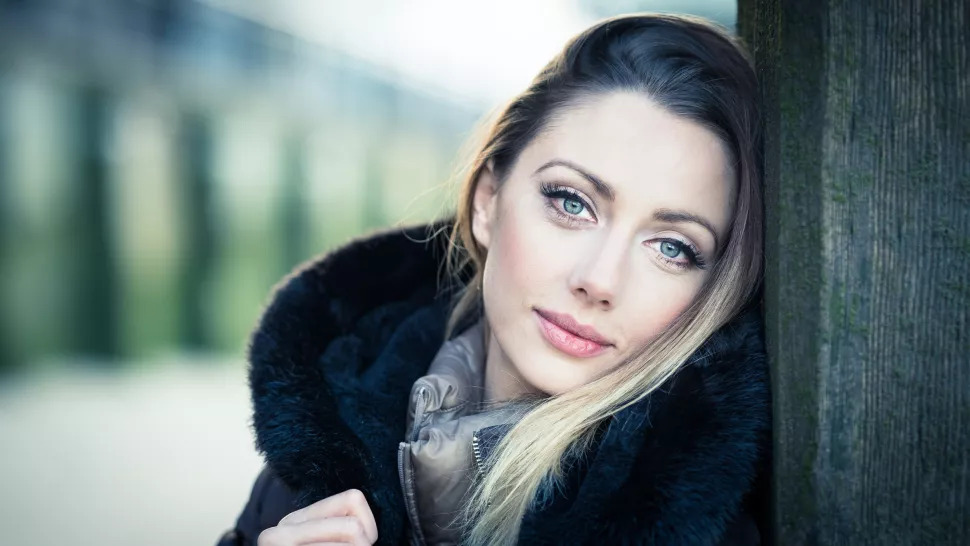
When shooting portraits, light skin tones can easily trick the camera into underexposing the shot. You'll notice this more when shooting full-face photos or when there's lots of white in the scene - brides at weddings are a prime example.
This can be quickly corrected though with your camera's Exposure Compensation controls. To begin with, try dialling in up to +1 stop of positive Exposure Compensation to lighten up people's faces. Review your shots, and if you feel you they need to be lightened further, increase this further. Read More…