17 Home Remedies For Polycystic Ovary Syndrome (PCOS) + Prevention Tips (Foods To Avoid)
-
 Loading...
 - Sophie Hoedemaker
- 15 Sep 2022
- 76 Views
- 0 Like
- 0 Comment
Statistically, women’s most common endocrine condition is polycystic ovarian syndrome or PCOS (1). It can negatively impact both your physical and mental well-being with a plethora of symptoms that it can throw your way. Luckily, there are home remedies for polycystic ovaries that can help you to manage this condition while you wait for medical treatment or if you want to handle things naturally. You can alternatively use some home remedies with prescribed treatments to get the best of both worlds.
In this post, we’ll go over the syndrome, its causes, and symptoms, as well as some home treatments and preventative actions you can take. Continue reading to know more.
Quick Tips For Fighting PCOS
Increase your intake of magnesium.
Cut down on inflammatory foods.
Consume vitamin B supplements.
Exercise regularly.
Get enough sleep.
Read them in detail in the precautionary measures section.
In This Article
What Is Polycystic Ovarian Syndrome?
What Is The Cause Of Polycystic Ovary Syndrome?
Home Remedies For PCOS
Precautionary Measures To Prevent PCOS
What Is Polycystic Ovarian Syndrome?
As women age, various genetic and hormonal disorders affect their lives and health. One such hormonal imbalance related disorder that affects women is Polycystic Ovarian Syndrome (PCOS).
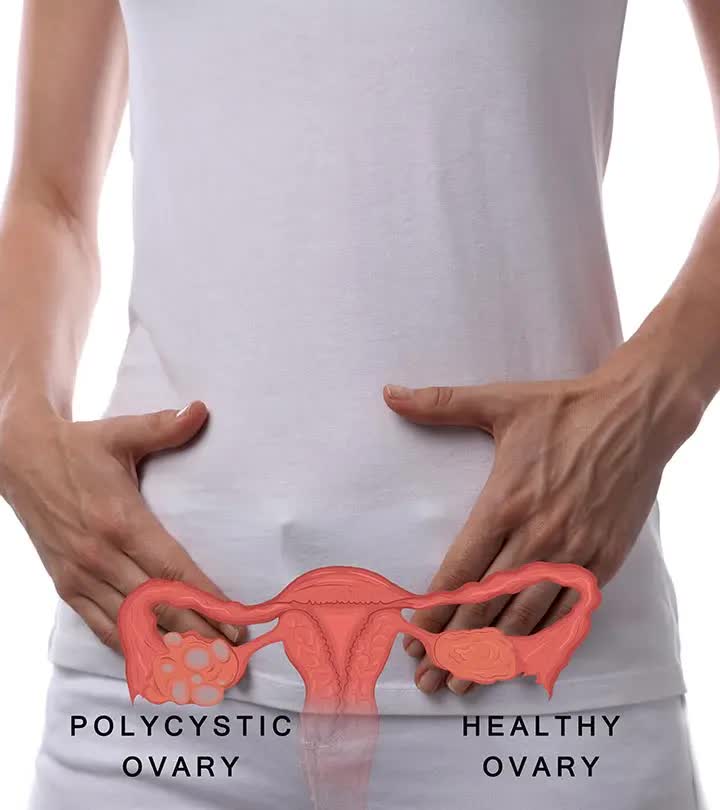
In this syndrome, fluid-filled cysts fill the ovary due to an imbalance of the reproductive hormones. The ovaries get enlarged and stop functioning normally.
What Is The Cause Of Polycystic Ovary Syndrome?
In PCOS, the medical emphasis is on imbalanced sex hormones and insulin resistance. The hormonal imbalance in PCOS happens due to not enough progesterone and too much estrogen, leading to estrogen dominance. Ongoing cycles of too much estrogen cause ovulation to fail, resulting in increasingly higher levels of estrogen and insufficient progesterone (but higher than testosterone).
Two factors that can throw hormones off balance are yeast overgrowth and magnesium deficiency. Yeast can overgrow in the intestines under the influence of antibiotics, steroids, and sugar. Yeast toxins are released that can be picked up by the bloodstream and block the hormone receptor sites. Magnesium deficiency can cause or contribute to high blood sugar and insulin resistance, thyroid and adrenal imbalance, fertility issues, pelvic pain, weight gain, elevated blood pressure. Read More...