2.9 million-year-old tools found in Kenya stir up a ‘fascinating whodunnit’
-
 Loading...
 - Robert Wainaina
- 13 Feb 2023
- 63 Views
- 0 Like
- 0 Comment
The stone tools could likely be the oldest evidence of Stone Age innovation.
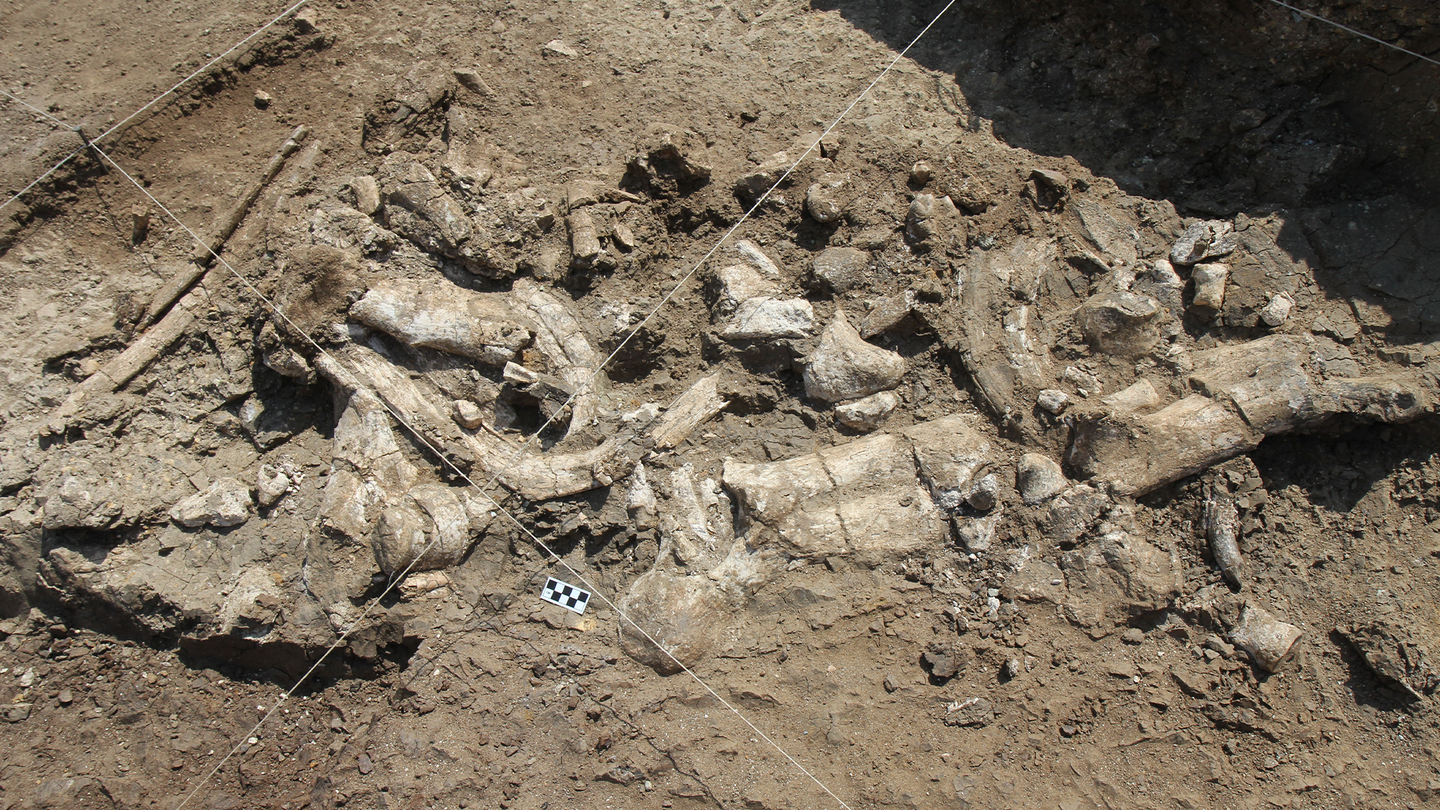
An international team of archaeologists recently uncovered some of the oldest stone tools ever found. The ancient tools, discovered along the banks of Lake Victoria in Kenya, are likely the oldest evidence of both an important Stone Age innovation called the Oldowan toolkit and of hominins consuming very large animals. The findings were published on February 9 in the journal Science.
The Oldowan toolkit includes three types of stone tools: hammerstones for hitting other rocks or creating tools that pound, cores that are angular or oval shaped and split off pieces of material, and flakes used as a cutting or scraping edge.
The team says that while there is solid evidence that the artifacts are likely about 2.9 million years old, a more conservative estimate is between 2.6 and three million years old.
In the excavations at the site named Nyayanga on western Kenya’s Homa Peninsula, the team also found a massive pair of molars that belong to Paranthropus– a genus of close evolutionary relatives of modern humans. These teeth are the oldest fossilized Paranthropus remains found by scientists. Their presence at a site with so many stone tools has sparked a mystery about which human ancestor made the tools.

“The assumption among researchers has long been that only the genus Homo, to which humans belong, was capable of making stone tools,” said Rick Potts, a co-author of the study from the Smithsonian National Museum of Natural History, in a statement. “But finding Paranthropus alongside these stone tools opens up a fascinating whodunnit.” Read More…