25+ Tunisian Foods You Will Love After The First Try In 2022
-
 Loading...
 - Daniella Chapman
- 10 Mar 2022
- 415 Views
- 0 Like
- 0 Comment
Its cuisine is enriched with diversified vegetables, starches, fruits, and more. Your Tunisian trip cannot be perfect if you don’t enjoy the Tunisian signature dishes. Check them out!
Tunisian Savory Dishes Are Difficult To Resist For Main Meals
How can you experience the main meal without savory recipes? I have some recommendations for you to help you have an excellent lunch or dinner with Tunisian recipes. Take a seat, note down and order immediately when you have a chance.
1. Lablabi/Lablebi – Tunisian Chickpea Soup
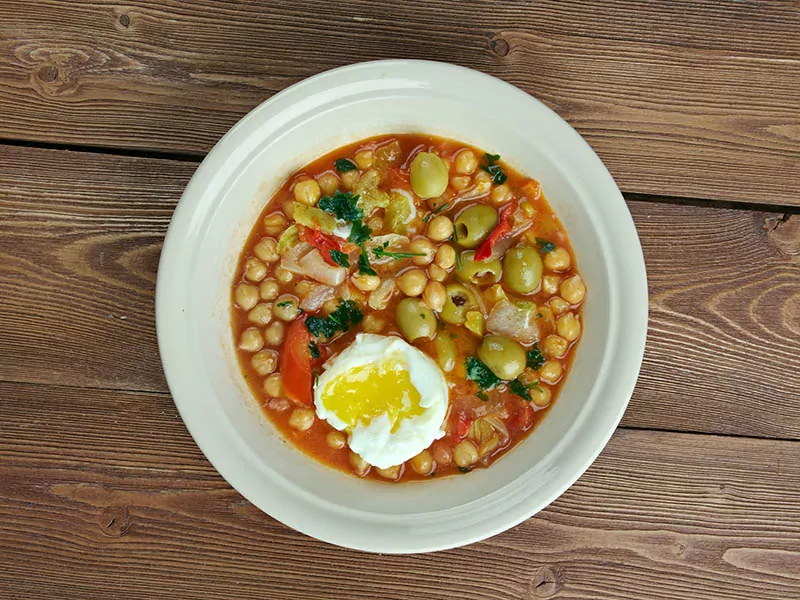
Lablabi is a traditional dish in Tunisian usually served at breakfast, but now you can enjoy it whenever you want. This is a chickpea soup cooked with some spices such as cumin, Harissa, and caraway.
Harissa plays an important role in Tunisian cuisine, and I will explain why in the next parts. You can order Lablabi in restaurants throughout this beautiful nation. Iraq and Turkish also have their own Lablabi versions.
The special feature when you taste Tunisian Lablabi is that it uses dry chickpeas instead of canned ones. The chefs will recommend you eat this soup with stale bread, a poached egg, and a spiced dressing.
Thanks to Tunisia’s coasts and rich seafood sources, the locals also decorate the dish with tuna and olives to add more flavor and texture to it. In some places, you can see the citizens add parsley, capers, cow trotters, and more to make a twist in taste.
In local restaurants, the waiters can allow you to “cook” the dish on your own. They will prepare for you stale bread, a bowl, and Lablabi. You need to fill bread in the bowl and pour Lablabi on the top. Don’t forget to mix them before eating.
Let’s explore how local restaurants serve Lablabi.
2. Assiette Tunisienne – Tunisian Salad Platter
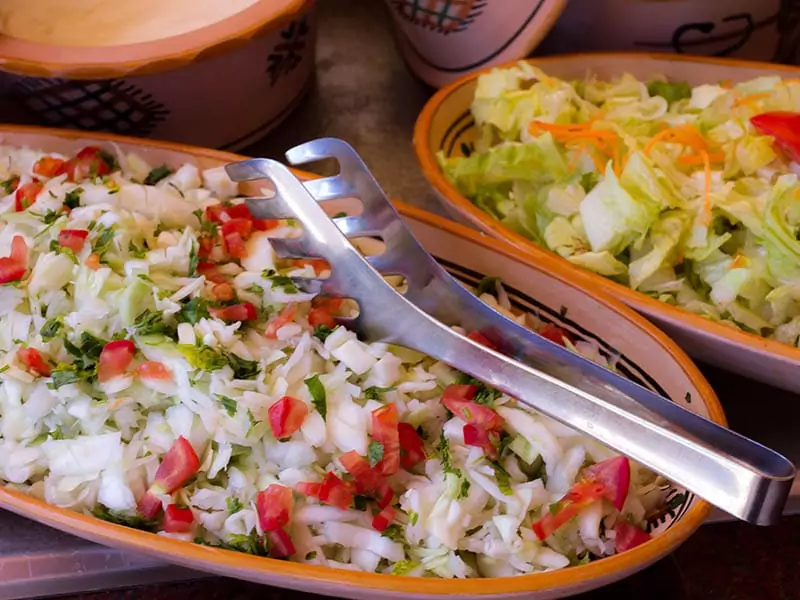
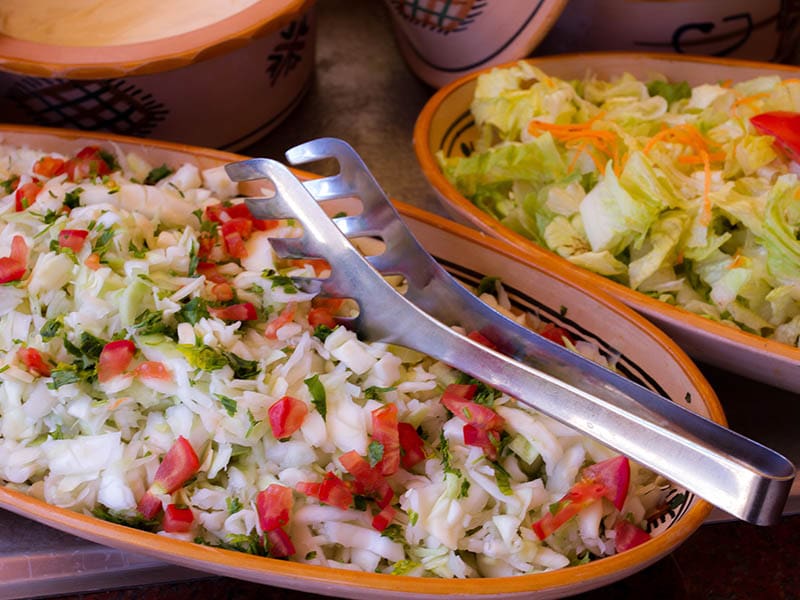
If you are finding a Tunisian dish to enjoy for lunch and relieve the heat of summer here, you should not skip Assiette Tunisienne. It is one of the Tunisian salads that I am excited to recommend to anyone I meet.
I read this recipe in a book about North African dishes written by Kitty Morse, and I wish to place my feet in Tunisia to taste this salad. This is also a smart way to make use of leftover cooked eggs from Easter.
Under sliced or diced vegetables, cooks can garnish some olives, eggs, capers, and one of Tunisia’s specialties – tuna on the top. However, you should not mistake it with Salade Nicoise. This dish will be a perfect puzzle for grilled poultry or fish.
3. Harissa – Chili Paste
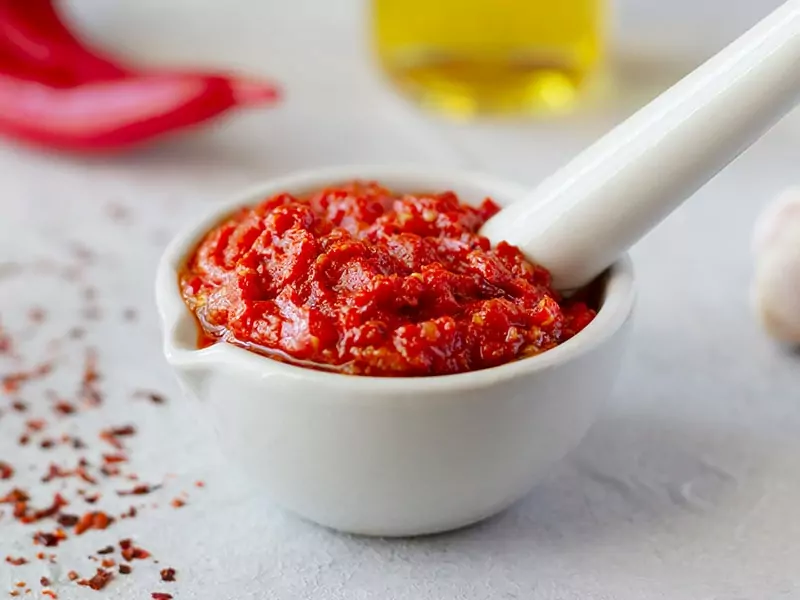
Is anyone a fan of spicy condiments? You can raise your hands or give this post a big like as I have a gift for you – Harissa. The Spanish brought red chili pepper from America in the 16th century and introduced it to Tunisia in 1535-1574 when they occupied this country.
Thanks to the suitable climate, this plant has grown prosperous here. The locals have created and consumed Harissa and made it become one of their favorite sauces. Besides red chili, you can taste other spices, including salt, garlic, cumin, and more.
The heat level can be varied depending on which type of chili pepper the chefs use. They can smoke it to create a twist in flavor. For over 500 years, this species has attracted the Tunisians and some surrounding Middle East and North Africa nations.
You can purchase it in both paste and powder form to blend it into meat, pizza, stews, sandwich, soups, and scrambled eggs. I’m sure it is hard to find a condiment more versatile than that.
4. Mechouia Salad – Tunisian Grilled Salad
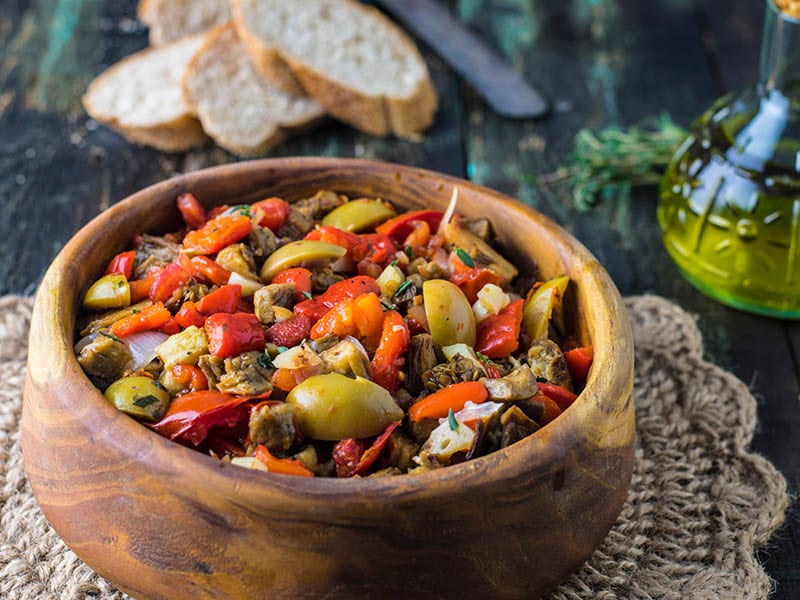
Another dish to welcome Tunisian summer. Are you ready to try it? Mechouia Salad is native to Tunisia, and it is usually served as an appetizer. It consists of grilled vegetables instead of raw ones like others.
Moreover, you can find tomatoes, onions, peppers, and garlic in the dish. It is spicier than Harissa, so make sure you know that before ordering. The locals usually enjoy it with grilled fish and lamb.
If you are a vegetarian, don’t hesitate to order a plate of Mechouia Salad. However, the citizens will suggest you should place some wedges of hard-cooked eggs, pieces of tuna, or olives to create a nuanced and rounded flavor.
The Northern African nations surround the Mediterranean sea, so how about adding a little bit of Mediterranean breath to the dish by combining the above 3 toppings? You will miss this dish when you go back to your hometown.
5. Kosksi – Tunisian Couscous
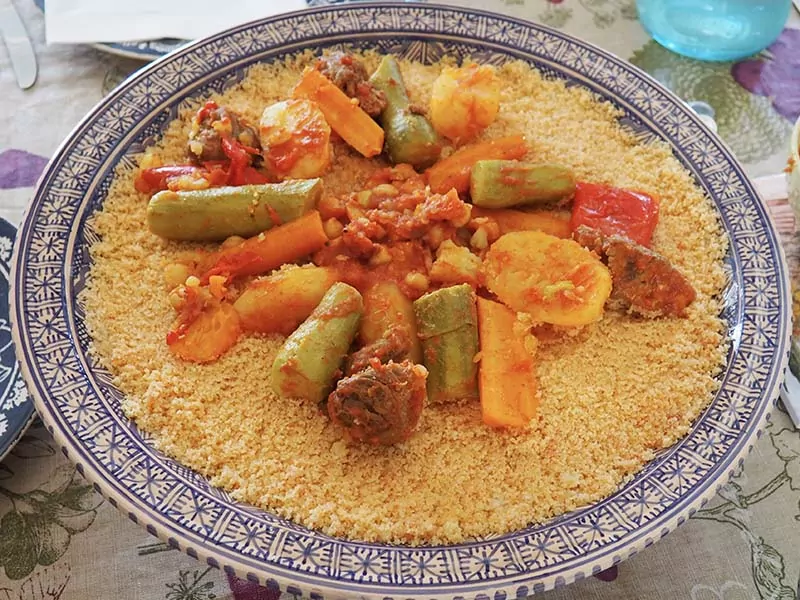
Take your seat as you will taste a long-established dish in both taste and history that is Tunisian Couscous. Couscous gained the Intangible Cultural Heritage title in 2020; thus, tasting it is one of my honors.
It is a national dish in Tunisia, and they believe eating Couscous will connect between family members. People love it despite Couscous’s size, mild or hot and especially in the summer.
Although countless recipes contain Couscous, its exact origin is still a secret. Charles Perry assumed that Couscous appeared in the 13th and 14th centuries as the Arabic cookery books wrote couscous recipes.
Meanwhile, another opinion said Couscous has a connection with the word “kuskusu”, which existed between the 11th and 13th centuries. This evidence suggests this grain popped up from the Berbers located in northern Morocco and Algeria.
Tunisian Couscous is dissimilar to other couscous dishes since it contains semolina. You can eat it alone, but it will be better if you pair it with beef and vegetable broth. The natural sweetness from these ingredients will level up this combo so much.
You can find numerous Couscous variants in Tunisia: Sometimes with fish (sea bass, red snapper, and more), cinnamon, crushed rosebuds, and seafood. The cooks also use different spices to breathe new flavors into the traditional dish.
Tunisian Couscous is one of the most recommended dishes. Can you imagine what it tastes like? Read More…