26 Most Amazing Algerian Foods You Shouldn't Miss 2022
-
 Loading...
 - Joshua Campbell
- 01 Mar 2022
- 393 Views
- 0 Like
- 0 Comment
Algerian dishes represent a wonderful blending of passionate North African cuisine with Mediterranean delicacy. Therefore, you’re going to find the dishes presented in this post both strange and familiar, closely intimate, and unusually irresistible. Scroll down to see for yourself.
Check Out These Astounding Algerian Appetizers And Side Dishes
When it comes to whetting your appetite, all the Algerian dishes below are equal, but some are more equal than others (any George Orwell vibe?). Which one will you choose?
1. Couscous – Steamed Semolina
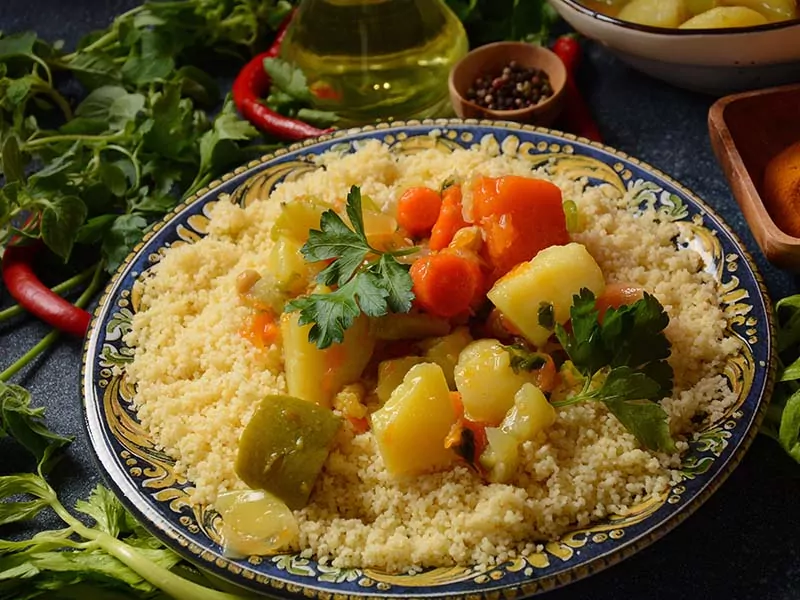
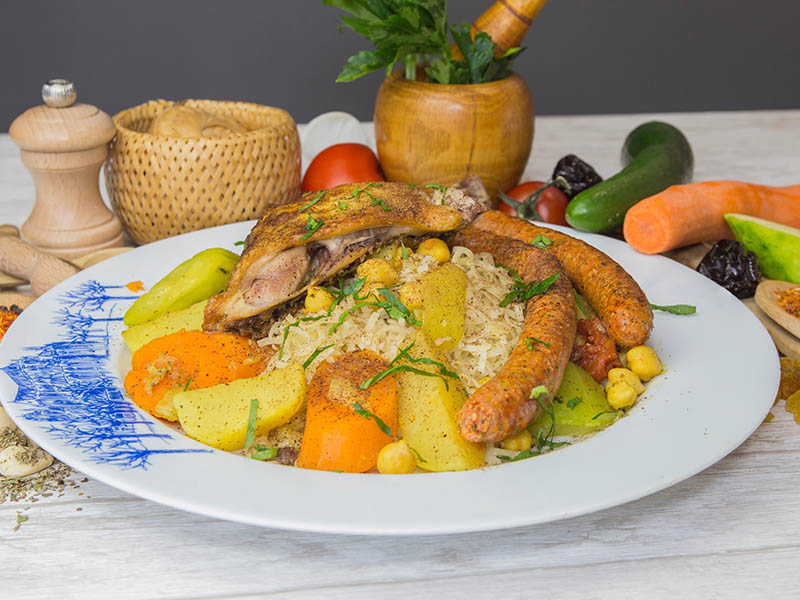
Ask any Algerian about their national dish, and you’re likely to receive the same answer: Couscous. Actually, ask anyone from the Maghreb (the part of North Africa bordering the Mediterranean Sea); it’s still the same answer. That underscores the popularity of couscous.
But what is couscous exactly? It is a dish made from steamed semolina which is a type of flour of durum wheat. The dish comes in the form of small, golden spherical grains that have a fat, nutty flavor when cooked.
Couscous is a healthy, nutritious starchy food to go with many kinds of dishes, such as vegetables, meat stews, buttermilk, etc. Algerians usually eat it on Friday at home after joining in midday prayers at mosques, as well as at funerals.
2. Kesra – Algerian Olive Oil Flatbread
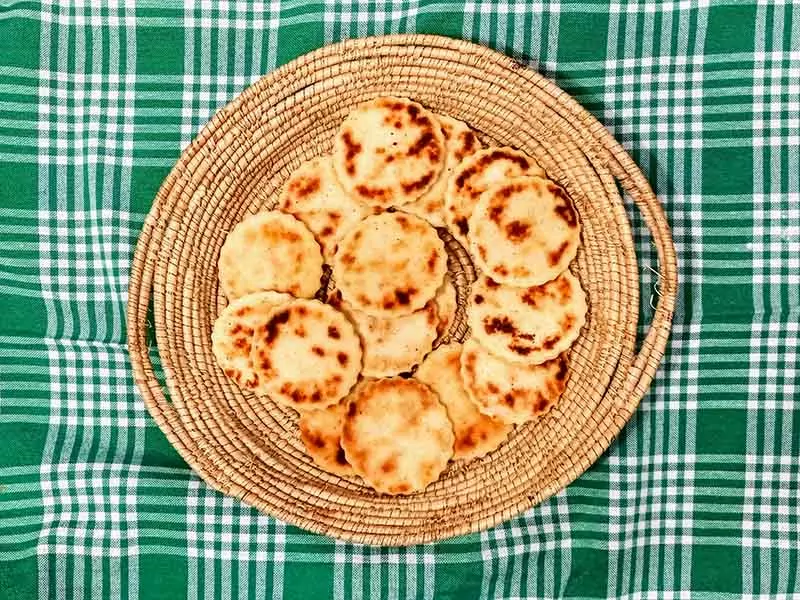
A typical Algerian breakfast recipe usually revolves around bread. There are many varieties to choose from, the simplest of which is Kesra. But don’t let the simplicity fool you: Kesra is made from semolina dough mixed with high-quality virgin olive oil.
The bread goes by many names. It is Khobz Ftir in the capital city Algiers, Kesra near Constantine in eastern Algeria, and Aghroum Akoran in the Kabyle region north of the country. But true Kesra is good and hearty under any disguise.
3. Mhadjeb – Flatbread Stuffed With Tomatoes And Onions
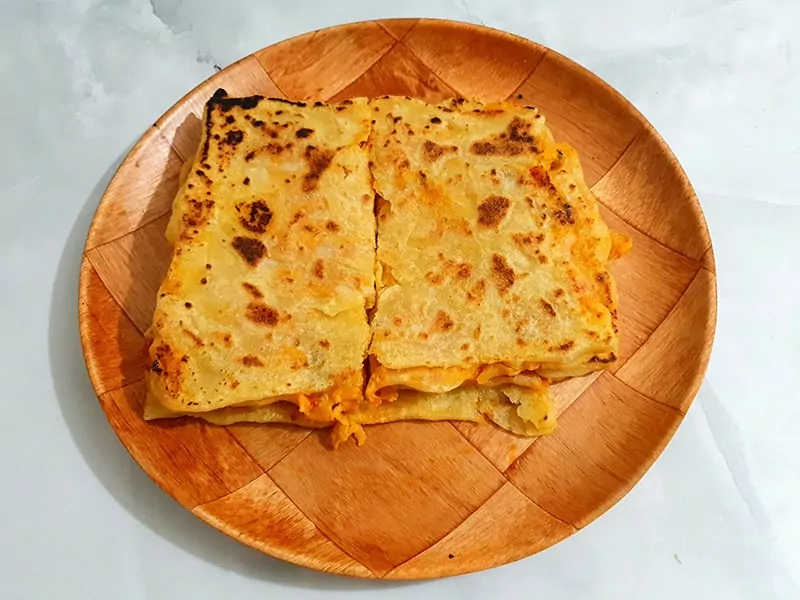
This is another type of traditional Algerian bread. Mhadjeb is a popular street food that people buy to eat alone or with Harrisa, a Maghrebi hot chili pepper. Like Kesra, it is made from semolina dough mixed with olive oil.
But what’s different about Mhadjeb is that it is stuffed with sauteed tomatoes and onions before being fried. Therefore it has a stronger and more diverse flavor.
4. Chakhchoukha – Flatbread Pieces Topped With Stew
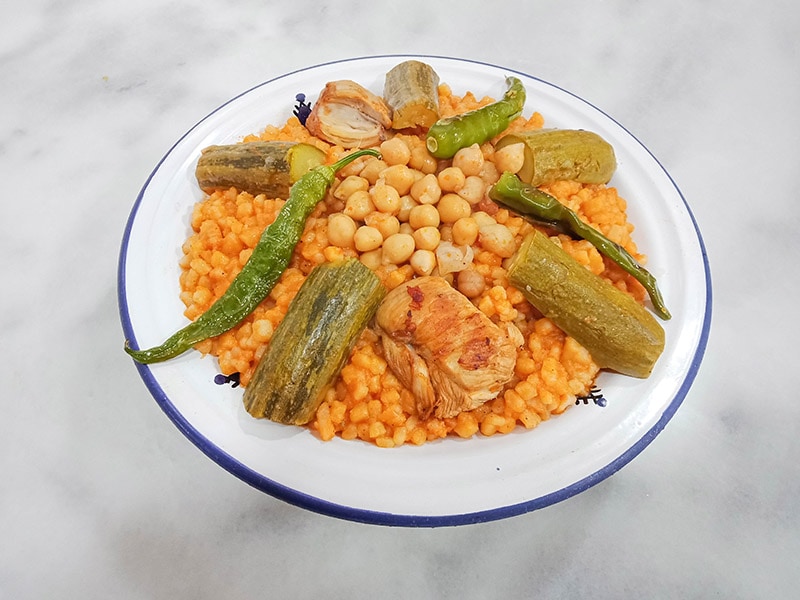
Chakhchoukha is a culinary contribution from the Chaoui people in the mountainous Aurès region in eastern Algeria. People believe that ancient Chaoui herders invented this “torn flatbread” (the literal translation of the name) as a nourishing dish for cold nights.
Chakhchoukha has two parts: the rougag (flatbread) topped with the marqa (the stew). The rougag consists of many torn pieces of semolina, hence the name of the flatbread. Meanwhile, the marqa is made from diced lamb, chopped vegetables, and lots, lots of spices.
You will appreciate the heat and the flavourful taste of this flatbread. After all, it first came about to deal with the cold nights of the Algerian desert. Nowadays, Algerians usually save Chakhchoukha for festivities or special occasions.
5. Baghrir- Spongy Semolina Pancake
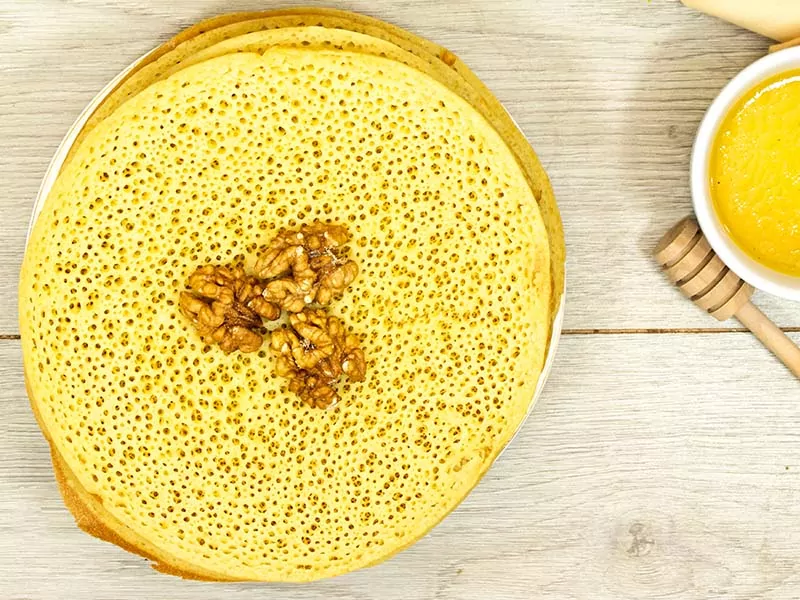
After getting fed up with rich and heavy foods, perhaps you need something lighter. How about some airy Baghrir, honeycomb-like pancakes that are a common sight at Maghrebi dinner tables?
This type of pancake is made from fine leavened semolina flour. Just fry the batter over a medium fire until countless tiny holes appear on the surface. A good thing about Baghir is that you don’t have to flip it.
The best condiment to go with Baghrir with a butter-honey mixture. The spongy surface absorbs every bit of the sauce, giving it a pleasantly sweet and fruity flavor. Algerians usually eat the pancake as a healthy snack on normal days as well as during Ramadan.
6. M’semen – Spiced Stuffed Crepe
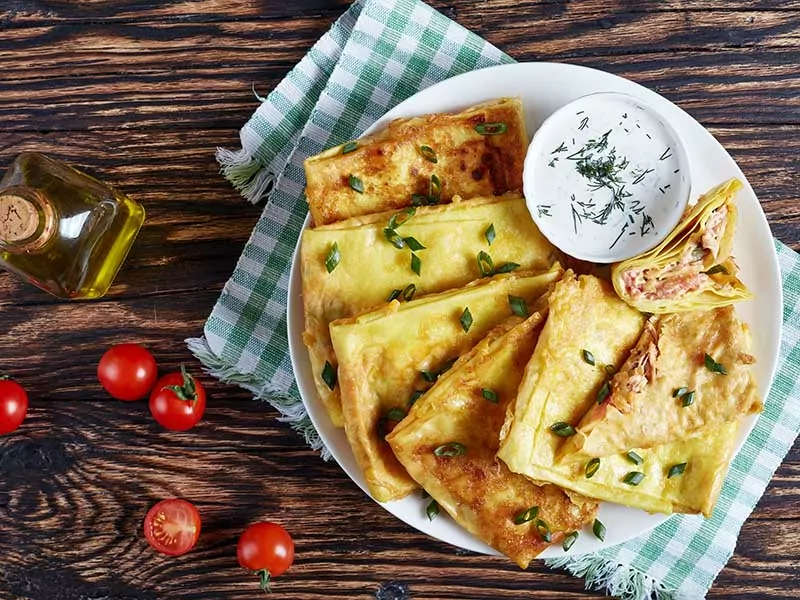
It is common knowledge that M’semen is a traditional Moroccan flatbread. While that isn’t far from the truth, you should also know that it is very popular with Algerians as well. They love to serve it with coffee and mint tea or simply eat it as a snack.
People make M’semen from simple ingredients like semolina, flour, butter, and some water. They create a smooth mixture, then divide it into smaller parts before kneading and rolling them into paper-thin circles. The next step is to masterfully fold each circle into a square pancake.
The dough is prone to sticking to the fingers during the folding process, so oiling them constantly is a must. M’semen can also be stuffed with minced meat and vegetables before being fried in oil until crisp and golden. Read More…