30 classic Italian dishes that everyone should try
-
 Loading...
 - Carol Brown
- 02 May 2022
- 327 Views
- 1 Like
- 0 Comment
Italian cuisine -- or some version of it -- has colonized the rest of the world so successfully that there are probably uncharted corners of the Amazon rainforest where you can sit down at a red-and-white checkered tablecloth and order up a plate of pasta and sauce.
There's a reason it's so good. Actually, there are hundreds of reasons scattered throughout
the different regions Italy. But here are 30 of them.
Pizza Napoletana
Italy's gift to TV box set bingers, deadline busters and delivery scooter manufacturers needs no introduction. Pizzas can be summoned to almost anywhere on the planet -- including an intercity train -- within 30 minutes provided there's a phone connection and worthwhile tip.
But that greasy slice you're eating out of a box (for breakfast? Seriously?) is a far cry from the real thing. A true Italian pizza is thick, tender and has an elasticity when chewed. It's traditionally dressed with fresh tomatoes, extra virgin olive oil, basil leaves and melting mozzarella or fior di latte cheese -- or simply plain white pizza. The most savory is buffalo milk mozzarella.
Many atrocities have been committed in the name of pizza science -- hot dog-stuffed crust anyone? Or pineapple pizza? -- but the original still never tastes better than in Naples, the city of its birth.
Tagliatelle al Ragù
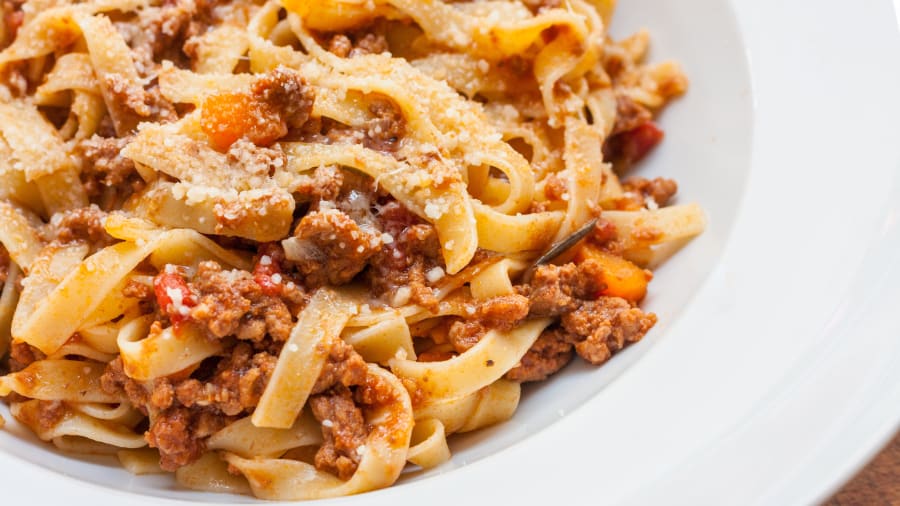
The rest of the world calls it "spaghetti bolognese" -- but the rest of the world is wrong. This perfect blend of delicate ragù sauce and fresh golden tagliatelle pasta is a signature of the northern Emilia Romagna region, in particular the city of Bologna -- hence the naming error.
Legend has it the tagliatelle shape was inspired by the curly blonde hair of fearsome 16th-century Italian noblewoman Lucrezia Borgia. The ragù is made with finely chopped or ground pieces of pork and beef mixed with celery, carrots, onions, tomato sauce and red wine.
Parmigiano Reggiano cheese is grated on top, like a snow-capped peak. The original ancient recipe is protected by the Azdore, "pasta priestesses" who prepare fresh tagliatelle for clients each day across the region at fresh pasta boutiques.
Rigatoni alla Carbonara
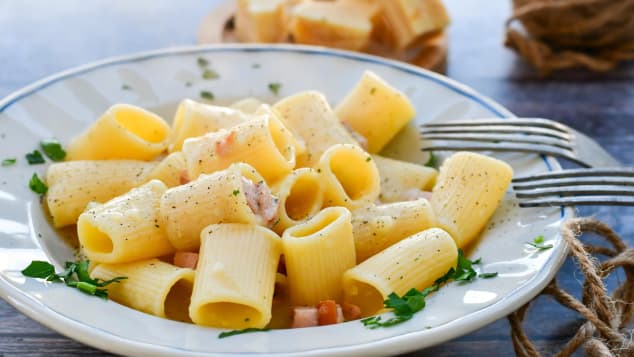
Few ingredients go into making this dish, but the secret is in their quality, and the way they stick to the tube shaped pasta. Pecorino cheese, pork cheek and raw organic eggs are all that's needed for Rome's specialty dish.
Being a heavy and protein-rich meal, it's usually served at dinner. The homemade rigatoni, must be "al dente" -- cooked to exactly the point when it's neither soft nor hard-- so the dense egg-rich dressing clings without leaking into the plate. Spaghetti can also be used, preferably the homemade type with a gritty surface.
Carbonara may owe its creation to American influence -- it's likely that pasta with egg and bacon flourished with the arrival of the American troops in Italy during World War II -- but Romans, and Italians in general, like to stick to an indigenous tale according to which the dish was a favorite of charcoal burners working on the cold Apennine mountains.
Trofie al Pesto
The word pesto literally means "crush" in Genoese. In this case, basil, Parmigiano Reggiano cheese, pine kernels, garlic cloves, coarse salt and extra virgin olive oil, pulverized together in a Genoese marble mortar. They combine to create a dense creamy sauce that smells of a Mediterranean garden and cries out to be stirred through a bowl of handmade trofie pasta twists.
This dish is at its best in Genoa, in northwestern Liguria, a land of seafarers and adventurers. The region was a spice trade hub in the Middle Ages, when use of herbs and flowers to flavor food became commonplace. A legacy of these times, Pesto flourished in the 1800s based on an earlier, older recipe made with garlic called "agliata."
Lasagne
Freezer-ready superstore versions of this classic, more suited to propping open doors or breaking windows, have done it few favors over the years. But made well -- with rich layers of ragù, béchamel sauce and Parmigiano cheese oozing between hand-made "sfoglia" sheets of fresh flat pasta -- it's still heavenly.
Eaten via recipes that use either spinach or tomatoes, lasagne is closely linked to the northern food mecca of modern Bologna, but traces its origins to Roman times.
It was, reputedly, philosopher Cicero's favorite, because its refinement and softness was easier to digest than many others found his outspoken beliefs. He's said to have gulped down huge quantities up until he was killed.
Brodetto
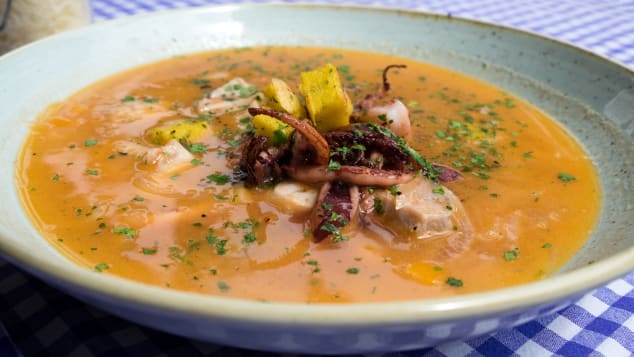
Solo diners should avoid ordering this dish, unless they're: A) really hungry; and B) massively into fish. Brodetto is a fish soup of gigantic proportions. It's served as a single main course but usually takes two people to finish.
Ray, mullet, sole, redfish and prawns gaze up from the bubbling pot, swimming in a pool alongside semi-ripe tomatoes, parsley, pepperoni and garlic. Grilled bread slices are dropped in before the eating starts and left to absorb the fishy liquid.
Once all the fish is gone, it's time to devour the soaked bread. At the very end thin spaghetti, called capelli d'angelo, or angel hair, is thrown inside the pot and mixed with the remaining sea broth.
It's a topsy-turvy meal typical of Vasto on the Adriatic coast. Read More…